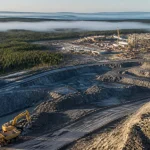
PERTH, Western Australia : Minerals 260 (ASX: MI6) has delivered a significant upgrade to its flagship Bullabulling Gold Project, expanding its mineral resource estimate by 38% and releasing a Pre-Feasibility Study (PFS) that outlines a high-margin, long-life operation. The company reported on Thursday that the project now hosts 6.2 million ounces of gold, supporting a robust economic case with a post-tax net present value (NPV) of A$2.3 billion and a 43% internal rate of return (IRR).

The updated Mineral Resource Estimate (MRE) stands at 190 million tonnes at 1.0 g/t Au, up from the previous 4.5 million ounces reported in late 2025. This growth follows an intensive 78,000-meter drilling campaign that successfully extended mineralization at depth across the Dicksons, Phoenix, and Bacchus deposits. Of the total resource, 4.4 million ounces (71%) are now classified in the higher-confidence Indicated category, providing a solid foundation for the Definitive Feasibility Study (DFS) already underway.
Economic Drivers and Project Scale
The Bullabulling PFS envisions a large-scale open-pit operation utilizing a 5 million tonne per annum (Mtpa) Carbon-in-Leach (CIL) processing plant. With a targeted production rate of 150,000 ounces per year, the project boasts a projected 19-year mine life.
Perhaps most compelling for investors is the project’s rapid capital recovery. Despite the scale of the proposed infrastructure, Minerals 260 estimates a payback period of just two years. This is driven by the project’s high-margin nature, benefiting from shallow mineralization and the operational efficiencies of Western Australia’s Tier-1 mining jurisdiction.
“This resource update and PFS confirm Bullabulling as one of the premier undeveloped gold assets in Australia,” said Luke Williams, Managing Director of Minerals 260. “The 38% increase in ounces, combined with the high level of resource confidence, demonstrates the scale and quality of the system. A$2.3 billion NPV at a 43% IRR sets a very high bar for the industry.”
More Read

Bullabulling Project: Key PFS Metrics
| Metric | PFS Outcome (A$) |
|---|---|
| Mineral Resource Estimate | 6.2 Moz (190 Mt @ 1.0 g/t Au) |
| Annual Production Target | 150,000 oz Gold |
| Plant Throughput | 5.0 Mtpa |
| Mine Life | 19 Years |
| Post-Tax NPV (8%) | A$2.3 Billion |
| Internal Rate of Return (IRR) | 43% |
| Payback Period | 2 Years |
| Processing Method | Conventional CIL |


Strategic Infrastructure and Location
Located roughly 60 kilometers west of Kalgoorlie, the Bullabulling project benefits from world-class infrastructure. The site is adjacent to the Great Eastern Highway and a major water pipeline, while also being positioned near existing power grids. These logistics are critical for the 5 Mtpa throughput model, significantly reducing the capital expenditure (CAPEX) compared to greenfield sites in more remote regions.
The resource expansion is largely attributed to the “step-out” success at the Kraken and Gibraltar deposits, where drilling confirmed the continuity of the gold-bearing shear zones. The company utilized a gold price assumption of A$5,250/oz for the pit shell optimization, reflecting the current strength of global gold reserves and central bank demand seen throughout 2026.
More Read

Path to Production and 2027 Outlook
With the PFS complete, Minerals 260 has immediately pivoted to a Definitive Feasibility Study, which commenced in May 2026. The DFS will focus on optimizing the mine schedule to prioritize higher-grade ore in the early years of production, potentially further enhancing the already rapid payback period.
A maiden Ore Reserve and the finalized DFS are targeted for release in the first quarter of 2027. If the project remains on its current trajectory, a Final Investment Decision (FID) could be expected by late 2027, putting Bullabulling on track for first gold production in 2028.

Market Implications
The scale of Bullabulling places it among the largest near-term gold development projects in the Eastern Goldfields. For investors, the 43% IRR provides a significant buffer against potential inflationary pressures in the labor and equipment markets.
Furthermore, the project’s focus on large-scale open-pit mining aligns with current industry trends where operators seek to mitigate the technical risks associated with deeper, more complex underground mines. The Bullabulling mineralization remains open in several directions, suggesting that the 6.2-million-ounce milestone may not be the project’s final ceiling.
As the industry looks toward the 2026 uranium price drivers and critical minerals demand, the gold sector continues to provide a cornerstone of stability for Western Australian mining majors. Minerals 260’s ability to deliver a multi-billion dollar valuation for a single-asset play underscores the enduring value of traditional precious metals in a diversified mining portfolio.

Technical Analysis: Resource Confidence
The transition of 1.4 million ounces from the Inferred to Indicated category is a vital de-risking step. In modern mining finance, Indicated resources provide the geological certainty required for debt financing and rigorous mine planning. The 71% conversion rate at Bullabulling indicates a highly predictable geological model, which should simplify the transition from the DFS to the construction phase.
Geological mapping suggests the gold is hosted within a broad, north-south trending shear zone that extends over several kilometers. The consistency of the 1.0 g/t grade across such a vast tonnage (190 Mt) is what enables the high-throughput 5 Mtpa processing strategy, allowing for lower unit costs through economies of scale.

By Charles Pitts