By Charles Pitts

The transition from a late-stage exploration project to an operating mine is often described as the “valley of death” for junior developers. For Generation Mining (TSX: GENM), that valley is currently being bridged by a complex, multi-layered C$1 billion financing package for its flagship Marathon Copper-Palladium Project. Located on the north shore of Lake Superior in Ontario, the Marathon project has emerged as a cornerstone of Canada’s strategy to secure a domestic supply of critical minerals essential for the energy transition and automotive sectors.
As of mid-2026, Generation Mining is moving into the final stages of project de-risking. With federal and provincial permits secured and a credit-approved debt package nearing completion, the company is positioning itself to make a formal Final Investment Decision (FID) by the fourth quarter of this year. The project’s success is not merely a corporate milestone; it represents a test case for Ontario’s “One Project, One Process” regulatory framework and its ability to compete in the global race for copper and platinum group metals (PGMs).
The Asset: A Tier-1 Jurisdiction Powerhouse
The Marathon Project is one of the largest undeveloped PGM-copper deposits in North America. According to the updated 2025 Feasibility Study, the project boasts an after-tax Net Present Value (NPV) at a 6% discount rate of C$1.07 billion, with an Internal Rate of Return (IRR) of 28%. At spot prices seen in early 2026, those numbers look even more compelling, with some analysts pegging the NPV north of C$2 billion.
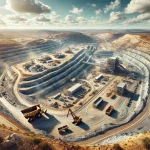
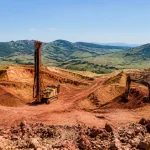
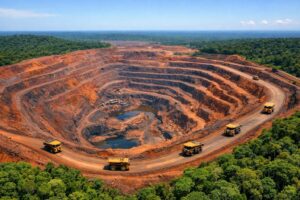
The mine is designed as a 13-year open-pit operation with a processing capacity of 25,000 tonnes of ore per day. Its life-of-mine production profile is substantial: approximately 2.16 million ounces of palladium, 532 million pounds of copper, and 488,000 ounces of platinum. This mix is strategically significant. While copper is the backbone of mining electrification and the EV supply chain, palladium and platinum remain critical for catalytic converters and the emerging hydrogen economy.
More Read

Constructing the C$1 Billion Capital Stack
The initial capital expenditure (Capex) for Marathon is estimated at approximately C$960 million to C$990 million. Building a mine of this scale in a remote northern environment requires a sophisticated financing strategy that blends traditional debt, equipment leasing, precious metal streaming, and government-backed infrastructure loans.

As of the current 2026 outlook, the financing stack is structured as follows:
- Senior Secured Project Finance (US$310 million / ~C$424 million): A syndicate including Export Development Canada (EDC), ING Capital, and Société Générale has provided internal credit approvals for this facility. This senior debt is the bedrock of the construction budget.
- Wheaton Precious Metals Stream (C$200 million – C$240 million): Generation Mining has utilized a streaming agreement with Wheaton Precious Metals. By selling a portion of the future gold and platinum production upfront, the company has secured a massive liquidity injection without the immediate dilution associated with equity markets.
- Canada Infrastructure Bank (CIB) Support (C$200 million): In a move highlighting the project’s strategic importance, the CIB has provided a C$110 million subordinated construction loan and a C$90 million standby facility. This capital is specifically earmarked for infrastructure that supports the mine’s operational readiness and local economic connectivity.
- Equipment Leasing (~C$145 million): To keep upfront capital manageable, the company has secured leasing facilities for its primary mining fleet, including agreements with Caterpillar.

More Read

With roughly C$969 million in total commitments and approved facilities, Generation Mining is essentially “nearing the finish line.” The final piece of the puzzle is an estimated C$150 million equity component, which the company expects to finalize alongside the closing of the senior debt documentation.
Regional Context: Newmont, Impala, and the Ontario Corridor
The development of Marathon is taking place within a shifting regional landscape. In Northern Ontario, the 2026 mining environment is defined by consolidation and a pivot toward critical minerals.
Newmont’s Rationalization:
Global gold giant Newmont has been optimizing its portfolio, recently divesting the Porcupine Mine Complex to Discovery Silver. This move signals a retreat from non-core Ontario assets as the major focuses on global Tier-1 operations. This divestment has left a vacuum in the regional labor and service provider market that developers like Generation Mining are now filling.
Impala Canada’s Stability:
To the northwest, Impala Canada continues to operate the Lac des Iles mine. As an established palladium producer, Impala provides a benchmark for operational excellence in the region. However, Lac des Iles is a mature asset. Generation Mining’s Marathon project represents the next generation of supply, offering a greenfield growth profile that complements the stable, albeit static, output from Impala.
Strategic Significance: Securing the North American Supply Chain
The geopolitical climate of 2026 has placed a premium on domestic mineral security. With global supply chains for copper and PGMs facing pressure from geopolitical fragmentation, the Marathon project is a vital link in the North American critical minerals watchlist.
Ontario’s government has leaned into this trend with the “Protect Ontario by Unleashing Our Economy Act,” which introduced the “One Project, One Process” framework. For Generation Mining, this has meant a more predictable permitting path, reducing the bureaucratic friction that has historically stalled major projects. The province’s C$500 million Critical Minerals Processing Fund is another potential lever the company could pull as it looks to optimize its downstream output.

2026–2028: The Road to First Production
The timeline for Marathon is now clearly defined. Detailed engineering, led by Ausenco as the EPCM partner, is slated for completion by late summer 2026. This will be followed by:
- Q4 2026: Final Investment Decision and closing of the full financing package.
- Late 2026 – 2027: Ramp-up into full construction, including site clearing, tailings facility development, and processing plant assembly.
- 2028: Commissioning and first production.
The project is currently tracking slightly below feasibility-study cost estimates, a rarity in an era of persistent industrial inflation. Management attributes this to early long-lead procurement and a disciplined approach to engineering readiness.
Operational Efficiency and ESG
Modern mining in Ontario requires more than just a strong balance sheet; it requires a “social license” and a commitment to ESG (Environmental, Social, and Governance) standards. Generation Mining has maintained a close partnership with the Biigtigong Nishnaabeg First Nation, ensuring that the project provides long-term economic benefits to the local community.
From an operational standpoint, the mine will utilize advanced fleet management and telemetry systems, similar to the technology seen in other major Canadian critical mineral plays. These systems will optimize haulage cycles and fuel consumption, reducing the project’s carbon footprint from day one.

Conclusion: The Base, Bull, and Bear Case
As investors look toward the second half of 2026, the outlook for Generation Mining remains tethered to its ability to close the final equity gap.
- Base Case: The company closes the C$150 million equity round by year-end, construction begins on schedule, and the project remains on track for 2028 production.
- Bull Case: Continued strength in copper and palladium prices leads to a higher valuation for the final equity piece, reducing dilution and potentially accelerating the construction schedule.
- Bear Case: A significant downturn in capital markets delays the equity raise, pushing the FID into 2027 and increasing the risk of cost overruns due to delayed procurement.
However, given the level of institutional and government support already in place, the Marathon project appears to have reached a point of no return. It is no longer a question of if the mine will be built, but rather how quickly it can begin contributing to the global mineral supply. For the Ontario mining sector, Marathon is the bellwether for a new era of industrial development.