By Charles Pitts

The strategic calculus of the United States defense industrial base changed significantly this week. REalloys (Nasdaq: ALOY) has finalized a $100 million equity financing round while simultaneously securing a conditional selection by the U.S. Army to establish a heavy rare earth separation facility at the Tooele Army Depot in Utah.
This is not a standard procurement contract. It is a fundamental shift toward "on-base" infrastructure integration: a model that embeds critical mineral processing directly within military installations to bypass global supply chain vulnerabilities and ensure national security through structural isolation from the China-dominated market.
The $100M Capital Catalyst: Blackstone and Citadel Move In
The financial underpinning of this project is as notable as its strategic objective. REalloys entered into a securities purchase agreement for approximately $100 million in gross proceeds through a private placement of common stock. The round, led by institutional heavyweights Blackstone and Citadel, signals a high-conviction bet on the "mine-to-magnet" vertical integration model.
With Clear Street LLC acting as the sole placement agent, the capital is earmarked for the accelerated build-out of a North American rare earth supply chain. This includes midstream separation, refining, and the production of high-performance magnets at the company’s facilities in Ohio. For an industry that has long struggled with the capital intensity of midstream processing, the entry of such tier-one institutional capital suggests that rare earth processing has transitioned from a speculative venture into a critical piece of national infrastructure.
More Read



Infrastructure Integration: The Tooele Army Depot Model
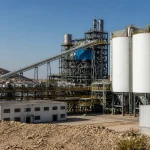
The most disruptive element of this deal is the location: the Tooele Army Depot. By situating a commercial separation facility on a U.S. Army base, REalloys is pioneering a "defense-mining nexus" that solves several problems at once.
- Security of Supply: The facility is physically protected and strategically aligned with the Department of Defense (DoD) needs.
- Permitting and Speed: Hosting facilities on federal defense land can potentially streamline the regulatory hurdles that often stall processing plants for decades.
- Strategic Stockpiling: The plant is designed to feed the National Defense Stockpile directly, creating a closed-loop system for high-purity oxides.
Under this partnership, REalloys will design, finance, and operate the plant, while the U.S. Army provides the site and strategic backing. This "host-and-operate" model is likely to become a blueprint for other critical minerals, from antimony strategy to titanium.
More Read

Technical Superiority: Heavy Rare Earths (HREOs) and HF-Free Processing
While China currently controls nearly 90% of global rare earth separation, its dominance is even more pronounced in heavy rare earth oxides (HREOs) such as dysprosium and terbium. These elements are essential for the permanent magnets used in F-35 fighter jets, Virginia-class submarines, and precision-guided munitions.
The Tooele facility will focus specifically on these heavy rare earths. Furthermore, REalloys is deploying a proprietary hydrofluoric-acid-free (HF-free) processing method. Traditional separation techniques rely heavily on toxic chemicals, which has historically been the primary ESG barrier to domestic processing. By removing HF from the equation, REalloys is positioning itself as a "clean" alternative, a necessity for operating within the strict environmental frameworks of a U.S. military installation.

Feedstock Security: From Saskatchewan to Greenland
A processing plant is only as good as its feedstock. To avoid the "China nexus," REalloys has secured a diversified portfolio of non-adversarial supply.
The company’s strategy is anchored by its Hoidas Lake asset in Saskatchewan, Canada. To supplement this, REalloys has entered a 15-year offtake agreement to purchase 15% of the annual rare earth concentrate from Critical Metals’ Tanbreez project in Greenland. Tanbreez is one of the world's largest deposits of heavy rare earths, providing the scale necessary to feed the Tooele and Ohio facilities for decades.
This international "Allied Supply" model mirrors other major moves in the sector, such as Teck’s Trail expansion for germanium and antimony. It recognizes that while the processing must be domestic, the extraction can be distributed across friendly jurisdictions to ensure a resilient flow of material.
The Blueprint for Junior Miners in the Defense-Mining Nexus
For junior miners and exploration companies, the REalloys-Army deal provides a clear strategic signal. The Department of Defense is no longer a passive buyer; it is an active partner in the industrial base.
Junior companies focusing on critical minerals should take note of three key takeaways from this deal:
- Vertical Integration is Mandatory: The days of selling unrefined concentrate to the highest bidder (often in Asia) are ending for strategic metals. Companies that can demonstrate a path to domestic or allied processing will attract premium valuations and institutional capital.
- Defense Logistics Agency (DLA) Engagement: REalloys’ path to the Army deal began with smaller DLA contracts for modular plants. Junior miners should prioritize government engagement early in the exploration phase.
- The Geography of Risk: Projects in Canada, Greenland, and Australia are being re-rated as "strategic assets" rather than just mining projects. This is evident in the market's response to projects like Viridis Mining’s Colossus.

Market Analysis: 2026 Outlook for REalloys and Domestic REE
As we look toward the second half of 2026, the success of the REalloys $100M deal will be measured by its construction milestones at Tooele. The market is currently pricing in a high probability of success, given the caliber of investors involved. However, execution risks remain. Rare earth separation is notoriously difficult to scale, and "first-of-its-kind" facilities often face commissioning delays.
| Metric | Target / Detail |
|---|---|
| Financing Size | $100 Million Gross Proceeds |
| Lead Investors | Blackstone, Citadel |
| Primary Site | Tooele Army Depot, Utah |
| Key Products | Dysprosium (Dy), Terbium (Tb) |
| Feedstock Sources | Hoidas Lake (Sask), Tanbreez (Greenland) |
| Technology | HF-Free Separation |
The REalloys deal is more than a corporate financing event; it is the establishment of a "fortress supply chain." By integrating processing into the heart of the defense infrastructure, the U.S. is signaling that it is finally ready to decouple its military capability from its geopolitical rivals' industrial output.
For investors, this marks the beginning of a new era where "Army-Grade" becomes the standard for supply chain reliability in the critical minerals sector. Whether this model can be replicated for other minerals like lithium or uranium: both of which face their own price and supply challenges in 2026: remains the most important question for the upcoming fiscal year.
Shareable Snippet for LinkedIn/X:
REalloys (ALOY) secures $100M from Blackstone & Citadel to build a rare earth processing plant at the Tooele Army Depot. This "on-base" model is a game-changer for U.S. mineral security. #RareEarths #MiningNews #NationalSecurity #CriticalMinerals #REalloys