By Salini Krishnan and Sonny Rollins

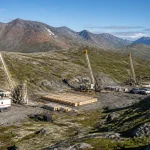
For decades, the global seaborne iron ore market has been a predictable tug-of-war between two giants: the Pilbara region of Western Australia and the Carajás mines of Brazil. This duopoly, dominated by Rio Tinto, BHP, Fortescue, and Vale, has dictated the flow and pricing of the world’s most essential industrial commodity. However, deep in the forested highlands of Guinea, a $27 billion engineering sprint is nearing its climax, threatening to rewrite the rules of the game.
The Simandou project, often described as the "Pilbara Killer," is no longer a distant prospect. At the heart of this transformation is the Trans-Guinean Railway (CTG), a 650-kilometer heavy-haul rail link that is currently nearing 80% completion. Designed to move 120 million tonnes of high-grade iron ore per year from the remote interior to the Atlantic coast, the CTG infrastructure is the key that will finally unlock the world’s largest untapped high-grade iron ore deposit.
The Engineering Feat: The Trans-Guinean Railway (CTG)
Building a railway of this magnitude through some of the most challenging terrain in West Africa is an undertaking of historic proportions. The project, managed by the Compagnie du TransGuinéen (CTG): a joint venture between the Guinean government, Rio Tinto’s Simfer, and the Winning Consortium Simandou (WCS): is more than just a track; it is a strategic corridor.
The 650-kilometer line must traverse thick jungles, cross dozens of bridges, and cut through mountainous ranges. As of mid-2026, construction crews have completed nearly 80% of the rail infrastructure. This progress marks a significant milestone for a project that was stalled for years by legal disputes, political instability, and the sheer technical difficulty of the build.
More Read

The rail link is designed to support 10,000-tonne trains, necessitating heavy-gauge tracks and sophisticated signaling systems. This infrastructure isn't just about mining; it represents a fundamental shift in Guinea's national capacity. The unified infrastructure model, insisted upon by the Guinean government, ensures that the rail and the new deep-water port at Morebaya will be shared assets, serving both the northern and southern blocks of the Simandou deposit.


Breaking the Australia-Brazil Duopoly
For steelmakers, particularly those in China, the reliance on Australian and Brazilian ore has long been a point of strategic vulnerability. Australia currently accounts for approximately 60% of China’s iron ore imports, while Brazil provides another 20%. Any logistical disruption, weather event, or geopolitical tension in these regions sends shockwaves through the global steel industry.
More Read
Simandou changes the calculus. With a projected capacity of 120 million tonnes per year, the project will introduce a third major supply hub into the market. While initial exports in late 2025 and early 2026 are expected to be modest: with some analysts forecasting a ramp-up of 5 to 10 million tonnes in the first year: the long-term impact is structural.
The sheer volume of high-grade ore entering the market will dilute the pricing power currently held by the "Big Four." For China, which is financing a significant portion of the infrastructure through state-backed enterprises, Simandou is a matter of national security. It provides a massive, non-Australian source of ore that can be shipped via Atlantic routes, diversifying their supply chain and providing a hedge against the geopolitical leverage often exercised by Canberra.
The Grade Game: Why 65%+ Fe Matters
The true value of Simandou lies not just in its volume, but in its exceptional quality. The deposit is famous for its high-grade hematite, with iron (Fe) content consistently exceeding 65% and very low levels of impurities such as alumina and phosphorus.
In a world increasingly focused on decarbonization, ore grade has become the ultimate differentiator. Traditional blast furnaces can utilize lower-grade ores (around 58-62% Fe), but the transition to "Green Steel" requires something better.

Direct Reduced Iron (DRI) and Electric Arc Furnaces (EAF) are significantly more sensitive to ore quality. Low-grade ores produce too much slag in an EAF, making the process inefficient and costly. Simandou’s 65%+ Fe ore is ideally suited for the production of DR-grade pellets, which are essential for EAF steelmaking. As the global steel industry under-invests in traditional blast furnaces in favor of lower-carbon alternatives, the demand for Simandou’s high-grade ore is expected to skyrocket.
Steel for AI and the Infrastructure of the Future
The demand for high-quality steel is being further driven by the global explosion in AI infrastructure. Data centers, specialized power grids, and high-tech manufacturing facilities require high-strength, precision-engineered steel that only high-grade iron ore can reliably provide.
As we have seen in our analysis of critical minerals and strategic stockpiles, the hardware required for the AI revolution is placing unprecedented pressure on supply chains. High-grade iron ore is the fundamental building block of this hardware. Without the high-quality steel produced from ore like Simandou’s, the rollout of massive data center clusters and the requisite energy infrastructure would be both more expensive and less efficient.

The 2026 Outlook: Timeline and Risks
As the CTG rail link approaches the finish line, the industry is bracing for "First Ore." While 2026 is the year the market expects to see the first significant shipments, several risks remain.
- Commissioning Bottlenecks: Completing a 650km railway is one thing; making it run at 120Mtpa is another. The commissioning of locomotives, signaling, and the complex "tippler" systems at the port of Morebaya will likely face teething issues.
- Political Stability: Guinea has undergone significant political shifts in recent years. While the current administration has been a driving force behind the "unified infrastructure" model, any future shift in the regulatory or fiscal environment could impact the speed of the ramp-up.
- Logistics Integration: The coordination between Rio Tinto’s southern blocks and the WCS northern blocks on a shared rail line will be a masterclass in logistics: or a potential point of friction.
Despite these risks, the momentum behind Simandou is undeniable. The capital has been deployed, the tracks are being laid, and the port is taking shape. By late 2026, the iron ore market will look fundamentally different than it does today.
Conclusion
The $27 billion infrastructure sprint in Guinea is entering its final lap. The Trans-Guinean Railway is not just a piece of mining infrastructure; it is a geopolitical tool that will break the decades-old Australia-Brazil duopoly. For investors and operators, the arrival of 120Mtpa of 65%+ Fe ore represents a paradigm shift.
As the world pivots toward EAF steelmaking to meet decarbonization goals and build the infrastructure for the AI age, Simandou’s high-grade ore will become the industry’s most coveted prize. The "Pilbara Killer" is no longer a myth; it is a 650km reality of steel and stone.
Stay tuned to Skillings Mining Intelligence for daily updates on Simandou’s progress and its impact on global commodity markets.