By Charles Pitts

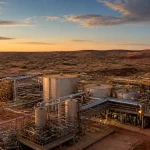
The British Columbia government has formally approved a significant 13-meter expansion of the tailings storage facility (TSF) at the Mount Polley mine, a move that secures the site’s operational future through 2033. This decision, finalized in mid-2026, marks a critical junction for Imperial Metals and the broader Canadian mining sector as it balances the urgent demand for energy-transition metals with the highest standards of environmental oversight.
The consent order, issued jointly by the Ministry of Environment and Protected Areas and the Ministry of Mining and Critical Minerals, allows the TSF dam height to reach 77 meters. This expansion is the centerpiece of the broader Springer Pit development, a project representing a $130 million capital investment aimed at stabilizing copper and gold production in the Cariboo region for the next decade.
Securing the Future of Copper in the Cariboo
Mount Polley’s 13m expansion is more than a technical adjustment to infrastructure; it is a foundational pillar for the regional economy. The mine currently supports approximately 430 direct jobs and an estimated 700 indirect roles in the surrounding communities, including Williams Lake. By extending the mine life to 2033, the provincial government is signaling a commitment to long-term resource security.
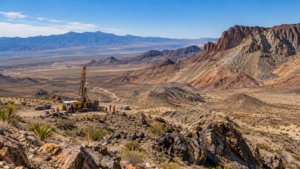
The expansion involves deepening the existing Springer Pit to access deeper mineralization. This vertical progression requires a corresponding increase in waste rock storage and tailings capacity. The 13-meter raise follows an interim 4-meter increase approved earlier in 2025, which was designed to manage spring runoff and maintain safety margins. The new, permanent height increase provides the volumetric capacity necessary to process the ore remaining in the Springer deposit.
More Read



Regulatory Rigor and Post-2014 Oversight
Any discussion of tailings management at Mount Polley is inevitably viewed through the lens of the 2014 dam breach. Since that event, British Columbia has implemented some of the most stringent mining regulations globally, and the 2026 approval reflects these heightened standards.
The Environmental Assessment Office (EAO) and the Major Mines Office conducted an exhaustive technical review before issuing the consent order. Regulators concluded that the expansion is unlikely to result in significant new environmental impacts, provided that strict permit conditions are met. These conditions include:
More Read

- Enhanced Water Management: Continuous monitoring of treated water discharge into Quesnel Lake.
- Independent Oversight: Mandatory third-party reviews of dam stability and construction quality.
- Emergency Preparedness: Updated response protocols coordinated with local First Nations and regional authorities.
While the consent order provides the provincial “green light,” construction remains subject to final Mines Act permit amendments. This multi-layered regulatory approach is designed to ensure that the mistakes of the past are not repeated, transforming Mount Polley into a case study for modern, sustainable tailings management.
Economic Impact and Local Stakes
The $130 million investment earmarked for this expansion will flow directly into the regional supply chain. Beyond the 430 mine-site employees, the extension of operations provides a stable revenue stream for local contractors, equipment providers, and service industries.
“Maintaining these jobs is vital for the Cariboo,” noted a regional economic analyst. “The mining sector remains the highest-paying employer in the area, and a 2033 horizon provides the certainty needed for local families to invest in homes and for small businesses to plan for the long term.”
For Imperial Metals, the expansion is also a strategic move within the 2026 copper market landscape. With global copper demand surging due to the electrification of transport and the expansion of renewable energy grids, domestic sources of the metal have become increasingly valuable from both a financial and geopolitical perspective.

Navigating First Nations Consultation
The path to approval has not been without its complexities. The B.C. government and Imperial Metals have been engaged in ongoing consultations with the Williams Lake First Nation and the Xatśūll (Soda Creek) First Nation. While these discussions have led to greater transparency and the inclusion of traditional knowledge in environmental monitoring, legal challenges have also occurred.
A recent B.C. Supreme Court decision dismissed an injunction attempt by the Xatśūll First Nation aimed at halting the dam height increase. While the court ruled that the project could proceed, the provincial government has emphasized that the consent order includes specific provisions for continued engagement and the protection of Indigenous rights and title. The integration of First Nations oversight into the daily operations of the TSF is a significant shift in how Mount Polley is managed today compared to a decade ago.
The Technology of the Expansion
From a technical standpoint, the 13-meter raise utilizes advanced geotechnical engineering to ensure the integrity of the embankment. The expansion uses a combination of downstream construction methods and rockfill reinforcement, which are widely considered the safest designs for modern tailings dams.
Inside the processing plant, the mine is also looking at efficiency gains. The extension of the mine life allows for the deployment of modernized grinding and flotation circuits that can improve recovery rates for both copper and gold, maximizing the value extracted from every ton of ore processed.

Copper’s Role in the Energy Transition
Mount Polley’s 13m expansion arrives at a time when the “green premium” on copper is higher than ever. As the world pushes toward net-zero targets by 2050, the demand for high-grade copper concentrates: like those produced at Mount Polley: is expected to outpace supply for the foreseeable future.
British Columbia’s Critical Minerals Strategy identifies copper as a priority metal. By approving the Springer Pit expansion, the province is ensuring it remains a reliable supplier of the materials needed for EV batteries, solar panels, and wind turbines. The project aligns with the provincial goal of producing the “world’s cleanest metals,” utilizing B.C.’s low-carbon hydroelectric grid to power mining operations.
Looking Ahead: The 2033 Horizon and Beyond
While the current permit extends the mine life to 2033, Imperial Metals has already indicated that exploration beneath the Springer Pit could yield further mineralization. This suggests that the current expansion might not be the final chapter for Mount Polley.
The 2026 approval of the 13-meter tailings raise represents a milestone for the B.C. mining industry. It proves that even sites with a challenging history can be brought into alignment with modern ESG (Environmental, Social, and Governance) standards if the regulatory framework is robust and the capital investment is sufficient.
As construction on the dam raise begins in late 2026, the industry will be watching closely. Success here would not only secure hundreds of jobs and millions in tax revenue but also serve as a blueprint for how older mining assets can be safely and profitably extended to meet the demands of the 21st-century energy transition.

For more deep-dive analysis on British Columbia’s mineral wealth and regulatory shifts, visit our Markets and Commodities section.