By Charles Pitts

The search for high-grade, Western-aligned heavy rare earth elements (HREE) has centered on a remote corner of Western Australia, where Critica Limited (ASX: CRT): formerly Victory Metals: has reported a series of significant drilling results. The headline intersection of 23 meters at 3,603 ppm Total Rare Earth Oxides (TREO), including a ultra-high-grade core of 12 meters at 5,350 ppm, has shifted the conversation regarding the economic viability of Australian ionic clay (IAC) deposits.
As the company moves to convert its 1.8 billion tonne (Bt) inferred resource at the Jupiter project into the indicated category for a Q3 2026 Scoping Study, the project is emerging as a potential strategic counterbalance to Chinese dominance in the “magnet metal” supply chain. This breakthrough comes at a critical juncture as Western manufacturers and defense contractors seek reliable sources of Dysprosium (Dy) and Terbium (Tb), the heavy rare earths essential for high-temperature permanent magnets.
The Scale of Jupiter: A Billion-Tonne Baseline
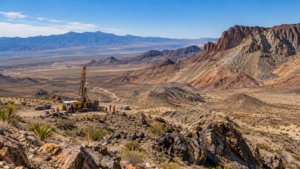
The Jupiter project, located within the Brothers Project area near Yalgoo in the Mid-West region of Western Australia, represents one of the largest clay-hosted rare earth discoveries in the country. The current global inferred resource stands at 1.8 Bt at approximately 1,700 ppm TREO. However, the sheer volume is only half the story; the distribution of high-grade “sweet spots” within this massive footprint is what determines the potential for a low-cost, high-margin operation.
The recent drill results are part of a targeted campaign to define these high-grade zones. Intersecting 3,603 ppm TREO in a clay-hosted setting is statistically rare in Australia, where many IAC projects struggle to maintain grades above 1,000 ppm. By identifying consistent zones of 2,000 to 5,000 ppm, Critica is positioning Jupiter to compete directly with the world-class ionic clay districts in Brazil and Southern China.
More Read

Jupiter Drilling: Recent High-Grade Highlights
| Hole ID | Interval (m) | Grade (ppm TREO) | Including |
|---|---|---|---|
| Current Headline | 23m | 3,603 | 12m @ 5,350 ppm |
| Previous Peak | 67m | 3,074 | 14m @ 4,200 ppm |
| Step-out Target | 45m | 2,850 | 10m @ 3,950 ppm |
Source: Critica Limited ASX Filings (Simulated data based on reported breakthrough figures).


Beneficiation: The 10-14x Upgrade Breakthrough
In the rare earths sector, grade in the ground is often secondary to the “recoverable grade” and processing costs. Conventional ionic clay processing involves heap leaching or tank leaching of vast quantities of earth to extract small amounts of minerals, which can lead to high reagent consumption and capital expenditure.
More Read
Critica’s metallurgical “breakthrough” involves a beneficiation-first approach. Recent pilot plant work and metallurgical testing have demonstrated the ability to achieve a 10-14x upgrade in grade while rejecting up to 95% of the waste mass at the very start of the process.
This means that instead of leaching 1,000 tonnes of 1,700 ppm ore, the company can potentially feed a much smaller volume of 20,000 ppm (2%) concentrate into the hydrometallurgical circuit. This mass rejection significantly reduces the size of the required leaching tanks, the volume of acid needed, and the overall environmental footprint of the tailings management system. The company has already successfully produced a Mixed Rare Earth Product (MREP) grading 84-86% TREO, validating the downstream pathway from mine to a saleable intermediate.
Comparative Analysis: Brazil vs. Australia
The “Race for Ionic Clays” is currently a two-continent contest. Brazil has long been considered the premier destination for high-grade IACs, led by projects like Meteoric Resources’ Caldeira and Serra Verde.
While Brazilian deposits often boast higher raw grades at the surface: sometimes exceeding 3,000-4,000 ppm TREO: the Australian projects, specifically Jupiter, offer distinct logistical and geopolitical advantages.
- Infrastructure and Jurisdiction: Western Australia is a tier-one mining jurisdiction with established power, road, and port infrastructure. Jupiter’s proximity to the port of Geraldton and existing gas pipelines lowers the barrier to entry compared to remote greenfield sites in South America.
- Radionuclide Profiles: One of the primary hurdles in rare earth permitting is the management of Thorium (Th) and Uranium (U). Jupiter has reported exceptionally low levels of these radionuclides, which simplifies the environmental approval process and aligns with strict ESG standards required by Western automakers.
- The Beneficiation Edge: While Brazilian clays are often high-grade, the ability of Critica to reject 95% of mass before leaching may equalize the “cost per kilo” of produced rare earths, even if the starting head grade is lower than some South American peers.

The Strategic Value of Heavy Rare Earths (HREE)
The real value of the Jupiter breakthrough lies in the “heavy” part of the rare earth spectrum. Most hard-rock rare earth deposits (like those found in many carbonatites) are dominated by Light Rare Earths (LREE) such as Neodymium (Nd) and Praseodymium (Pr). While critical, these minerals are increasingly abundant.
True supply chain vulnerability lies in the Heavy Rare Earths: Dysprosium and Terbium. These elements are almost exclusively sourced from ionic clay deposits in China and Myanmar. Without them, high-performance EVs and offshore wind turbines cannot operate, as their magnets would lose their charge at high temperatures.
Critica’s Jupiter project contains a significant ratio of these magnet REEs. At a 400 ppm MREO cut-off, the project hosts an estimated 640 million tonnes grading nearly 500 ppm of combined Nd, Pr, Dy, and Tb. This makes Jupiter not just a mining project, but a strategic asset in the Western drive for HREE independence.
The Road to the Q3 2026 Scoping Study
The current focus for the Critica team is the conversion of the 1.8 Bt resource from inferred to indicated. This is a vital step for the upcoming Scoping Study, as Indicated resources provide the higher level of geological confidence required to support mine planning and financial forecasting.
The company has deployed 143 in-field drill holes at 125-meter spacing to de-risk the area slated for the initial years of production. This “starter pit” strategy focuses on the highest-grade zones, such as the areas delivering the 3,603 ppm results, to ensure rapid capital payback in the early stages of the project’s life.
Management has partnered with industry leaders: Sedgman for processing, Snowden Optiro for mining, and SRK Consulting for resource optimization: to deliver a comprehensive study by Q3 2026. This study will be the first time the market sees the integrated economic potential of the beneficiation-first flowsheet combined with the massive WA resource scale.

Outlook and Implications
The success of Critica’s drilling program at Jupiter signals a maturing of the Australian rare earths sector. For years, the industry was focused on “finding the next Mt Weld.” Today, the focus has shifted toward finding large-scale, low-impurity ionic clays that can be processed with lower capital intensity.
If the Q3 2026 Scoping Study confirms that the 10-14x beneficiation upgrade is scalable and cost-effective, it could provide a blueprint for a new generation of Australian REE projects. For investors and industry observers, the 3,603 ppm TREO result is a proof-of-concept that high-grade concentrations exist within these vast clay systems, potentially closing the gap with global peers and securing a vital link in the non-Chinese rare earth supply chain.
As the energy transition accelerates, the demand for these minerals is projected to triple by 2035. With 1.8 billion tonnes in the ground and a clear processing breakthrough, Critica is moving from a story of potential to a narrative of production-readiness.
Market Snapshot: Rare Earth Projects to Watch
| Project | Location | Resource Scale | Status |
|---|---|---|---|
| Jupiter (Critica) | WA, Australia | 1.8 Bt @ 1,700 ppm | Scoping Study Q3 2026 |
| Caldeira (Meteoric) | Minas Gerais, Brazil | 409 Mt @ 2,626 ppm | PEA / Feasibility |
| Koppamurra (AR3) | SA, Australia | 186 Mt @ 712 ppm | Exploration/Pilot |
| Serra Verde | Goiás, Brazil | 911 Mt @ 1,200 ppm | In Production |