By Charles Pitts

PERTH : Elevate Uranium (ASX: EL8) has moved to consolidate its footprint in Namibia’s premier uranium province, announcing an agreement to acquire an additional 15% interest in its flagship Marenica Uranium Project. The transaction, expected to close by late July 2026, increases the company’s ownership from 75% to 90%, effectively streamlining the ownership structure and significantly boosting the firm’s attributable resource base.
The acquisition comes at a critical juncture for the global nuclear fuel cycle. With the uranium market entering a period of structural supply deficits in 2026, Elevate Uranium’s decision to increase its stake in the Erongo region asset highlights a strategic pivot toward high-leverage ownership in low-cost jurisdictions. Upon completion, the company’s total Namibian resource base will rise to 124 million pounds (Mlb) of $U_3O_8$, while its global inventory across Namibia and Australia will reach approximately 181 Mlb.
Consolidating the Marenica Core: Transaction Details
The deal involves the acquisition of interests currently held by minority partners Millennium Minerals (5%) and Xanthos Mining (10%). Under the terms of the agreement, Elevate will provide a total consideration of A$3.3 million, split between A$1.1 million in cash and A$2.2 million in fully paid ordinary shares.
Furthermore, the transaction includes the release of an existing debt of A$3.425 million previously owed by the project owners. By moving to 90% ownership, Elevate simplifies a historical joint venture structure that dated back to the project’s early exploration phases. The remaining 10% interest continues to be held by the Namibian state-owned mining company, Epangelo Mining, ensuring alignment with national interests: a key factor for long-term permitting and operational stability in the country.
More Read

This consolidation follows a period of aggressive exploration and resource definition. Recent geological modelling at Marenica has identified 52.8 Mlb $U_3O_8$ at an average grade of 180 ppm within 134.5 million tonnes of ore. At a 90% ownership level, Elevate’s attributable share of the Marenica deposit alone rises to 47.5 Mlb.

Scaling the Resource Base: A Global Perspective
The 15% stake increase acts as a force multiplier for Elevate’s reporting metrics. By increasing its attributable share, the company has effectively “bought” pounds in the ground at a time when discovery costs are rising globally.
In Namibia, the company’s portfolio now consists of several high-value targets, with Marenica and Koppies serving as the twin pillars of its development strategy. The Koppies Uranium Project recently saw a significant upgrade, with its JORC-compliant resource reaching 66.1 Mlb $U_3O_8$. When combined with Marenica and other regional tenements, Elevate now controls one of the largest independent uranium resource bases in Africa.
More Read

| Project / Region | Ownership Stake | Attributable Resource ($U_3O_8$) | Status |
|---|---|---|---|
| Marenica (Namibia) | 90% | 47.5 Mlb | Advanced Exploration / Pilot Phase |
| Koppies (Namibia) | 100% | 66.1 Mlb | Resource Expansion |
| Other Namibia Assets | Various | ~10.4 Mlb | Exploration |
| Total Namibia Base | : | 124.0 Mlb | : |
| Australian Portfolio | 100% | ~57.0 Mlb | Strategic Reserve |
| Total Global Base | : | 181.0 Mlb | : |
The scale of this resource base positions Elevate as a mid-tier player with a pipeline that can support multiple decades of production, provided technical hurdles are cleared.

U-pgade™: The Technological Unlock
While the scale of the Marenica project is impressive, the grade: averaging 180 ppm: is considered low by traditional processing standards. This is where Elevate’s proprietary U-pgade™ technology becomes the central value driver.
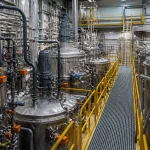
Conventional uranium processing for surficial deposits often involves leaching large volumes of ore, which requires high reagent consumption and massive capital expenditure for processing plants. The U-pgade™ process, a beneficiation technology developed in-house, aims to flip this economic model.
According to technical studies conducted at the Marenica ore, the U-pgade™ process can:
- Concentrate the Grade: Increase the effective grade from ~93 ppm to over 5,000 ppm $U_3O_8$ before the leaching stage.
- Reject Mass: Remove approximately 98% of the ore mass prior to leaching, leaving only 2% as high-grade leach feed.
- Reduce Acid Consumption: By rejecting acid-consuming minerals (gangue) early in the process, reagent costs are projected to drop significantly.
The company is currently operating a demonstration plant in Namibia to validate these results at an industrial scale. Management indicates that if successful, the U-pgade™ technology could reduce both operating (OPEX) and capital (CAPEX) costs by approximately 50% compared to conventional methods. This technological “moat” allows Elevate to target deposits that were previously considered sub-economic, effectively turning a “low-grade” project into a “high-margin” opportunity.

Namibia as a Global Uranium Hub in 2026
The decision to focus 90% of management’s attention on Namibia is not accidental. As of 2026, Namibia remains one of the world’s most stable and established uranium-producing nations. Unlike some other jurisdictions facing regulatory gridlock or social opposition, Namibia has a well-defined Mining Act and a long history of successful partnership with global miners like Rössing and Langer Heinrich.
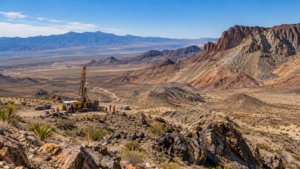
The Erongo province, where Marenica is located, benefits from existing infrastructure, including a deep-water port at Walvis Bay, established road networks, and a workforce skilled in radiation-safety and mineral processing. For investors, Namibia offers a “low-sovereign-risk” entry point into the African mining sector, which is increasingly vital as Western utilities seek to diversify supply away from Russian-linked sources.
Elevate’s strategic divestment of non-core Australian assets over the past 24 months has further sharpened this focus. By becoming a “pure-play” Namibian developer, the company is positioning itself for potential M&A activity or strategic partnerships with larger producers looking to secure long-term feedstock.
Global Uranium Market 2026: Outlook and Drivers
The timing of the Marenica consolidation coincides with a “perfect storm” in the global nuclear industry. By mid-2026, the structural deficit in uranium supply has become a primary concern for utility procurement managers.
Several key factors are driving the current market:
- The Energy Nexus: The rapid expansion of AI data centers has created a secondary surge in electricity demand, leading to the extension of existing nuclear plant licenses and the acceleration of Small Modular Reactor (SMR) deployments.
- Geopolitical Bifurcation: The continued “de-risking” from Russian enrichment and conversion services has put a premium on Western-friendly primary production.
- Supply Lags: Despite higher prices, new mine starts in Canada and Central Asia have faced inflationary pressures and technical delays, keeping the market tight.
Industry analysts suggest that spot prices in 2026 are likely to maintain a base case of US$65–$85/lb $U_3O_8$, with bull-case scenarios pushing toward $100/lb if further supply disruptions occur. For a developer like Elevate, these price levels provide a robust “buffer” for financing project construction, especially when combined with the cost savings promised by the U-pgade™ technology.

Risks and Execution Timeline
Despite the positive momentum, Elevate Uranium faces several execution risks typical of the junior-to-mid-tier transition.
Technological Scaling: While the U-pgade™ demonstration plant has shown promise, the transition from a pilot environment to a full-scale commercial operation is often fraught with engineering challenges. Any delay in validating the 50% cost-reduction claim could impact the project’s Net Present Value (NPV) and attractiveness to lenders.
Permitting and Water Scarcity: Namibia is an arid country, and large-scale mining requires significant water resources. While the U-pgade™ process is designed to be more water-efficient than traditional leaching, securing long-term water allocations and environmental permits remains a critical milestone.
Commodity Volatility: While the 2026 outlook is bullish, uranium is historically a volatile commodity. A sudden shift in nuclear policy in major markets like Japan or Western Europe could dampen demand and soften prices, affecting the company’s ability to raise further development capital.
The immediate timeline for Elevate is clear:
- End-July 2026: Finalize the 15% acquisition and integrate the ownership structure.
- Q3 2026: Release updated data from the U-pgade™ demonstration plant.
- Late 2026: Progress toward a Definitive Feasibility Study (DFS) for a combined or standalone operation in the Erongo province.
Conclusion
Elevate Uranium’s move to 90% ownership of the Marenica project is a calculated bet on both technology and geography. By consolidating its hold on a 124 Mlb Namibian resource base, the company has positioned itself as a major beneficiary of the 2026 uranium supply crunch. If the U-pgade™ technology delivers on its promise of radical cost reduction, Elevate may well transition from an explorer to one of the most efficient uranium producers in the world.
Related Analysis on Skillings Mining Intelligence: