By Charles Pitts

QUETTA, Pakistan : Operations at the Saindak copper-gold mine, Pakistan’s largest metal extraction project, are facing a critical threat of suspension within the next 30 days. The Metallurgical Corporation of China (MCC), which operates the site in the volatile Balochistan province, has warned the federal government that a surge in militant activity is strangling supply routes and making continued production “unsustainable.”
The warning, delivered in a high-level communication to Pakistan’s Ministry of Energy, underscores a deteriorating security climate in a region central to the China-Pakistan Economic Corridor (CPEC). While the Pakistani government has publicly downplayed the risk of a total shutdown, pledging intensified security deployments, the logistical reality on the ground reflects a deepening crisis for the global mining news landscape and the broader copper supply chain.
Logistics at the Breaking Point
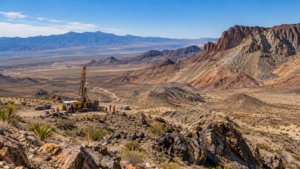
The Saindak project, located in the Chagai district near the Iranian border, relies on a constant flow of furnace oil, chemicals, and spare parts trucked hundreds of kilometers through sparsely populated desert terrain. These routes have become the primary targets for the Baloch Liberation Army (BLA) and other insurgent groups, which have stepped up their campaign against foreign-funded infrastructure.
According to a June 29 letter from the managing director of Saindak Metals Limited (SML) : the state-owned partner in the project : transporters are increasingly refusing to operate on key highways due to the risk of ambush and roadside bombings. The letter stated that without immediate and secure access to production materials, the mine would likely exhaust its reserves of essential inputs within a month.
More Read

“The situation is not a matter of geological depletion or market pricing, but of physical access,” said a regional security analyst. “If you cannot get fuel to the generators or move the concentrate to the port, the machinery stops. It is a blockade in all but name.”


Economic Stakes and the 2026 Copper Deficit
The potential idling of Saindak comes at a precarious time for global markets. Analysts have long pointed to a significant copper deficit impact 2026, as the transition to green energy and the expansion of AI data centers drive demand far beyond current production capacity. Saindak produces approximately $750 million worth of copper and gold exports annually, the vast majority of which is destined for Chinese smelters.
More Read

A disruption of this magnitude would not only deprive Pakistan of vital foreign exchange but also tighten an already stressed global market. The copper price forecast 2026 suggests that structural supply deficits are no longer a distant theoretical risk but a present reality, exacerbated by geopolitical instability in key mining jurisdictions like Balochistan and parts of South America.
| Metric | Saindak Operational Snapshot (Est. 2026) |
|---|---|
| Annual Export Value | ~$750 Million USD |
| Primary Export Destination | China |
| Current Operator | Metallurgical Corporation of China (MCC) |
| Lease Expiry | 2037 |
| Primary Commodities | Copper, Gold, Silver |
| Estimated Workforce | 2,000+ (Direct and Indirect) |
Government and Operator Clarifications
Following the leak of the internal warning, Raziq Sanjrani, the Managing Director of SML, issued a public statement clarifying that the mine remains operational and that reports of an “imminent closure” were factually incorrect. He noted that while the logistical challenges are real, the mine has operated for 25 years without a major stoppage and that contingency plans are being enacted.
In Islamabad, State Minister for Interior Talal Chaudhry confirmed that the government has ordered a “beefed-up deployment” of paramilitary forces and regular army units to protect the convoys. “We are aware of the security concerns raised by our Chinese partners,” Chaudhry said in a press briefing. “The safety of the personnel and the integrity of the supply chain for our national assets is a top priority. We will not allow the insurgency to dictate our economic policy.”
Despite these assurances, the pressure on MCC is visible. The company recently secured a lease extension to 2037, a move that was met with local protests in Balochistan over profit-sharing and employment rights. The current unrest is seen by many as a direct attempt by insurgents to capitalize on this local friction.

Shadow Over Reko Diq
The instability at Saindak casts a long shadow over the neighboring Reko Diq project, one of the world’s largest undeveloped copper-gold deposits. Operated by Barrick Gold, Reko Diq is significantly larger in scale than Saindak and is viewed as a cornerstone of Pakistan’s future economic stability.
If a seasoned operator like MCC, which has a two-decade history in the region and deep ties to the Pakistani military infrastructure, is struggling to maintain logistics, it raises questions for Barrick’s timeline. Industry insiders suggest that the security overhead for Reko Diq may need to be significantly revised upward, potentially impacting the project’s internal rate of return (IRR).
The white house’s recent equity plays for critical minerals emphasize the growing importance of securing supply chains in high-risk environments. For Pakistan, the challenge is proving that it can provide a stable “safe harbor” for these massive capital investments amidst a resurgent regional militancy.
The Geopolitical Context: CPEC and the BRI
Saindak is a flagship of the China-Pakistan relationship. It was one of the first major Chinese mining investments in the country and has served as a proof-of-concept for the Belt and Road Initiative (BRI). A failure to protect the mine would be a significant symbolic blow to the China-Pakistan Economic Corridor (CPEC).
Local resentment toward Chinese projects in Balochistan has been a persistent issue. Separatist groups argue that the province’s mineral wealth is being extracted for the benefit of the central government in Islamabad and foreign interests in Beijing, with little trickling down to the local population. This narrative has fueled the recruitment of the very groups now targeting the Saindak supply lines.

2026 Outlook: A High-Stakes Balancing Act
As mid-2026 approaches, the situation at Saindak remains a high-stakes balancing act between industrial output and regional security. The government’s response: essentially militarizing the supply chain: may solve the immediate shortage of fuel and materials, but it does little to address the underlying political grievances driving the unrest.
For investors and operators, the mining news coming out of Pakistan serves as a stark reminder of the “above-ground risks” that define modern mineral extraction. While the geology at Saindak and Reko Diq is world-class, the geography remains one of the most challenging in the world.
The next 30 days will be a litmus test for the Pakistani security apparatus. If the convoys resume under heavy guard and production stabilizes, the “shutdown warning” will likely be remembered as a successful, if aggressive, lobbying effort by the operator to secure more state support. However, if the disruptions continue, the global copper market may have to prepare for a $750 million hole in its 2026 balance sheet.