By Charles Pitts

The global uranium market is entering 2026 defined by a transition from speculative sentiment to a hard-coded structural deficit. For over a decade, the nuclear fuel cycle operated on the fringes of the energy transition, burdened by post-Fukushima oversupply and stagnant demand. That era has concluded. As we look toward the 2026 fiscal year, the convergence of Small Modular Reactor (SMR) commercialization, chronic primary production shortfalls, and aggressive geopolitical decoupling from Russian enrichment has created a fundamental floor for $U_3O_8$ pricing.
Current market dynamics show spot prices consolidating within the $85 to $92 per pound range, while the long-term contract market: the true barometer of utility anxiety: has moved toward $94 per pound. Industry analysts and financial institutions are increasingly aligning on a “higher-for-longer” narrative, driven by a demand profile that is no longer just about maintaining existing fleets but fueling a new generation of high-density energy users.
The SMR Catalyst: A 17% Demand Surge
The most significant shift in the uranium demand profile comes from the acceleration of Small Modular Reactors. While large-scale conventional reactors remain the backbone of nuclear power, SMRs represent a more agile, scalable solution for heavy industry and the burgeoning AI data center sector.
Goldman Sachs has recently revised its long-term outlook, forecasting a 17% surge in uranium demand specifically attributed to the deployment of SMRs. Unlike traditional reactors, which have decade-long lead times, SMRs are designed for serial production and faster integration into existing grids. This “SMR uranium demand 2026” narrative is moving from theoretical research to physical market impact as utilities begin the multi-year process of securing initial core loads.
More Read

The demand is not just coming from national grids. Large technology firms, facing massive power requirements for generative AI and cloud computing, are increasingly looking at “behind-the-meter” nuclear solutions. This shift effectively decouples a portion of nuclear demand from traditional utility procurement cycles, introducing new, well-capitalized players into the uranium term market.


Supply Constraints: The Kazatomprom and Geopolitical Bottleneck
On the supply side, the 2026 outlook is dominated by persistent production challenges at the world’s largest producer, Kazatomprom. The Kazakh state-owned miner has repeatedly signaled that it will prioritize “value over volume,” a strategic pivot that coincides with genuine operational hurdles.
More Read

A chronic global shortage of sulfuric acid: the essential reagent for in-situ recovery (ISR) mining: has capped Kazakh production levels. For 2026, analysts estimate Kazatomprom’s output will remain constrained, potentially missing licensed capacity targets by several million pounds. When combined with logistics complications along the trans-Caspian shipping route, the reliability of Central Asian supply is no longer a given for Western utilities.
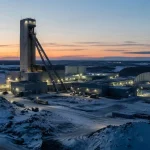
Furthermore, the legislative landscape has shifted. The phased ban on Russian uranium imports, set to culminate in 2028, is already dictating utility behavior in 2026. Buyers are aggressively pivoting toward “Western-origin” material, creating a bifurcated market. This shift places immense pressure on Tier-1 assets in stable jurisdictions, such as Cameco’s operations in the Athabasca Basin.
As noted in our recent coverage of the Cameco Cigar Lake production update, even world-class assets are not immune to the technical complexities of deep-underground mining. The margin for operational error in the global supply chain has effectively vanished.

Uranium Market Outlook 2026: Pricing and Data Analysis
The following table outlines the projected market balance and price consensus for 2026, synthesizing data from Goldman Sachs, Citi, and Skillings Mining Intelligence.
Table 1: Uranium Market Fundamentals (2026 Forecast)
| Metric | Base Case | Bull Case | Source/Note |
|---|---|---|---|
| Spot Price ($/lb) | $91 – $115 | $135 – $150+ | Goldman Sachs / BofA |
| Term Price ($/lb) | $94 – $105 | $120 – $140 | Utility Contracting Data |
| Primary Mine Supply | 162M lbs | 158M lbs | Includes Kazatomprom cuts |
| Global Reactor Demand | 185M lbs | 192M lbs | Reflects SMR/AI acceleration |
| Structural Deficit | ~23M lbs | ~34M lbs | Secondary supply tightening |
The structural deficit is the most critical data point for decision-makers. Primary mine supply currently meets less than 75% of global requirements. The gap has historically been filled by secondary supplies: government stockpiles, underfeeding, and recycled material: but these “mobile inventories” are reaching exhaustion.
In 2026, the market will increasingly rely on greenfield and brownfield restarts. However, the “uranium price forecast 2026” depends heavily on whether these projects can hit their nameplate capacity on time. History suggests that mining ramp-ups in the nuclear sector are frequently delayed by permitting, ESG compliance, and technical staffing shortages.
Structural Bull Market Drivers: Base, Bull, and Bear Cases
To understand the 2026 landscape, operators and investors must weigh three distinct scenarios:
1. The Base Case (Spot $90–$115/lb)
This scenario assumes that Kazatomprom manages its acid shortage without further production cuts and that Western utilities continue a disciplined, multi-year contracting strategy. SMR demand begins to influence the term market, but physical core loads remain 2–3 years away. Pricing remains high enough to incentivize new production but stays below the “demand destruction” levels seen in other commodities.
2. The Bull Case (Spot $115–$150/lb)
The bull case is triggered by a “compounded disruption.” This would involve a significant operational failure at a major mine (e.g., Cameco or Kazatomprom) occurring simultaneously with a sudden acceleration in SMR procurement. If Big Tech firms move into the spot market to “pre-fund” fuel for their proprietary SMR projects, the resulting price spike could rival the 2007 peak in inflation-adjusted terms.
3. The Bear Case (Spot Below $85/lb)
A bear case requires a major macro-economic slowdown that reduces overall electricity demand or a significant reversal in nuclear policy in key markets like China or the EU. While unlikely given the current push for decarbonization, a rapid over-delivery of supply from restarts in Australia and Africa could temporarily soften prices. However, given the current cost of capital and labor, sustained pricing below $80/lb is viewed as unsustainable for the next generation of mines.

Conclusion: Repricing a Strategic Asset
The 2026 uranium market is no longer just about “mining pounds.” It is about securing energy sovereignty in a decarbonizing world. The emergence of SMR uranium demand provides a long-term growth floor that the industry has lacked for decades.
As primary supply remains handcuffed by technical and geopolitical constraints, the pricing of $U_3O_8$ is being fundamentally reset. For utilities, the focus is shifting from “how much does it cost?” to “do we have the fuel?” In 2026, that shift in mindset will likely be the primary driver of the structural bull market.