By Charles Pitts

Liontown Resources has signed a binding farm-in agreement with NEXT Lithium Corp. that gives it a staged pathway to acquire up to 100% of the Centenario lithium brine exploration project in Salta province, Argentina.
The agreement expands Liontown’s exposure beyond its hard-rock lithium operations in Western Australia and adds an early-stage brine asset to its growth pipeline. Reported details from Kalkine show that the transaction combines upfront cash and shares with project funding, exploration milestones and a final resource-linked payment.
For Liontown, the deal offers exposure to one of the world’s most important lithium regions without requiring the company to commit all development capital at once. The main question is whether exploration can establish a resource capable of supporting a commercially viable brine operation as the market weighs the outlook captured in the lithium price forecast 2026.
Staged agreement creates a pathway to full ownership
Liontown will pay NEXT Lithium US$5 million in cash and issue US$10 million worth of Liontown shares at initial completion. The transaction remains subject to customary conditions precedent, including the release of security interests over project shares and tenements and the repayment of certain intercompany loans.
More Read

According to Kalkine, those conditions must be satisfied or waived within six months of signing, unless both parties agree to extend the period. If they are not met, either party may terminate the agreement without further liability.

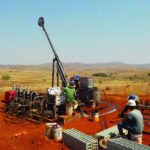
Once the transaction completes, Liontown can earn a 49% interest by funding US$15 million in project expenditure within 24 months. The initial work program is expected to run for 12 to 24 months and will include drilling, geophysical work and resource assessment.
The exploration program will target anomalies identified through a completed transient electromagnetic, or TEM, survey. TEM surveys can help identify conductive zones that may be associated with brine-bearing aquifers, although drilling and subsequent sampling are required to determine lithium concentrations, aquifer continuity and recoverability.
More Read
Liontown can then elect to increase its interest from 49% to 51% within 90 days of achieving the first-stage interest. The additional consideration is US$15 million, payable in cash, Liontown shares or a combination of both, at NEXT Lithium’s election.
A further US$25 million in project expenditure within 24 months of earning the Phase 1 interest would allow Liontown to increase its stake to 75%.
If Liontown progresses to 75%, it must proceed to acquire the remaining 25%, with the final payment linked to the size of the project’s defined mineral resource.
Liontown’s Centenario farm-in structure
| Stage | Liontown requirement | Potential project interest |
|---|---|---|
| Initial completion | US$5 million cash and US$10 million in Liontown shares | Farm-in rights |
| Phase 1 | US$15 million in project expenditure within 24 months | 49% |
| Phase 2 | Additional US$15 million consideration within 90 days | 51% |
| Phase 3 | Further US$25 million in project expenditure within 24 months | 75% |
| Final stage | Resource-linked payment for remaining interest | Up to 100% |
Across the first and third phases, Liontown could fund up to US$40 million in project expenditure over approximately four years. Separate milestone payments linked to the resource outcome could reach up to US$140 million, or about A$195 million, if every stage is completed.
Final payment depends on the resource outcome
The final 25% acquisition is not a fixed-price purchase. Kalkine reported that the consideration could reach US$125 million and would be calculated using the mineral resource estimate published after completion of Phase 3.
The formula applies to lithium carbonate equivalent resources averaging more than 350 milligrams per litre of lithium. Liontown would pay US$25 per tonne for the first three million tonnes of qualifying resource and US$10 per tonne for qualifying tonnes above that level, subject to the US$125 million cap.
That structure shifts some of the valuation risk to the exploration outcome. A smaller or lower-grade resource would limit the final consideration, while a large resource could trigger a substantial payment at the point when the asset has become more strategically valuable.
The arrangement also allows Liontown to gather technical data before committing to later stages. The first drilling campaign should provide information on brine chemistry, lithium grades, aquifer thickness, permeability and the potential for sustained production. Those factors will be more important to project economics than headline resource tonnes alone.

Argentina adds regional scale and execution risk
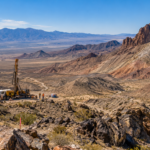
Centenario is located in Salta province, part of Argentina’s section of the Lithium Triangle, which also includes major brine districts in Chile and Bolivia. The region has attracted producers and developers because of its established lithium geology, high-altitude salar basins and growing processing infrastructure.
The project is geographically close to the Centenario-Ratones operation, where Eramet has developed a direct lithium extraction operation. That nearby activity provides evidence of regional prospectivity and growing technical capability, but it does not remove the risks attached to Liontown’s separate exploration concessions.
Brine projects can face long development timelines and complex technical challenges. Lithium concentrations may vary across an aquifer, while high levels of magnesium, calcium and other impurities can increase processing costs. Pumping rates, reinjection performance and water-management requirements must also be demonstrated over extended periods.
Argentina’s fiscal and regulatory environment is another consideration. The country has sought to attract mining investment while maintaining provincial control over natural resources. Changes in permitting requirements, taxation, foreign exchange rules or export policy could affect project timing and returns.
Infrastructure is also relevant. High-altitude operations require reliable roads, power, water-management systems, chemical supplies and logistics links. A project may be geologically attractive but still require significant investment to reach a bankable development case.
What the deal means for Liontown’s growth pipeline
Liontown’s core operating priority remains the Kathleen Valley lithium operation in Western Australia. The Centenario agreement gives the company an additional growth option without replacing that focus.
The strategic distinction is important. Kathleen Valley provides exposure to hard-rock spodumene production, while Centenario could give Liontown experience in lithium brine extraction and processing. The two project types have different operating profiles, cost structures, permitting issues and technical requirements.
Brine exposure may also broaden Liontown’s options if battery supply chains continue to value regional diversification. However, diversification does not guarantee lower risk. It adds a new jurisdiction, commodity-processing route and technical model to the company’s portfolio.
The staged structure is designed to limit that exposure during the exploration period. Liontown can initially focus on the US$15 million program and use the results to assess whether the project merits further funding. Later decisions will depend on the quality of the resource, brine chemistry, recovery assumptions, capital requirements and lithium-market conditions.
NEXT Lithium’s Argentine experience is also part of the transaction’s rationale. Its founder previously co-founded Millennial Lithium, which was acquired by Lithium Americas in 2022. That background may assist with local project development and stakeholder engagement, although execution will ultimately depend on the technical results from Centenario.

Lithium prices will shape the next decision points
The agreement arrives as lithium prices have recovered from the sector’s recent downturn but remain exposed to changes in supply, battery chemistry and electric-vehicle demand.
A stronger price environment could improve the economics of brine development and support investment in processing infrastructure. It could also encourage more producers to restart idled operations or accelerate previously deferred projects, placing pressure on future prices.
For Centenario, the relevant question is not whether lithium prices can rise temporarily. It is whether the project can remain competitive across a range of market conditions. That assessment will require a resource estimate, metallurgical test work, preliminary economic studies and a clearer understanding of capital and operating costs.
The next milestones for decision-makers to monitor include:
- Completion of the transaction’s conditions precedent.
- Results from drilling of the TEM-defined anomalies.
- Reported lithium grades and brine chemistry.
- Evidence of aquifer continuity and sustainable flow rates.
- Liontown’s decision on whether to advance beyond the 49% stage.
- The eventual resource estimate used to calculate the final 25% payment.
Until those steps are completed, Centenario remains an exploration opportunity rather than a development asset.
Early-stage opportunity with substantial risks
Liontown’s agreement with NEXT Lithium provides a conditional route into Argentina’s brine sector and potentially to full project ownership. The company’s initial commitment is relatively focused compared with the capital required to build a commercial lithium operation, while the staged structure gives it decision points before later expenditure.
The risks are equally clear. Centenario has no established economic reserve, and there is no guarantee that drilling will define a resource capable of supporting production. The project also carries technical, permitting, infrastructure, country and lithium-price risks.
For Liontown, the farm-in expands the growth pipeline at a time when lithium developers are competing for high-quality resources and processing expertise. Its success will depend on whether the initial exploration program converts a prospective salar position into a defined, recoverable and economically competitive brine resource.
Source: Transaction terms and company commentary reported by Kalkine. Additional regional context: Liontown Resources and Eramet’s Centenario project announcement.