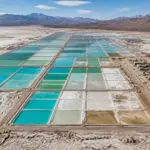
Aerial view of an integrated copper mining district in northern Chile.

By Charles Pitts
Mining M&A deals 2026 are entering a more demanding phase as the proposed Anglo American-Teck Resources merger approaches its expected regulatory decision window, with Glencore’s position at the Collahuasi copper mine emerging as a central issue.
Anglo American and Teck announced their merger of equals in September 2025. The companies have said the transaction is expected to close within 12 to 18 months of signing, subject to regulatory and other customary conditions. That points to a completion window between September 2026 and March 2027.
The merger has already cleared several major milestones. Shareholders of both companies approved the transaction in December 2025, while the Canadian government approved it under the Investment Canada Act later that month. However, final regulatory approvals remain outstanding.
More Read

Mining.com reported that Anglo American continues to expect the remaining approvals during the September 2026-to-March 2027 period. The companies reaffirmed that timeline in a July 2026 announcement naming the future Anglo Teck executive leadership team.

The regulatory process matters because the merger’s strategic rationale extends beyond combining two corporate portfolios. Anglo American and Teck are also targeting a significant operational integration between two adjacent Chilean copper operations: Anglo’s 44%-owned Collahuasi and Teck’s 60%-owned Quebrada Blanca.
Merger timeline remains subject to final approvals
The transaction was announced on Sept. 9, 2025, as a merger of equals designed to create a global critical-minerals producer headquartered in Canada.
More Read

Under the proposed structure, Anglo American shareholders would own approximately 62.4% of Anglo Teck immediately after completion, while Teck shareholders would own approximately 37.6%. Anglo American said the combined group would have more than 70% exposure to copper on a copper-equivalent basis.
The principal milestones are:
| Milestone | Status or expected timing |
|---|---|
| Merger announced | September 2025 |
| Anglo American shareholder approval | December 2025 |
| Teck shareholder approval | December 2025 |
| Investment Canada Act approval | December 2025 |
| Future Anglo Teck leadership announced | July 2026 |
| Expected completion window | September 2026 to March 2027 |
| Targeted Collahuasi-Quebrada Blanca EBITDA uplift | Average annual basis, 2030-2049 |
Anglo American’s July announcement said the future leadership team would take effect only after completion and that the transaction remained conditional on final regulatory approval.
The remaining process introduces uncertainty for investors and operating partners. Regulators in multiple jurisdictions must assess the combination, while the companies continue to prepare the organizational and operational framework for the proposed group.
The merger also follows a period of portfolio restructuring at Anglo American, including plans to simplify its exposure to diamonds, nickel and steelmaking coal. Teck has likewise focused on its copper and zinc businesses. The proposed combination is therefore intended to consolidate a more focused critical-minerals portfolio rather than simply expand corporate scale.
The $1.4 billion copper opportunity
Anglo American and Teck have identified two separate categories of value creation.
The first is approximately $800 million in recurring annual, pre-tax corporate synergies. The companies expect about 80% of that run-rate amount to be realized by the end of the second year after completion, with the full figure expected by the end of the fourth year.
The second opportunity is the much larger Collahuasi-Quebrada Blanca integration plan.
According to Anglo American’s merger materials, the combined group expects to work with partners and stakeholders at both mines to generate approximately $1.4 billion in annual underlying EBITDA revenue synergies, calculated on a 100% basis and averaged over the period from 2030 to 2049.
The companies say the potential uplift would come primarily from operational integration and optimization. The stated objective is to develop one of the world’s leading copper mining districts by coordinating adjacent assets, infrastructure and processing capabilities.
The announcement also estimated that the integration could support approximately 175,000 tonnes of additional potential annual copper production, again on a 100% basis.

Conveyor and processing infrastructure at a copper operation.
That basis of calculation is important. The $1.4 billion figure does not represent the amount that would flow directly to Anglo Teck shareholders. It reflects the combined potential of the assets before applying ownership interests, joint-venture arrangements, taxes, capital requirements and any negotiated sharing of the value.
Quebrada Blanca is 60%-owned by Teck, while Collahuasi is jointly owned by Anglo American and Glencore, each with a 44% interest. A Japanese consortium holds the remaining 12% of Collahuasi.
As a result, Anglo Teck would control a large portion of the assets involved in the proposed integration, but it would not control the entire Collahuasi operation.
Why Glencore is central to the plan
Glencore’s 44% stake gives it a direct financial interest in any plan that changes how Collahuasi is operated, expanded or integrated with Quebrada Blanca.
The company is not a party to the Anglo-Teck merger. Its participation in a broader Collahuasi-Quebrada Blanca arrangement would therefore require separate negotiations covering governance, capital spending, mine planning, infrastructure use and the allocation of future benefits.
Mining.com described Glencore as standing between Anglo Teck and the proposed copper prize because the full value of the integration cannot be captured without cooperation from the other major Collahuasi shareholder.
Anglo American’s own language is more measured. Its merger materials say Anglo Teck will work with “key stakeholders and partners” at Collahuasi and Quebrada Blanca. That wording reflects the commercial reality of a multi-party mining joint venture: the merger can transfer Anglo American’s ownership interest into the new group, but it does not automatically give Anglo Teck unilateral authority to redesign the Collahuasi-Quebrada Blanca district.
The negotiations could be particularly sensitive because the two operations have different operating histories, ownership structures and infrastructure needs. Discussions may need to establish how higher-grade ore, processing capacity and logistics are coordinated, while also determining which party funds new infrastructure and how the resulting EBITDA uplift is divided.
Glencore could also seek terms that recognize the quality and performance of its Collahuasi investment. That may include a premium valuation for its stake, a larger role in operating or marketing decisions, or protections around future capital commitments.

Adjacent copper operations and infrastructure in a dry Chilean landscape.
Asset valuation is the next major negotiation
The commercial question is not simply whether the two mines can be linked. It is how the value of the integrated system should be allocated.
Anglo American and Teck have presented the $1.4 billion figure as an opportunity created by combining adjacent assets. Glencore, by contrast, would be contributing a large interest in Collahuasi without becoming part of the Anglo Teck corporate structure.
That creates several valuation questions:
- How should Collahuasi and Quebrada Blanca be valued before integration?
- How much of the projected EBITDA uplift is attributable to each operation?
- Who funds shared infrastructure and expansion projects?
- Which company controls mine planning, processing and logistics?
- How are operating risks, permitting obligations and environmental liabilities allocated?
- What governance rights would Glencore receive in any new operating arrangement?
The distinction between current asset value and future synergy value is likely to be especially important. A conventional valuation may assess each mine on a standalone basis. An integrated valuation would also include the potential benefits of shared infrastructure, improved ore blending and coordinated production.
But those benefits are not guaranteed. They depend on technical studies, permitting, capital availability, stable operations and agreement among the joint-venture partners.
Mining.com and related market commentary have highlighted the possibility that Glencore could seek a favorable valuation for its Collahuasi interest before agreeing to participate. If the parties cannot agree, Anglo Teck may still pursue partial operational improvements, but the full $1.4 billion target would become more difficult to achieve.
Regulatory uncertainty adds a second layer of risk
The Collahuasi negotiations are separate from the regulatory approvals required to complete the Anglo-Teck merger, but the two issues are connected in the transaction’s investment case.
The merger’s corporate synergies can be assessed within the two companies. The copper-district synergies require cooperation from external partners and may involve new commercial, infrastructure and regulatory arrangements in Chile.
That means the value attributed to the $1.4 billion opportunity should be treated as a forward-looking estimate rather than an acquired benefit. Anglo American has described the figure as an underlying EBITDA revenue synergy on a 100% basis, and its filings warn that actual results may differ from forward-looking expectations.
For mining executives and investors tracking mining M&A deals 2026, the Anglo-Teck transaction illustrates how headline merger value can depend on assets outside the immediate deal perimeter.
The final outcome may turn on three milestones: completion of the remaining regulatory approvals, agreement on the valuation and governance of the Chilean assets, and evidence that the proposed operating integration can deliver measurable production and cash-flow improvements.
Until those issues are resolved, Glencore remains more than a passive partner in the story. Its 44% Collahuasi stake gives it a meaningful seat at the negotiating table; and potentially a decisive influence over how much of Anglo Teck’s projected copper upside becomes operational reality.

Control-room operators monitor mine and processing activity.
Sources
- Mining.com: Glencore stands between Anglo-Teck and $1.4B copper prize
- Anglo American: Anglo American and Teck Resources to combine through a merger of equals
- Anglo American: Merger of Anglo American and Teck Resources
- Anglo American: Future Anglo Teck Executive Leadership Team
- Skillings: Copper price forecast and market drivers