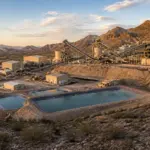
Rare earth separation and refining remain among the most closely watched stages of the global minerals supply chain.

By Sonny Rollins
The critical minerals supply chain in 2026 is being reshaped less by the discovery of new deposits than by governments tightening control over processing, technology, trade routes and project finance.
China’s expanding export-control system, a new lithium operation reported near M23-held Rubaya in the Democratic Republic of Congo, a US$10 million U.S. Department of Energy research program and Brazil’s proposed US$388 million guarantee fund all point to the same conclusion: access to minerals is becoming inseparable from jurisdiction, traceability and industrial policy.
For policymakers and investors, the key question is no longer simply which countries have the ore. It is which governments can control the steps between extraction and finished products : and which supply chains can withstand a licensing delay, quota, sanctions designation or conflict-related disruption.

The watchlist: where supply-chain pressure is building
The table below ranks the principal areas to monitor through 2026. It is a risk watchlist, not a forecast of imminent shortages. The most exposed commodities combine high geographic concentration with limited processing alternatives or growing strategic importance.

| Commodity | Main control point | Regions to watch | 2026 trigger |
|---|---|---|---|
| Rare earth elements | Separation, refining, magnet technology and licensing | China, United States, Australia, Southeast Asia | Expiry or modification of temporary U.S.-China arrangements; new entity or technology controls |
| Gallium and germanium | Byproduct recovery, refining and case-by-case export licensing | China, United States, Europe | Licensing delays, restrictions on overseas technology or tighter end-user reviews |
| Graphite | Natural graphite processing and anode-grade qualification | China, Mozambique, Zimbabwe, Tanzania, North America | Export permits, project-level sanctions or additional restrictions on processed products |
| Cobalt | Mine supply, export quotas and refining | Democratic Republic of Congo, Indonesia, China | Changes to DRC export quotas or refinery sourcing requirements |
| Lithium | Hard-rock extraction, brine processing and traceability | China, Australia, South America, Zimbabwe, eastern DRC | New export restrictions, conflict-linked supply or controls on unprocessed material |
| Copper | Mine development, smelting capacity and secondary recovery | Chile, Peru, Democratic Republic of Congo, China, United States | Tariffs or strategic import measures; permitting delays; treatment and refining bottlenecks |
| Tungsten, antimony and silver | Approved-exporter systems and strategic stockpiles | China, Vietnam, Myanmar, Central Asia | Changes to whitelist access or restrictions on downstream products |
| Uranium | Conversion, enrichment and geopolitical supply | Kazakhstan, Canada, Australia, Russia, United States | Sanctions, contracting restrictions or state-backed stockpiling |
China’s export-control architecture is the most significant cross-commodity risk. According to analysis cited by the International Energy Agency and other industry sources, the number of mineral tariff codes under Chinese export controls has increased sharply since 2023. Rare earths, gallium, germanium and graphite are particularly sensitive because licensing can affect not only mined material, but also refined products and intermediate technologies.
A temporary suspension of enhanced controls on many critical minerals is expected to run until November 2026, according to reporting summarized in Skillings Mining Intelligence’s critical-minerals export-control watchlist. That deadline is now a planning milestone for manufacturers, traders and governments.

The risk is not limited to a formal export ban. A licensing regime can create uncertainty without stopping every shipment. Buyers may carry additional inventory, redirect procurement or demand contractual protections. Smaller processors can be affected first because they have less working capital and fewer qualified suppliers.

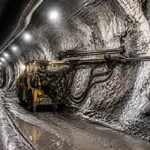
Lithium supply chains are increasingly evaluated by processing location, export policy and traceability as well as resource size.
Rubaya adds a conflict-minerals test to lithium
A new reported lithium operation near Kalambairo, in the wider Rubaya mining zone of North Kivu, introduces a different type of supply-chain risk.
According to KT Press, social-media footage and local accounts show hundreds of miners working an open pit, with trucks and motorcycles moving lithium-bearing rock toward the Rwanda border. The report says M23 controls the area and that the first loads may already be entering a cross-border trading route.
The information remains preliminary. No independent resource estimate, published grade or formal feasibility study has been identified. The operation appears to be artisanal or informal rather than an industrial lithium mine. That distinction matters: a visible pit does not establish commercial viability, and mineral-bearing rock is not the same as battery-grade product.
The immediate concern is provenance. Rubaya is already a major coltan and tantalum-producing area. The United Nations has estimated that M23 earns roughly US$800,000 a month from mineral taxation in territory under its control, according to the KT Press report and other international reporting. The emergence of lithium could broaden the zone’s economic importance while making supply-chain screening more complicated.
Companies sourcing lithium, tantalum or mixed mineral concentrates from the region will need to establish:
- Who controls the mine and transport corridor.
- Whether taxes or fees support an armed group.
- Which exporter or intermediary first takes title to the material.
- Whether the material is blended with legally sourced production.
- Whether buyers can demonstrate chain-of-custody documentation.
Rubaya therefore belongs on the export-control watchlist even if the lithium deposit never reaches industrial scale. Conflict exposure, sanctions risk and weak documentation can shut a material out of compliant markets before geology becomes the limiting factor.
DOE funding targets the midstream bottleneck
The U.S. response is focused on building alternatives at the processing and recovery stages.
On Aug. 26, the U.S. Department of Energy announced US$10 million for seven early-stage projects. The projects cover rare earth elements, gallium, copper and other critical materials, including:
- Heavy rare earth production using chloride-based molten salt electrolysis.
- Copper extraction from primary sulfides through hydrometallurgical and bio-hydrometallurgical methods.
- Gallium recovery from bauxite-alumina processing, zinc refinery residues and end-of-life waste.
- Recovery of rare earth and gallium-bearing materials from industrial byproducts.
The awards are subject to negotiations before funding is issued, but their technical focus is notable. The program is not aimed only at opening new mines. It targets separation, refining, leaching, byproduct recovery and material substitution : the stages where supply chains are often most concentrated.
DOE’s wider Critical Minerals and Materials Program also identifies four strategic pillars: expanding supply, developing alternatives, improving materials and manufacturing efficiency, and reusing or recycling materials.
That approach offers a useful framework for assessing whether public funding can reduce strategic dependence. A project that produces a concentrate but relies on a single overseas refiner may not materially improve resilience. A smaller project that recovers gallium from domestic industrial waste, or substitutes a constrained material in a semiconductor, could have a more immediate security value.
The commercial test will be scale. Early-stage research can reduce technical risk, but it does not automatically solve permitting, energy costs, waste management, qualification standards or long-term offtake.
Brazil links finance to domestic value addition
Brazil is pursuing a different policy tool: public credit support tied to processing and industrialization.
The country’s Chamber of Deputies approved PL 2.780/2024 in May. The bill would establish a National Policy for Critical and Strategic Minerals and create the Mineral Activity Guarantee Fund, or FGAM.
The proposed federal contribution is R$2 billion, roughly US$388 million. The fund could eventually reach R$5 billion with contributions from private companies, states, municipalities, foreign governments and multilateral institutions, according to reports reviewed for this analysis.
FGAM would not operate as a conventional mining bank. Instead, it would provide guarantees for loans issued by financial institutions, potentially lowering the cost of capital for projects that commercial lenders consider too risky. The priority would be projects involving processing, refining, research and other value-added activities.
The bill also proposes up to R$5 billion in tax credits for mineral processing and industrialization. Beneficiary companies would face requirements related to research spending, traceability and participation in the fund. The Senate stage remains important because the financing mechanism is not fully operational until the legislation is approved and implemented.
Brazil’s model reflects a broader shift among resource-rich countries. Governments want foreign capital and technology, but they also want more refining, manufacturing and data control to remain within national borders. For investors, the result can be a stronger project pipeline alongside more conditions on exports, ownership, local processing and compliance.
What tightens next?
Three scenarios frame the 2026 outlook.
Base case: selective controls, higher compliance costs
In the base case, governments avoid broad embargoes but expand licensing, end-user checks and reporting requirements. Producers maintain access to key markets, but buyers hold more inventory and pay more for verified material.
The impact would be uneven. Large manufacturers with multiple suppliers could manage the disruption. Smaller processors and junior developers would face higher working-capital and qualification costs.
Bull case for diversification: funding reaches commercial scale
In a more constructive scenario, DOE-backed research, Brazil’s guarantee mechanism and allied-country incentives move beyond pilot projects. New separation plants, recycling facilities and byproduct-recovery systems begin supplying qualified material.
This would not displace concentrated incumbents quickly. It could, however, create credible alternatives in gallium, rare earths, copper recovery and lithium processing, reducing the leverage of any single supplier.
Escalation case: controls spread from minerals to technology
The most disruptive scenario is a return to broad export restrictions, especially if temporary U.S.-China arrangements expire without a durable agreement. Controls could extend from ores and refined products to magnets, equipment, software, intellectual property and products made with controlled technology.
At the same time, conflict-linked production in eastern DRC could trigger stronger due-diligence rules for lithium and tantalum. Under this scenario, the first market response would likely be procurement delays and regional separation of supply chains rather than an immediate global shortage.
The practical test for supply-chain resilience
For operators, policymakers and investors, the most useful metric is not a country’s reserve base alone. It is the number of independent routes from mine to qualified end user.
A resilient critical-minerals project should be assessed across five points:
- Geology: resource size, grade and byproduct potential.
- Processing: location and ownership of refining and separation capacity.
- Jurisdiction: exposure to export controls, sanctions and policy changes.
- Traceability: ability to prove origin, custody and labor conditions.
- Substitution: whether customers can change chemistry, technology or supplier.
That framework applies equally to a lithium pit near Rubaya, a rare earth separation plant, a Brazilian processing project and a U.S. recycling technology.
The central risk in the critical minerals supply chain in 2026 is not that the world will run out of minerals. It is that material may exist but remain inaccessible, unqualified, uninsurable or politically unusable. The next phase of competition will therefore be decided at the chokepoints between extraction and manufacturing.
LinkedIn snippet
Critical minerals supply chains are entering a more interventionist phase. China’s licensing system, conflict-linked lithium reports from M23-held Rubaya, DOE’s US$10 million R&D award and Brazil’s proposed US$388 million guarantee fund show how control is moving from the mine site to processing, finance and traceability. Our 2026 watchlist maps the commodities and regions most exposed to the next round of restrictions.
X snippet
The critical minerals race is shifting from reserves to control points: refining, licensing, technology, finance and traceability. Our 2026 watchlist examines rare earths, lithium, cobalt, copper, graphite, gallium and more : including new supply-chain risks around M23-held Rubaya and Brazil’s proposed US$388M guarantee fund.