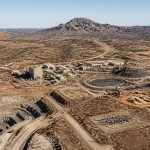
Rare-earth processing and metallization facilities are becoming strategic assets as companies seek greater control over the mine-to-magnet chain.

The critical-minerals supply chain is moving beyond a simple race to secure ore. Two transactions announced in late August: Energy Fuels’ completed acquisition of Australian Strategic Materials (ASM) and Greenland Mines’ planned $35 million purchase of the Sarfartoq rare-earths project: illustrate a wider shift toward controlling feedstock, processing, metals production and customer access in one coordinated system.
The change matters because mining capacity alone has not solved the supply-chain problem. China remains dominant in rare-earth separation, metallization, alloying and permanent-magnet manufacturing. For Western producers, the strategic question is no longer only where to mine neodymium and praseodymium. It is whether those materials can be separated, converted into metal, alloyed and manufactured into qualified magnets without relying on a single geopolitical centre.
That is why mine-to-magnet integration is increasingly replacing spot-market strategy.
Energy Fuels and ASM: a midstream acquisition with downstream ambitions
Energy Fuels said on Aug. 28 that it had completed its acquisition of ASM, adding rare-earth metal and alloy production to its existing uranium and rare-earth processing operations.

The transaction brings ASM’s Korean Metals Plant in Ochang into Energy Fuels’ portfolio. According to the company, the plant has existing capacity to produce 1,300 tonnes per year of neodymium-iron-boron alloy, while an expansion under way could lift capacity to 3,600 tonnes per year as early as the end of 2026.

That capability addresses one of the most difficult gaps outside China: converting separated rare-earth oxides into metals and alloys suitable for magnet production.
Energy Fuels already produces or is developing rare-earth processing capability at its White Mesa Mill in Utah. The company says the ASM acquisition adds metallization and alloying expertise, including commercial production of neodymium-praseodymium metal and developing capabilities for dysprosium and terbium.

The proposed acquisition of permanent-magnet producer Vacuumschmelze, which remains subject to completion, would extend the chain further downstream. If completed, the transaction would give Energy Fuels exposure across mining, separation, oxides, metals, alloys and magnet manufacturing.
That structure is strategically different from selling concentrate or oxide into an open market. It gives the company more control over specifications, inventory, customer qualification and the timing of sales. It may also improve resilience when export controls, trade restrictions or sudden price changes disrupt spot-market flows.
The risks are equally clear. Integrating an Australian materials company, a South Korean plant and U.S.-based processing operations is operationally complex. The planned plant expansion must be commissioned successfully, while future magnet production depends on customer qualification, financing, engineering and permitting. The company’s own release cautions that these forward-looking plans may be affected by construction delays, commodity prices, regulatory changes and processing difficulties.
Sarfartoq adds diversified feedstock: but not yet production

Greenland’s Sarfartoq project offers potential rare-earth feedstock, but exploration and development work remain ahead.
Greenland Mines’ Sarfartoq transaction represents the upstream side of the same strategy.
The company said on Aug. 27 that it had secured Government of Greenland approval for the indirect transfer of the mineral licence and had completed a public offering to fund the acquisition. The deal is valued at $35 million, comprising $20 million in cash and $15 million in newly issued Greenland Mines shares.
Sarfartoq is a neodymium-praseodymium project in southwest Greenland. Neo Performance Materials is expected to become a strategic shareholder and retain offtake rights for up to 60% of future ore or mineral-concentrate production.
That offtake arrangement is important because it links the project to an established rare-earth materials company before the mine has been built. It also demonstrates how emerging projects are seeking commercial alignment with processors and manufacturers rather than waiting to sell material on the spot market after production begins.
Greenland Mines said an independent Initial Assessment estimated a high-case pre-tax net present value of approximately $2.05 billion and a pre-tax internal rate of return of 118.6%. Those figures require careful interpretation. The assessment is based only on the ST1 deposit, which occupies less than 1% of the 191-square-kilometre exploration licence. The company also notes that mineral resources are not mineral reserves and do not demonstrate economic viability.
Following closing, the planned work programme includes infill drilling, pilot-scale metallurgical testing, mine-engineering studies and environmental and social baseline work. These steps are essential because the project still has to establish a development pathway, recoverability, infrastructure requirements and a permitting case.
Sarfartoq therefore provides potential geopolitical diversification, not immediate supply. Its value will depend on whether the resource can produce a consistent concentrate that fits an ex-China separation and magnet chain.
The real bottleneck is between mine and magnet
A critical-minerals supply chain can be divided into five stages:
| Stage | Commercial output | Principal constraint |
|---|---|---|
| Mining and beneficiation | Ore or concentrate | Permitting, infrastructure, grade variability |
| Separation | Individual rare-earth oxides | Solvent extraction, purity, waste management |
| Metallization | Rare-earth metals | Technical know-how, energy, process yield |
| Alloying | NdFeB and other alloys | Qualified capacity and customer specifications |
| Magnet manufacturing | Finished permanent magnets | Tooling, IP, yields and qualification cycles |
The strategic weakness is concentrated in the middle and downstream stages. New mines can add feedstock, but they do not automatically create separated oxides, metals or magnets.
This is particularly important for dysprosium and terbium, which are used to improve the heat resistance and performance of high-end permanent magnets. Processing capacity for heavy rare earths remains highly concentrated, leaving defense, electric-vehicle and industrial customers exposed even when light rare-earth supply improves.
Processing plants also carry a different risk profile from mines. They can require complex chemical circuits, specialist operators, radioactive-material controls, substantial water and energy management, and long commissioning periods. A project can therefore have a large resource and still fail to become a reliable commercial supplier if its metallurgy is inconsistent or its waste-management plan is unacceptable to regulators.
Permitting is becoming a strategic differentiator
Permitting is not simply a timetable issue. It determines whether a mine-to-magnet platform can be built in a politically acceptable and commercially viable location.
Mining approvals must address land access, water, tailings, transport and community impacts. Separation and metallization plants add chemical handling, emissions, radioactive by-products and industrial-waste concerns. In Greenland, environmental and social baseline studies will be central to Sarfartoq’s next development phase. In the United States and South Korea, existing industrial and processing infrastructure may reduce some risks, but it does not eliminate licensing or expansion requirements.
The most competitive developers will be those that can demonstrate three things at once:
- A bankable resource with predictable mineralogy and recoveries.
- A permitted processing route with credible waste and environmental controls.
- A qualified customer chain that can absorb the output at commercial specifications.
This is why an acquisition such as ASM can be strategically valuable even before a new mine enters production. Operating knowledge, plant data and metallization expertise can be more difficult to recreate than a mineral resource estimate.
Investment framework: what to watch
The following framework is designed for analysis, not a buy, sell or hold recommendation.
| Case | Supply-chain outcome | Indicators to monitor |
|---|---|---|
| Base case | Several ex-China projects advance, but processing and magnet capacity remain constrained through the late 2020s | Commissioning milestones, offtake agreements, permitting progress and customer qualification |
| Bull case | Integrated platforms achieve reliable commercial output while governments support financing and long-term procurement | Successful plant expansions, heavy-rare-earth production, magnet sales and lower unit costs |
| Bear case | Delays, weak prices or metallurgy problems leave new mines dependent on Chinese or third-party processors | Cost overruns, failed pilot tests, approval delays, funding dilution and unresolved waste streams |
For Energy Fuels, the central question is whether the ASM acquisition can translate existing Korean capacity and U.S. processing into dependable, qualified magnet supply. Key risks include integration, plant expansion, the status of the proposed Vacuumschmelze acquisition, execution costs and market competition.
For Greenland Mines, the priority is different. Investors and industrial buyers should focus on drilling results, metallurgical recoveries, infrastructure costs, the conversion of resources into reserves and the requirements of Greenland’s permitting process. The headline Initial Assessment economics are potentially significant, but they remain early-stage and should not be treated as a production forecast.
For strategic customers, the most important metric may be less the headline resource than the chain’s ability to deliver consistent material through multiple stages. A smaller deposit tied to an operating separator, alloy plant and magnet customer may be more commercially useful than a larger undeveloped resource without downstream partners.
Mine-to-magnet strategy is becoming the new benchmark
The Energy Fuels–ASM transaction and the Sarfartoq acquisition sit at different ends of the value chain, but together they show how critical-minerals strategy is changing.
Energy Fuels is buying processing and alloy capability to complement upstream assets. Greenland Mines is acquiring a potential source of rare-earth feedstock while linking the project to an industrial offtaker. Both transactions reflect the same conclusion: access to ore is necessary, but control over conversion and customers is increasingly decisive.
The next phase of the critical-minerals race will therefore be measured less by the number of announced mines and more by the number of complete, permitted and qualified supply chains. Companies that can connect geology to processing, processing to alloying and alloying to magnets will have a stronger strategic position than those relying solely on spot-market access.
But integration is not a shortcut around risk. It concentrates capital requirements, operational complexity and regulatory exposure. The winners will be those that can prove commercial reliability: not merely announce the next link in the chain.
Sources
- Energy Fuels completes acquisition of Australian Strategic Materials
- Greenland Mines set to close Sarfartoq rare-earths acquisition
- Critical minerals supply-chain analysis
- Critical-minerals policy and deal tracker
LinkedIn snippet
Critical-minerals strategy is shifting from securing ore to controlling the full mine-to-magnet chain. Energy Fuels’ completed ASM acquisition adds rare-earth metals and NdFeB alloy capacity, while Greenland Mines’ Sarfartoq deal highlights the race to secure diversified feedstock. Our analysis examines processing bottlenecks, permitting, geopolitical risk and base, bull and bear cases.
X snippet
Critical-minerals supply chains are moving beyond the mine. Energy Fuels–ASM targets metals and alloying; Greenland Mines’ Sarfartoq deal adds potential NdPr feedstock. The decisive bottlenecks remain separation, metallization, magnet capacity and permitting.