Mining ESG compliance is moving from sustainability reporting into the critical path for mine approvals, financing and operating continuity. For operators, the key question is no longer whether an annual report contains environmental and social targets. It is whether site-level evidence can support a permit application, satisfy lenders, withstand assurance and address community concerns.

The regulatory landscape remains fragmented. Companies may need to manage ISSB-based climate disclosures, EU sustainability reporting, national emissions rules, environmental impact assessments, tailings standards and mineral supply-chain due diligence at the same time. These frameworks overlap, but they do not create one global rulebook.
The result is a more demanding operating environment for projects involving water stress, biodiversity impacts, tailings storage, Indigenous rights, land disturbance or carbon-intensive processing.
Why ESG data now affects mine approvals
Project permitting and corporate sustainability reporting serve different purposes. An environmental impact assessment is generally site-specific and supports a regulatory decision. Sustainability reporting is recurring and may cover a company’s subsidiaries, suppliers, customers and broader value chain.
The two systems are increasingly connected.
Under the ISSB’s IFRS S1 and S2 standards, companies disclose material sustainability and climate-related risks that could affect cash flows, access to finance or the cost of capital. IFRS S2 includes governance, strategy, risk management, metrics and targets, as well as Scope 1, Scope 2 and Scope 3 greenhouse-gas emissions.

For mining companies, the ISSB’s industry-based Metals & Mining guidance provides additional context for selecting relevant climate metrics.
In Europe, the Corporate Sustainability Reporting Directive and European Sustainability Reporting Standards use a double-materiality approach. Companies must consider both how sustainability issues affect the business and how the business affects people and the environment.
For a mine, that can include:
- Water withdrawals, consumption and discharge quality.
- Greenhouse-gas emissions and transition risks.
- Land disturbance, rehabilitation and biodiversity.
- Tailings volumes, facility safety and closure obligations.
- Worker health and safety.
- Impacts on affected communities and Indigenous Peoples.
- Grievances, resettlement and human-rights risks.
- Environmental and social impacts in the mineral supply chain.
The GRI 14 Mining Sector Standard also increases the emphasis on site-level information covering tailings, water, biodiversity, closure and communities. GRI 14 is voluntary unless adopted through a company commitment or reporting policy, but it is becoming a reference point for investors, lenders and civil society groups.
Permitting is becoming an evidence test
A permit application can contain thousands of pages, but regulators and communities often focus on a relatively small number of questions:
- How much water will the project withdraw and consume?
- What happens during drought or extreme rainfall?
- How will tailings remain stable over the life of the facility and after closure?
- Which habitats and communities will be affected?
- What financial resources are available for closure and rehabilitation?
- How will the company respond if monitoring shows that impacts exceed forecasts?
Weak answers do not always lead to rejection. More commonly, they produce additional information requests, revised designs, tighter permit conditions or a longer review process.
The OECD Handbook on Environmental Due Diligence in Mineral Supply Chains makes an important distinction: an environmental and social impact assessment is useful, but it is not a substitute for continuing environmental due diligence across the supply chain.
That distinction matters for projects that sell copper, lithium, nickel or other critical minerals into regulated markets. A company may have an approved mine plan while still facing questions about contractors, processing partners, transport routes or downstream customers.
Practical comparison: disclosure, permitting and operating risk
The following framework is designed as a planning tool for operators, lenders and project teams. The ranges are scenario assumptions, not universal industry averages.
| Risk area | Evidence-led position | Typical control position | Weak-control position |
|---|---|---|---|
| Permitting | Complete site data, clear mitigation plans and documented consultation before submission | Data is available but requires further regulator review or design updates | Repeated information requests, appeals, redesign or permit conditions |
| Water | Site-level water balance, source data, recycling plan and drought scenarios | Monitoring is in place but basin-level assumptions remain incomplete | Water restrictions, community opposition or additional treatment requirements |
| Tailings | Full facility register, independent reviews and conformance plan | Most controls are documented, with remediation milestones outstanding | Incomplete records, redesign, higher insurance costs or regulatory intervention |
| Emissions | Scope 1–3 boundaries, methodologies and assurance trail are defined | Scope 1 and 2 are reliable; Scope 3 remains estimated | Inconsistent inventories and exposure to reporting or customer-access risk |
| Community relations | Grievance process, consultation record and commitments have accountable owners | Engagement is active but outcomes are unevenly measured | Legal challenges, work stoppages or loss of social licence |
| Closure | Cost model is linked to mine plan, financial provisions and rehabilitation milestones | Closure obligations are recognized but assumptions are periodically updated | Unfunded liabilities, permit delays or balance-sheet adjustments |
| Operating cost | Monitoring is embedded in maintenance and production systems | ESG programs operate alongside core systems | Reactive spending on consultants, treatment, repairs and compliance |
The practical test is whether each material metric has a definition, a named owner, a documented boundary and a source record. A water figure should be traceable to meters, laboratory results or invoices. A tailings disclosure should connect to engineering records and inspection reports. A community commitment should have a budget, completion date and accountable manager.
Tailings and water are the clearest operational fault lines
Tailings governance has become one of the most visible tests of mining project readiness. The Global Industry Standard on Tailings Management is not automatically law in every jurisdiction, but it can become binding through permits, lender covenants, customer requirements or company commitments.
The operational consequences extend beyond the tailings facility itself. A credible program requires:
- A complete inventory of facilities and ownership responsibilities.
- Consequence classification and independent technical review.
- Monitoring of water levels, seepage, deformation and stability.
- Emergency-preparedness and response plans.
- Closure and post-closure management.
- Public reporting of conformance gaps and remediation milestones.
Water creates a similar connection between environmental performance and production risk. In a water-stressed basin, a permit may depend on the accuracy of a site water balance, the credibility of recycling plans and the company’s response to competing community or agricultural demand.

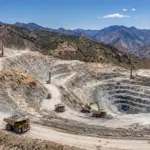
Tailings storage facilities are increasingly assessed through engineering, environmental and financial controls together.
A project that underestimates water demand may need additional treatment capacity, revised extraction rates or alternative supplies. Those changes can affect capital expenditure, commissioning schedules and production assumptions.
The cost of a delay is usually larger than the cost of compliance
ESG controls add direct costs. These may include water meters, laboratory analysis, tailings instrumentation, external assurance, community engagement, data systems and rehabilitation work.
However, the larger economic exposure is often schedule risk.
For illustration, a project expected to generate $200 million in annual cash flow and discounted at 8% would lose approximately $14.8 million in present value from a one-year delay. A two-year delay would reduce present value by approximately $27.4 million, before considering inflation, financing costs, contractor claims or changes in commodity prices.
The estimate is illustrative, but the relationship is important: a relatively small investment in permitting-quality evidence can protect a much larger project value.
This is particularly relevant to copper, lithium and nickel projects that are being developed against strong policy interest in energy-transition supply chains. Strategic importance may improve administrative coordination in some jurisdictions, but it does not remove environmental review or community obligations.
The EU Critical Raw Materials Act, for example, provides maximum permit-granting periods for designated Strategic Projects: 27 months for extraction and 15 months for processing or recycling. Those limits do not guarantee approval, and the preparation of an environmental impact assessment is treated separately from the permitting timetable.
A three-stage operating model
Mining companies can reduce compliance risk by treating ESG as an operating control system rather than a reporting workstream.
1. Map obligations by asset
Create an obligation register for each mine, processing facility, tailings storage facility and development project. Identify applicable environmental permits, emissions rules, disclosure standards, lender requirements and customer due-diligence requests.
Mandatory obligations should be separated from voluntary frameworks such as GRI or corporate commitments to the tailings standard.
2. Build one controlled data architecture
Use a common data dictionary for emissions, water, waste, tailings, land disturbance, safety and community indicators. Record calculation methods, reporting boundaries, source systems and approval responsibilities.
The objective is not to collect every possible metric. It is to make material metrics consistent and auditable across sites.
3. Link ESG to capital and mine planning
Water-treatment systems, tailings upgrades, rehabilitation, monitoring networks and community programs should appear in feasibility studies, sustaining-capital budgets and financial models.
The same information should inform production schedules and risk registers. If a drought scenario changes available water, that assumption should flow into mine planning. If tailings capacity is constrained, it should affect production sequencing and capital allocation.

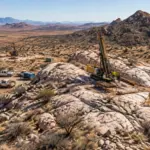
Field surveys connect permit assumptions with conditions observed during construction and operations.
What decision-makers should monitor
Broad ESG rankings are less useful for project readiness than a focused set of operational indicators:
- Percentage of sites with complete water balances.
- Tailings facilities with current independent reviews.
- Scope 1 and Scope 2 data covered by assurance.
- Number and age of unresolved permit conditions.
- Land disturbed versus land rehabilitated.
- Closure liabilities covered by approved financial provisions.
- Community grievances open beyond agreed resolution periods.
- Contractor incidents and corrective-action completion.
- ESG-related capital expenditure as a share of sustaining capital.
- Number of material data gaps carried into the next reporting cycle.
These indicators do not eliminate commodity-price, construction, labor or geopolitical risks. They provide a more precise view of whether environmental and social risks are being managed before they become schedule or balance-sheet problems.
Conclusion
Mining ESG compliance is becoming a test of operating discipline. The strongest projects will not necessarily be those with the most ambitious public targets. They will be the projects that can demonstrate, site by site, how water, tailings, emissions, closure and community commitments are measured and controlled.
For operators, the priority is to make the evidence usable across permits, assurance, financing and daily mine management. For investors and lenders, the most relevant question is whether disclosed targets are supported by accountable owners, reliable source data and funded implementation plans.
In that environment, ESG compliance is not separate from mine economics. It is increasingly part of the schedule, the capital plan and the licence to operate.
Further reading
- Mining ESG compliance: three scenarios for permitting, capital and operating costs
- Critical minerals supply chain: mine-to-magnet strategy
- Autonomous mining technology: deployment-readiness metrics
- Global Industry Standard on Tailings Management
- OECD environmental due diligence in mineral supply chains
- IFRS S2 climate-related disclosures
LinkedIn snippet
Mining ESG compliance is moving into the project critical path. Our latest analysis compares how water, tailings, emissions, closure and community risks can affect permitting, operating costs and financing readiness. The practical test is whether site-level evidence can withstand regulatory, lender and community scrutiny. #Mining #ESG #CriticalMinerals #Tailings
X snippet
Mining ESG compliance is becoming an operating-risk issue, not just a reporting requirement. A practical comparison of water, tailings, emissions, closure and community controls shows where project delays and higher costs can emerge. #Mining #ESG #CriticalMinerals