By Penny Langford

The energy transition is increasing demand for critical minerals faster than many new mines, refineries and recycling facilities can be developed. The immediate risk is not a universal shortage of geological resources. It is a shortage of permitted projects, processing capacity and reliable supply chains capable of delivering the right materials at the required scale.
The International Energy Agency’s Global Critical Minerals Outlook 2025 found that clean-energy technologies were the main source of demand growth for lithium, nickel, cobalt, graphite and rare earth elements in recent years. Lithium demand rose by nearly 30% in 2024, while demand for nickel, cobalt, graphite and rare earths increased by roughly 6% to 8%.
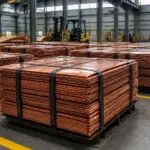
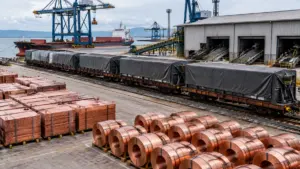
Copper presents a different but equally important challenge. Its role in power grids, electric vehicles, renewable generation and industrial electrification makes it less dependent on a single technology. Yet copper mines face declining ore grades, rising capital costs and long development timelines. The IEA’s project-pipeline analysis indicates that announced projects are unlikely to close the projected supply gap through 2035.
The result is a supply problem with several layers: the volume of mined material, the ability to refine it into usable products, the geographic concentration of processing and the time required to move projects from exploration to production.
Demand is rising across several technologies
Battery electric vehicles and grid-scale energy storage remain the most visible sources of mineral demand. Lithium is used in cathodes and electrolytes, graphite is used primarily in anodes, and nickel and cobalt remain important in several high-energy-density cathode chemistries.

Demand is also increasing outside batteries:
- Copper is required for grid expansion, motors, charging infrastructure, solar systems and wind power.
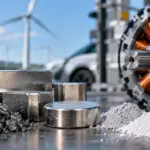
- Rare earth elements, particularly neodymium, praseodymium, dysprosium and terbium, are used in permanent magnets for electric motors and wind turbines.
- Nickel is used in batteries, stainless steel and high-performance alloys.
- Cobalt supports battery cathodes and specialty industrial applications.
- Graphite remains a major anode material, even as battery manufacturers adjust chemistries and increase the use of synthetic alternatives.
The IEA estimates that clean-energy applications accounted for about 85% of demand growth in several battery minerals between 2017 and 2024. Under more ambitious climate pathways, demand growth becomes substantially steeper. Earlier IEA analysis indicated that, relative to 2020 levels, lithium demand for batteries could increase by roughly 20 to 30 times by 2030 in a net-zero pathway, while rare earth demand linked to electric vehicles and wind power could rise by an order of magnitude.
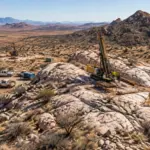
These scenarios are not forecasts of a single outcome. They are measures of how quickly supply requirements change when vehicle production, electricity networks and renewable capacity expand simultaneously.

The project pipeline is large, but readiness is limited
The number of announced critical-mineral projects can create the impression that supply is catching up. In practice, projects at different development stages cannot be treated as equivalent.
A producing mine, a permitted project under construction and an exploration target may all appear in a broad project inventory, but their contribution to near-term supply is materially different. Projects must still secure permits, financing, power, water, equipment, labor and customer agreements before they can deliver commercial volumes.
Australia provides a useful illustration. A 2026 assessment by PwC identified 907 critical-minerals projects in the country’s pipeline. However, only 13 were expected to reach a final investment decision within two to four years. Nearly 90% were estimated to be three to six years from FID, while more complex projects could require up to a decade.
The same assessment found that only six upstream projects reached FID between 2022 and June 2026: four lithium projects, one rare earths project and one base or technology metals project.
Critical-minerals pipeline readiness
| Indicator | Reported figure | What it indicates |
|---|---|---|
| Australian critical-minerals projects in pipeline | 907 | Large prospect and development inventory |
| Projects expected to reach FID within two to four years | 13 | Small near-term conversion rate |
| Projects three to six years from FID | Nearly 90% | Pipeline is weighted toward medium-term development |
| Upstream projects reaching FID from 2022 to June 2026 | 6 | Slow conversion from studies to construction |
| Average mine discovery-to-production timeline | About 14–18 years | New discoveries will not quickly solve near-term gaps |
| Nonoperating projects with feasibility studies completed | Nearly 30-year timelines in some cases | Permitting and development delays can compound |
Sources: PwC Australia reporting; S&P Global Market Intelligence; ERM. Figures refer to specific studies and should not be treated as a complete global inventory.
The table is a linkable reference point because it separates pipeline size from pipeline readiness. For operators and policymakers, the more relevant question is not how many projects have been announced, but how many are permitted, financed and capable of producing before demand accelerates further.
Permitting and infrastructure are the main timing constraints
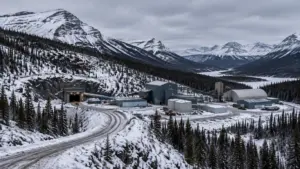
Mining projects commonly require 15 to 20 years to move from discovery through exploration, feasibility, permitting, construction and ramp-up. S&P Global research has placed the average discovery-to-production timeline at about 16 years across a broad sample of mining assets, with operating mines averaging about 14 years.
The timeline is longer for projects that encounter permitting disputes, environmental reviews or changes to previously granted approvals. ERM research found that permitting issues contributed to delays in 45% of mining-project cases reviewed, ahead of stakeholder opposition and environmental concerns.
Permitting is only one part of the development schedule. Critical-mineral projects also compete for:
- Grid connections and reliable low-carbon power.
- Water rights and transport infrastructure.
- Processing equipment and construction contractors.
- Skilled engineers, metallurgists and maintenance workers.
- Long-term offtake agreements and creditworthy customers.
- Financing that can withstand construction overruns and commodity-price volatility.
These constraints are particularly important for refining and separation projects. A mine can produce concentrate while downstream processors remain dependent on a small number of countries, creating a supply chain that is geographically exposed despite additional mining capacity.
Refining concentration remains a strategic vulnerability
The IEA reported that the average market share of the top three refining countries for key energy minerals increased from about 82% in 2020 to 86% in 2024. About 90% of refined supply growth during that period came from a single dominant supplier in each market, including Indonesia for nickel and China for cobalt, graphite and rare earths.
The agency expects diversification to be gradual. By 2035, the top-three share of refined materials could decline to about 82%, roughly returning to the concentration level recorded in 2020.
The concentration is especially high in some processing segments. China is projected to account for more than 60% of refined lithium and cobalt supply by 2035 and around 80% of battery-grade graphite and rare earth processing under the IEA’s project-based assessment.
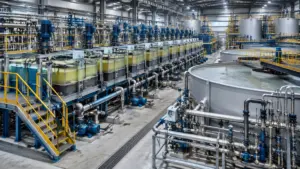
This distinction between mining and refining matters for procurement decisions. New mines in Australia, Canada, Africa or South America may increase raw-material availability without immediately creating alternative sources of battery chemicals, separated rare earth oxides, permanent magnets or anode material.

Commodity-by-commodity supply outlook
Copper: the clearest structural gap
Copper demand is supported by several parts of the energy transition, making substitution more difficult than in some battery materials. Grid investment, renewable generation, electric vehicles and data-center construction all require significant quantities of copper.
The IEA’s 2025 outlook pointed to a potential mine-supply shortfall of about 30% by 2035 based on the existing project pipeline. Its later 2026 analysis reduced the estimate to roughly 25%, reflecting progress in projects in countries including the Democratic Republic of Congo and Zambia. Even the lower estimate represents a substantial gap.
The challenge is structural. Copper grades are declining at many established mines, discoveries have become less frequent and major projects require extensive infrastructure and permitting.
Lithium: near-term abundance, longer-term pressure
Lithium supply expanded rapidly, with global production increasing by about 70% between 2020 and 2024. That growth contributed to softer prices and a well-supplied near-term market.
However, the pipeline may not be sufficient if electric-vehicle and stationary-storage deployment follows more ambitious pathways. Lithium projects generally have a shorter development cycle than large copper mines, but brine chemistry, water access, processing technology and permitting can still delay production.
The market may therefore move between oversupply and tightness rather than follow a smooth trajectory. Short-term capacity additions can weigh on prices while delayed projects leave later demand exposed.
Nickel and cobalt: volume does not remove concentration risk
Announced nickel projects appear broadly capable of meeting projected demand through 2035 in some IEA scenarios, particularly after rapid expansion in Indonesia. That expansion has also increased the market’s exposure to one country and to specific processing technologies.
Cobalt supply is even more concentrated at the mining stage. The Democratic Republic of Congo accounts for about 70% of global mined cobalt, while China remains a major refining center. Battery chemistry changes may reduce cobalt intensity, but they do not eliminate the need for secure supply in applications where cobalt remains technically valuable.
Graphite and rare earths: processing is the critical link
The IEA finds that announced projects for graphite and rare earth mining may be sufficient to meet projected demand to 2035 if they proceed as planned. The main weakness is processing.
USGS data show that China accounted for about 79% of estimated global natural graphite mine production in 2024. China also dominates spherical graphite and other battery-grade processing stages. In rare earths, new mines outside China do not automatically provide separated products or magnet capacity.
For these minerals, the project pipeline must be measured from ore extraction to chemical conversion and component manufacturing, not only from mine construction.
Recycling can narrow the gap, but not replace new mines
Recycling and mine-waste recovery can improve supply resilience. Battery black mass contains lithium, nickel, cobalt, manganese, graphite and copper, while tailings and legacy mine sites may contain rare earths and other metals that were not economic to recover when the material was first processed.
The limitation is timing. Most electric-vehicle batteries installed in recent years have not yet reached the end of their operating lives, so secondary supply will grow gradually. Recycling facilities also require permits, specialized equipment, reliable feedstock and commercially viable recovery rates.

What operators and investors should monitor
The most useful indicators for the critical-minerals outlook are execution measures rather than announcement totals:
- Projects reaching FID: Conversion from feasibility to construction is a stronger supply signal than a new exploration announcement.
- Permits secured: Approval status should be tracked separately for mines, concentrators, refineries and waste-processing facilities.
- Processing capacity: Refined lithium, battery-grade graphite, separated rare earths and nickel intermediates may remain tighter than mined supply.
- Customer qualification: A facility is not commercially integrated until its products meet technical specifications and are accepted by downstream users.
- Infrastructure delivery: Power, water, roads, rail and ports can determine whether a permitted project starts on schedule.
- Recycling feedstock: Battery retirement volumes and black-mass collection will determine how quickly secondary supply becomes material.
- Technology shifts: Lower-nickel cathodes, sodium-ion batteries, synthetic graphite and magnet-efficient motor designs could reduce demand intensity, but adoption rates remain uncertain.
The central conclusion is that critical-minerals demand is not creating one uniform shortage. It is creating a series of bottlenecks that differ by commodity and by supply-chain stage.
Copper faces a long-term mine-development gap. Lithium has strong near-term supply growth but remains exposed to later demand acceleration. Nickel and cobalt carry concentration risks even where volumes appear adequate. Graphite and rare earths demonstrate why refining, separation and component manufacturing are as important as geology.
For decision-makers, the most useful measure of energy-transition supply security is therefore the number of projects that can move from resource to qualified, operating capacity within the required timeframe. On that measure, the pipeline remains behind demand.
Shareable snippets
Critical minerals demand is rising across electric vehicles, grids, renewable power and energy storage, but the supply challenge is not simply geological scarcity. Copper faces a projected mine-supply gap, while lithium, graphite, nickel, cobalt and rare earths remain exposed to permitting delays and concentrated refining. This analysis maps the project pipeline and the bottlenecks that operators, investors and policymakers should monitor.
X
Critical-minerals supply gaps are increasingly about timing and processing, not just geology. Copper projects face long lead times, lithium demand may outpace the later pipeline, and China remains dominant in several refining stages. A project pipeline is only useful when it becomes permitted, financed and operational. #Mining #Copper #Lithium #CriticalMinerals #EnergyTransition
Sources
- IEA: Global Critical Minerals Outlook 2025
- IEA: Global Critical Minerals Outlook 2025 executive summary
- IEA: Critical Minerals Data Explorer
- IEA: Global Critical Minerals Outlook 2026
- U.S. Geological Survey: Mineral Commodity Summaries 2025
- USGS: Mineral Commodity Summaries 2025 PDF
- S&P Global: permitting and mining-project lead times
- PwC Australia: critical-minerals project pipeline
- Skillings: critical-minerals supply-chain analysis
- Skillings: autonomous mining technology and deployment readiness