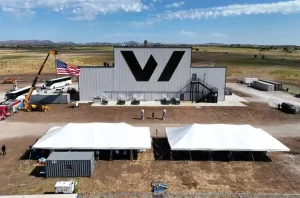
Diamond drilling remains the main bridge between exploration capital and a potentially mineable deposit.

By Charles Pitts
Mining exploration is attracting capital again, but the funding is moving selectively. Gold and copper are drawing the largest share of exploration budgets, while lithium, nickel and other battery metals face tighter scrutiny despite their long-term role in the energy transition.
The latest figures from S&P Global’s World Exploration Trends research show the tension clearly. Global nonferrous exploration spending was estimated at about US$12.4 billion, broadly flat to slightly lower year over year. Within that total, gold accounted for roughly US$6.15 billion, while copper reached approximately US$3.27 billion.
At the same time, junior and intermediate mining companies raised more than US$21 billion in 2025, according to S&P Global data cited in industry research. The difference between capital raised and exploration spending matters: not all financing is spent immediately on drilling. Funds may also support acquisitions, feasibility studies, permitting, working capital or debt repayment.
More Read

The central trend is therefore not simply more money for exploration. It is a sharper test of whether companies can convert financing into metres drilled, credible discoveries, resource growth and development milestones.

Exploration capital is concentrating in gold and copper
The commodity mix shows where investors currently see the clearest path from geological work to value creation.
| Exploration indicator | Reported figure | Direction or significance |
|---|---|---|
| Global nonferrous exploration budget | About US$12.4 billion | Down approximately 1% year over year |
| Gold exploration budget | About US$6.15 billion | Up approximately 11%; roughly half of total spending |
| Copper exploration budget | About US$3.27 billion | About 26% of total; a reported 12-year high |
| Lithium exploration budget | About US$595 million | Down approximately 46% |
| Lithium, nickel and cobalt combined | About US$958 million | Down approximately 43% |
| Minesite exploration | US$5.63 billion | About 45% of global spending; up approximately 13% |
| Grassroots exploration | US$2.57 billion | About 21% of global spending; down approximately 8% |
| Junior and intermediate financing | US$21.43 billion | Up approximately 109%; not directly comparable with exploration budgets |
Sources: S&P Global and industry summaries of its 2025 exploration data. Figures are approximate and measure different capital flows.
More Read

Gold’s position reflects both price strength and its role as a liquid financial asset. Spending is increasingly directed toward producing mines and advanced deposits, where drilling can add ounces to an existing resource or extend mine life.
Copper has a different strategic profile. Demand expectations linked to electrification, power infrastructure and data-center construction are encouraging companies to revisit large systems and expand existing operations. Yet S&P Global has warned that the pipeline of new copper projects remains thin despite higher exploration spending.
That combination creates a practical investment and operating challenge. A higher budget does not necessarily produce a new mine. Copper deposits can require long drilling campaigns, extensive metallurgical testing, major infrastructure and years of permitting before construction.
The grassroots retreat raises a discovery question
The most important structural shift is the movement from grassroots exploration to minesite and near-mine drilling.
Minesite work accounted for a record share of reported exploration spending, while grassroots exploration fell to an historic low share. Companies are favoring targets close to existing roads, processing plants, power systems and geological models. The approach can lower discovery risk and improve the chance that new mineralization will be developed using existing infrastructure.
The trade-off is that incremental drilling does not replace frontier discovery. A mine-life extension may create near-term value for an operator, but it does not necessarily address the industry’s long-term supply deficit.
The distinction is especially relevant for copper. Existing mines can add resources through deeper drilling, but the industry also needs new districts capable of producing at scale. In many jurisdictions, those discoveries are becoming harder to identify because the most accessible deposits have already been tested or developed.
For investors and policymakers, a useful framework is to separate exploration programs into three categories:
- Replacement drilling: adding ounces or tonnes close to existing operations.
- Resource conversion: moving mineralization into higher-confidence categories through infill drilling.
- Discovery drilling: testing new geological concepts with limited infrastructure and higher uncertainty.
Capital markets currently favor the first two categories. Supply security depends on maintaining enough funding for the third.

Core logging connects individual assays with geological continuity and future resource estimates.
Financing is returning, but it is milestone-driven
The rebound in junior and intermediate financing has improved access to exploration capital, particularly for companies with strong technical teams, established projects and clearly defined work programs.
Private placements, flow-through shares, strategic investments, earn-in agreements and convertible instruments remain common. In Canada, flow-through financing continues to direct tax-advantaged capital toward eligible exploration expenditures. Alternative structures, including royalties, streams and project-level partnerships, are also being used to reduce reliance on repeated equity dilution.
The market is increasingly asking what each financing will deliver. A raise linked to a specific drill program is easier to assess than a general-purpose financing with no defined technical objectives.
Recent examples illustrate the pattern:
- King Copper Discovery announced financing of up to US$15 million to support a planned 15,000-metre diamond drilling program at the Colquemayo copper-gold project.
- Kalo Gold closed approximately US$5.88 million to fund drilling, mapping and surface work across high-priority epithermal gold targets.
- Canadian Gold Corp. reported a C$3 million financing intended in part to expand its Tartan Lake program to about 8,000 metres.
- Critical Mineral Resources combined equity and convertible debt totaling approximately £2.2 million, with about £1.1 million allocated to drilling, exploration, technical work and permitting at its Agadir Melloul copper project.
These structures do not eliminate geological risk. They do, however, create measurable checkpoints: metres drilled, assays released, resource updates, feasibility studies and permitting decisions.
Drilling results are becoming more strategic
Large producers are using exploration not only to find new deposits but also to protect production profiles.
Agnico Eagle’s exploration update reported a 2% increase in mineral reserves to 55.4 million ounces and a 10% increase in indicated resources to 47.1 million ounces. Its reported drilling included:
- 233,754 metres of exploration drilling at Odyssey, plus 34,672 metres of regional drilling.
- 105,144 metres at Meliadine.
- 90,025 metres at Kittila.
The figures demonstrate the scale required to convert a geological concept into a resource base at a major producer.
Copper companies are following a similar model. Vale Base Metals reported a 6% increase in copper reserves and resources to 53 million tonnes, supported by approximately 47,000 metres of exploration diamond drilling.
Nexa Resources reported 69,807 metres of exploration drilling and 205,082 metres of infill drilling across its Latin American assets. Its reported results included broad zinc-lead-silver-copper intervals at Cerro Lindo, Aripuanã, Vazante and El Porvenir.
The operational significance is not limited to headline grades. Drilling data must also establish continuity, geometry, density, metallurgy and geotechnical conditions. Those inputs determine whether a deposit can support a pit shell, underground design or processing route.
From discovery to development
The distance between a promising drill result and a development decision remains substantial.
At Pilbara Gold’s Mt York project, hole 26MYDD022 returned 94 metres at 0.88 grams per tonne gold from 275 metres, including higher-grade internal zones. The company said the result extended mineralization approximately 100 metres below previous drilling and outside the current pit-shell boundary.
Pilbara Gold is planning more than 50,000 metres of drilling to test deeper extensions, improve resource confidence and support a prefeasibility study. The result may influence the geological model, but it does not by itself establish additional reserves or prove that deeper mineralization can be mined economically.
The same discipline applies to copper discoveries. At Lodestar Minerals’ Three Saints project in Chile, the first diamond hole returned a peak interval of 0.42 metres at 0.77% copper and 0.38 grams per tonne gold. The hole also identified cobalt and molybdenum anomalies.
Those results support further drilling and an iron oxide-copper-gold interpretation, but the mineralized intervals are narrow and true widths have not yet been established. The project remains at an early exploration stage, without a mineral resource or project-specific metallurgical test work.

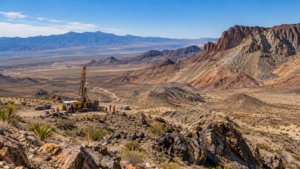
Covered copper targets require successive drill holes to establish geometry and continuity.
What operators and investors should track
Exploration financing is most informative when followed through to operational evidence. The key indicators over the next phase of the cycle include:
- The proportion of financing spent directly on drilling and technical work.
- Planned versus completed metres.
- Assay turnaround times and the continuity of reported mineralization.
- Resource upgrades and changes in confidence categories.
- Metallurgical recoveries and processability.
- Permitting progress and community agreements.
- Infrastructure requirements, including power, roads and water.
- The shift from exploration funding to feasibility and construction finance.
The market is also likely to distinguish between discoveries that can use existing infrastructure and those requiring an entirely new mining district. That difference affects timelines, capital intensity and permitting exposure.
For critical minerals, the retreat in lithium and nickel exploration budgets is a warning that policy urgency does not automatically translate into private-sector risk capital. Developers still need credible economics, competitive processing routes and customers willing to support projects through long construction periods.
Mining exploration is therefore entering a more selective phase. Gold and copper are benefiting from stronger financing conditions, while battery-material projects must demonstrate a clearer path from geology to supply-chain relevance. The companies best positioned to retain capital will be those that connect each financing round to a measurable technical milestone and explain what that milestone changes in the development case.
Sources and further reading
- S&P Global: Global Exploration Trends and Outlook
- S&P Global: Copper exploration budgets and project pipeline
- Agnico Eagle exploration results and plans
- Vale Base Metals exploration update
- Skillings Mining Finance coverage
- Skillings copper exploration coverage
- Skillings gold exploration coverage
- Skillings critical minerals analysis