For mining companies developing copper, lithium, nickel and other critical-mineral projects, ESG compliance is moving from a reporting exercise into the project critical path. The immediate question is no longer whether a company publishes sustainability targets. It is whether site-level evidence can support a permit application, withstand assurance, satisfy lenders and address community concerns.

That shift is important because the same information is increasingly used by regulators, investors, customers and insurers. Water balances, greenhouse gas inventories, tailings data, closure costs and community commitments now influence both the credibility of a mine plan and the speed at which it can move through review.
A concrete milestone illustrates the direction of travel. Under the EU Critical Raw Materials Act, designated Strategic Projects face maximum permit-granting periods of 27 months for extraction and 15 months for processing or recycling. Those limits do not guarantee approval, and environmental impact assessments are treated separately from the permitting timetable. Projects that enter the process with incomplete environmental or social evidence may still face information requests, redesigns or challenges.
Why ESG disclosure is becoming permitting evidence
Permitting and sustainability reporting have different legal purposes. An environmental impact assessment is generally site-specific and supports a regulatory decision. Corporate sustainability reporting can cover a group’s subsidiaries, supply chain, customers and broader financial risks.
In practice, the two systems increasingly draw on the same underlying data.
More Read

A mine’s water withdrawal figures may appear in its permit application, annual sustainability report and lender information package. Tailings stability records may be reviewed by engineers, disclosed to investors and referenced by local stakeholders. A community grievance that is unresolved in the field may later become a disclosure issue if it affects operating continuity, project approval or the company’s risk profile.

The Corporate Sustainability Reporting Directive, as amended by Directive (EU) 2026/470, retains the principle that companies should report both how sustainability matters affect the business and how the business affects people and the environment.
That “double materiality” approach matters for mining because operational impacts can also become financial risks. Water scarcity can constrain production. Biodiversity impacts can require additional mitigation. Labor or human-rights concerns can affect contractors and offtake relationships. Tailings weaknesses can increase insurance, financing and remediation costs.
More Read


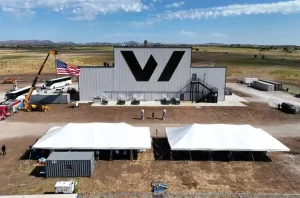
Integrated control rooms are increasingly used to connect operational data with compliance and risk management.
The regulatory milestones operators should track
The amended EU framework gives large mining groups several quantified thresholds and deadlines to map against their legal structure.
Under the revised CSRD framework described by Covington’s analysis, EU companies generally enter scope at 1,000 or more employees and €450 million in net turnover. For qualifying non-EU parent companies, the framework uses EU turnover thresholds and the presence of a sufficiently large EU subsidiary or branch.
For many large EU undertakings, reporting begins for financial years starting in 2027, with public reporting expected in 2028 or 2029, depending on the company and national implementation. Limited assurance remains part of the framework, while the European Commission is expected to establish harmonized assurance standards.
The revised Corporate Sustainability Due Diligence Directive has a higher threshold. It applies to EU companies with at least 5,000 employees and €1.5 billion in worldwide net turnover, and to qualifying non-EU companies with at least €1.5 billion in EU turnover. The principal compliance milestone is July 26, 2029.
The revised rules also require companies to assess adverse environmental and human-rights impacts through a risk-based process. A company is expected to begin with a scoping exercise using reasonably available information, then conduct more detailed assessments in areas where impacts are most likely and severe.
For mining groups, that can include their own operations, subsidiaries, contractors, logistics providers, processing partners and other businesses in the relevant chain of activities.
The United States remains more fragmented. California disclosure rules create significant exposure for large companies doing business in the state, while federal climate-disclosure requirements remain subject to regulatory and legal uncertainty. A recent 2026 ESG regulatory review highlights the resulting need for companies to monitor both binding requirements and voluntary frameworks used by lenders and customers.
A scenario framework for permitting and disclosure risk
The table below is a planning framework rather than an industry forecast. It shows how the quality of ESG evidence can affect project schedules, capital requirements and operating exposure.
| Scenario | Evidence and control position | Permitting implication | Illustrative schedule or cost exposure |
|---|---|---|---|
| Base case | Core water, emissions, tailings and community data is available, but some assumptions require clarification | Additional information requests and targeted permit conditions | 3–9 months of review friction; moderate compliance spending |
| Controlled case | Site data is traceable, independently reviewed and aligned with the environmental impact assessment | Review proceeds with fewer material revisions | 0–3 months of avoidable delay; planned monitoring and assurance costs |
| Stress case | Conflicting data, unresolved grievances or weak tailings and water assumptions | Redesign, supplemental studies, appeals or tighter operating conditions | 9–24 months of delay; material treatment, redesign or financing costs |
| Disclosure-led escalation | Public reporting identifies a risk that is not reflected in the permit file or feasibility study | Regulators, communities or lenders request reconciliation | Schedule impact depends on the gap; potential rework across multiple documents |
The most important control is consistency. A water figure should have a defined boundary, a source record and an accountable owner. An emissions number should identify the facilities included, the calculation method and any estimates. A community commitment should have a budget, completion milestone and responsible manager.
Without those controls, an apparently minor discrepancy can become a wider credibility problem.
Water and tailings remain the clearest fault lines
Water is often the first issue to connect ESG disclosure with permitting risk. A project in a water-stressed basin may need to demonstrate its withdrawals, consumption, recycling rates, discharge quality and response to drought conditions.
If the feasibility study assumes a stable water supply but the environmental assessment uses a different climate scenario, regulators may ask for revised modeling. If the company’s public report presents a lower water intensity than the site data supports, lenders and customers may seek clarification.
Tailings create a similar exposure. The Global Industry Standard on Tailings Management is not automatically law in every jurisdiction, but its requirements can enter a project through permits, lender covenants, customer standards or corporate commitments.
A credible tailings control system should connect:
- Facility inventories and ownership responsibilities.
- Consequence classification and independent technical reviews.
- Monitoring of seepage, water levels, deformation and stability.
- Emergency-preparedness and response plans.
- Closure and post-closure obligations.
- Public reporting of significant gaps and remediation milestones.

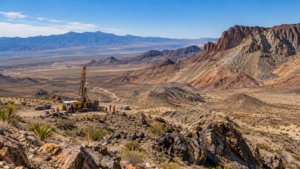
Field sampling links environmental assumptions in project documents with conditions observed at the site.
The cost of delay can exceed the cost of control
ESG compliance involves direct expenditure. Companies may need additional meters, laboratory testing, tailings instrumentation, external assurance, data systems, community engagement and rehabilitation work.
The larger financial exposure is often the schedule.
For illustration, a project expected to generate $200 million in annual cash flow, discounted at 8%, would lose approximately $14.8 million in present value from a one-year delay. A two-year delay would reduce present value by approximately $27.4 million, before financing costs, inflation, contractor claims or commodity-price changes.
The calculation is not a project valuation or investment recommendation. It demonstrates why a relatively modest investment in permitting-quality evidence can protect a much larger development schedule.
Strategic importance does not remove environmental review. Copper, lithium and nickel projects may benefit from government coordination because of energy-transition and supply-chain priorities, but they still need defensible water, biodiversity, tailings, social and closure plans.
An operating model for mining ESG compliance
1. Map obligations by asset
Companies should maintain an obligation register for every mine, processing plant, tailings facility and development project. The register should distinguish environmental permits, emissions requirements, disclosure rules, lender covenants, customer requests and voluntary frameworks.
This prevents a corporate-level policy from being mistaken for evidence that a particular site is compliant.
2. Build one controlled data architecture
A common data dictionary should cover emissions, water, waste, land disturbance, tailings, safety and community indicators. Each metric should have a definition, reporting boundary, source system, calculation method, review process and accountable owner.
The aim is not to collect every possible ESG indicator. It is to make material information consistent and auditable.
3. Link ESG to mine planning and capital allocation
Water-treatment systems, tailings upgrades, rehabilitation, monitoring networks and community programs should be incorporated into feasibility studies, sustaining-capital budgets and financial models.
If a drought scenario reduces available water, the assumption should flow into production planning. If tailings capacity is constrained, that should affect mine sequencing and capital requirements. ESG risks become more manageable when they are visible in the same systems used for operational decisions.

Permitting decisions depend on how field evidence, design assumptions and stakeholder commitments fit together.
What decision-makers should monitor
Broad ESG scores are less useful for project readiness than a focused set of operating indicators:
- Percentage of sites with complete and reconciled water balances.
- Tailings facilities with current independent technical reviews.
- Scope 1 and Scope 2 data supported by an assurance trail.
- Number and age of unresolved permit conditions.
- Land disturbed compared with land rehabilitated.
- Closure liabilities supported by approved financial provisions.
- Community grievances open beyond agreed resolution periods.
- Corrective actions completed by contractors and site managers.
- Material ESG data gaps carried into the next reporting cycle.
- ESG-related capital spending compared with the sustaining-capital plan.
These measures do not eliminate commodity-price, construction, labor or geopolitical risks. They provide a clearer indication of whether environmental and social issues are being managed before they become schedule, financing or balance-sheet problems.
Conclusion
Mining ESG compliance is becoming a test of operating discipline. The strongest projects will not necessarily be those with the most ambitious public targets. They will be the projects that can show, site by site, how water, tailings, emissions, closure and community commitments are measured, funded and controlled.
For operators, the priority is to make evidence usable across permits, assurance, financing and daily mine management. For investors and lenders, the relevant question is whether disclosed targets are supported by reliable data, accountable owners and implementation plans.
As the EU reporting and due-diligence milestones approach, ESG compliance is no longer separate from mine economics. It is increasingly part of the schedule, the capital plan and the license to operate.