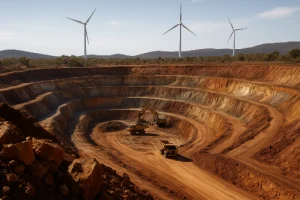
Sydney/London — BHP’s decision to cut 750 jobs at its Saraji South mine in Queensland and Anglo American’s parallel workforce reductions are not isolated cost-cutting measures. They are a bellwether for how global mining is being reshaped by shifting demand, rising costs, and growing regulatory and investor pressure. For a sector long reliant on coking coal revenues, the developments highlight structural challenges now facing the world’s largest exporters.

Australia’s Coal Sector at a Crossroads
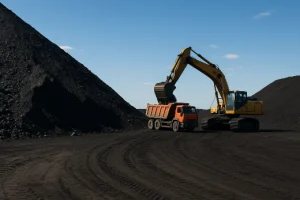
BHP Mitsubishi Alliance confirmed this month it will place Saraji South into care and maintenance from November 2025, citing weak margins in a high-cost environment. Anglo American is following suit, trimming 200–300 roles across its Bowen Basin mines and Brisbane office. QCoal’s Cook Colliery has also scaled back operations, affecting a further 80 workers.
The numbers are stark. Australia, the world’s top exporter of metallurgical coal, shipped around 160 million tonnes in 2024, according to S&P Global. Yet margins are eroding as international spot prices for premium hard coking coal fell by more than 20% year-on-year in H1 2025, while wage inflation, equipment costs, and deeper mining have pushed operating expenditure up by double digits.
At the heart of industry frustration lies Queensland’s 2022 royalty overhaul, which introduced a steeply progressive system when coal prices exceed A$175/t. Producers argue the system has left mines exposed in a downturn, turning once-profitable pits into liabilities.
Stranded-Asset Risk Extends Beyond Coal
Coal assets once considered bankable are now vulnerable to early retirement. The Institute for Energy Economics and Financial Analysis (IEEFA) notes that several Queensland underground mines are already running at the edge of viability. Globally, similar dynamics threaten to strand fossil-fuel projects in jurisdictions where price volatility and tightening regulation intersect.

For mining companies, this raises a broader question: how much longer can coal remain a core portfolio asset when investors, insurers, and governments are accelerating away from it?

Policy and Trade Dynamics
The Queensland royalty structure has become a flashpoint, but the underlying trend is wider. Governments from Canada to South Africa are exploring mechanisms to capture more fiscal rent during commodity booms, raising the specter of unpredictable policy swings.
At the same time, trade flows are being redrawn. India — long a growth market for Australian coal — has increased intake from Russia and the United States, where logistics and contract terms have proven competitive. This competition adds further pressure on Australian producers, already squeezed by policy and cost headwinds.
Investor and ESG Pressures
Perhaps the most significant shift is investor sentiment. Global asset managers continue to retreat from coal financing, reallocating capital toward “transition metals” such as copper, nickel, and lithium. BHP’s own strategic pivot — exiting thermal coal entirely and now rebalancing away from low-margin coking coal — underscores the trend.
According to BloombergNEF, investment into transition minerals is expected to outpace coal capital expenditure by a factor of three within the next five years. That signals a decisive reprioritization of where mining’s growth capital will flow.
Regional and Social Fallout
The Bowen Basin’s heavy reliance on coal royalties and employment leaves regional economies exposed. Local councils have warned of ripple effects across housing markets, retail, and small business. This mirrors challenges in other mining regions globally — from Appalachia to Poland — where coal retrenchment brings social and political consequences that extend well beyond mine gates.
Skillings Analysis
- Portfolio risk is accelerating. Coal’s role as a cornerstone revenue stream for diversified majors is diminishing, forcing capital to flow toward growth metals.
- Policy volatility matters. Queensland’s royalty debate highlights how quickly fiscal frameworks can shift investment decisions and long-term mine viability.
- Communities remain vulnerable. Mining companies face rising responsibility to plan transitions that protect social license and regional economies.
Looking Ahead
The next quarter will test whether recent coal price weakness stabilizes or continues to erode profitability. For Australia, the Christmas cycle — typically a period of logistical bottlenecks and tighter shipping — may offer temporary support. But the longer-term trajectory is clear: coal is ceding ground to critical minerals. For global mining leaders, the lesson is unambiguous — diversify early, engage with policymakers proactively, and prepare for deeper structural shifts that will define the industry beyond 2025.