Province Expedites $20 Billion in Critical Mineral and Energy Developments
In a strategic move to fortify its economy against potential U.S. tariff impositions, the British Columbia mining projects initiative has been unveiled by the provincial government. The plan aims to accelerate 18 critical mineral and energy developments, collectively valued at approximately $20 billion. This initiative seeks to diversify the province’s economic base and mitigate risks associated with trade uncertainties.

Project Portfolio and Economic Impact
The expedited British Columbia mining projects encompass a diverse array of developments, including four mining operations, three energy security initiatives, and eleven BC Hydro clean energy ventures, primarily focused on wind power. Collectively, these projects are expected to generate employment for approximately 8,000 individuals across the province.
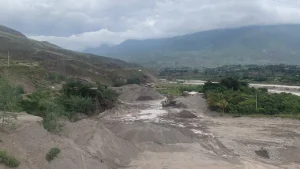
Notable among the mining projects are the Eskay Creek gold and silver mine and the Red Chris gold and copper mine expansion, both located in northern British Columbia. Additionally, the Highland Valley Copper Mine, southwest of Kamloops, is slated for expansion. On the energy front, the Cedar LNG project—a proposed floating liquefied natural gas facility near Kitimat—stands out as a significant development.
Related News
- Ukraine Rare Earth Mining: Strategic Deals and U.S. Interest
- What Space Debris and Deep-Sea Mining Can Teach Us About Cleaning Up Earth’s Orbit
- Capricorn Metals Expands WA Exploration with Mummaloo Acquisition
- Keystone Project Nevada: U.S. Gold Corp.’s High-Stakes Bet in the Cortez Trend
Government’s Strategic Rationale
Premier David Eby has emphasized that the acceleration of these British Columbia mining projects is a proactive strategy to diversify the province’s economy in anticipation of “four years of continual on-and-off tariff threats” from the United States under President Donald Trump’s administration. This approach reflects a broader effort to enhance economic resilience amid shifting international trade dynamics.
Environmental and Indigenous Concerns
The government’s plan has sparked reactions from environmental organizations and Indigenous groups. Jessica Clog, executive director and senior counsel for West Coast Environmental Law, voiced concerns that the expedited process might bypass essential environmental assessments and limit First Nations consultations. She stressed the need to uphold democratic decision-making, environmental sustainability, and Indigenous human rights, warning against “short-sighted steps that may compromise long-term ecological and community resilience.”
Certain British Columbia mining projects have also faced opposition from Indigenous communities. The Stk’emlupsemc te Secwepemc Nation has withheld consent for the Highland Valley Copper Mine expansion, citing concerns over environmental impacts on ancestral lands and water sources. Additionally, some tribal governments in Alaska have raised objections to the Eskay Creek and Red Chris mine projects due to potential cross-border environmental repercussions.

Industry Perspectives
Industry advocates have praised the government’s initiative. Stewart Muir, CEO of Resource Works, a Vancouver-based organization promoting natural resource development, remarked that the expedited list of British Columbia mining projects is likely to “impress investors” and demonstrates a high-priority commitment from the provincial government. He added that recent tariff threats have “galvanized what might be an unprecedented level of government and industry collaboration.”
As British Columbia mining projects move forward at an accelerated pace, the province must navigate a complex landscape of economic growth, environmental sustainability, and Indigenous rights. This strategy underscores the delicate balance between fostering economic development and maintaining commitments to sustainable resource management and inclusive decision-making.