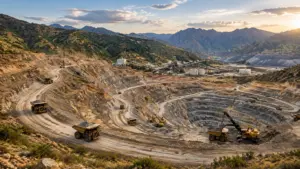
Copper, dubbed the “new strategic raw material” by the United Nations, is at the heart of the global transition to green energy—but the rush to mine it is surfacing deep concerns about environmental damage and human rights violations.

In its latest Global Trade Update, the UN Conference on Trade and Development (UNCTAD) projected that global copper demand will surge more than 40% by 2040, driven by rising production of electric vehicles, wind turbines, and solar panels. Meeting that demand will require 80 new copper mines and at least $250 billion in new investment by 2030. Without this, UNCTAD warns, the energy transition could stall.
“Copper is no longer just a commodity – it’s a strategic asset,” said Luz María de la Mora, director of UNCTAD’s Division on International Trade and Commodities. “Its market exposes the power asymmetries that still shape global trade. That’s why we need to invest in local value addition, scale up recycling and remove trade barriers that limit opportunity.”
But this rapid growth in copper demand is revealing an uncomfortable truth: the clean energy revolution may be resting on an unsustainable and unjust foundation.
Related News
- Blackstone’s Mankayan Bet Reignites Interest in Philippine Copper-Gold Belt
- Unki Mine Commits $700K to Expansion, Solar Power Despite Production Setbacks
- Copper Industry Faces $2.1 Trillion Investment Gap to Meet Global Demand by 2050
- Trade Shifts Reshape Transatlantic Copper Pricing Trends
- China’s Copper Demand Stabilizes Global Markets Amid Renewable Energy Boom
Human Rights Abuses Linked to Copper Mining
A separate report released by the Business and Human Rights Resource Centre (BHRRC) has flagged copper as the most problematic of all transition minerals, accounting for 513 allegations of human rights abuses out of 835 cases tied to the mining of eight critical minerals between 2010 and 2024.
More Read

Those eight minerals—copper, cobalt, lithium, bauxite, manganese, nickel, zinc, and iron ore—are vital for the technologies driving decarbonization. But BHRRC’s Transition Minerals Tracker found that copper extraction alone was responsible for over 60% of documented abuses, including attacks on environmental defenders, forced displacement, pollution, and violations of Indigenous rights.

In 2024 alone, copper was associated with more than half of the 156 allegations recorded in the tracker. Caroline Avan, head of just transition and natural resources at BHRRC, said the findings show that “the urgency of the energy transition cannot justify an unprincipled scramble for transition minerals.”
Environmental Devastation and Community Conflict
The environmental fallout is equally severe. More than half of copper mines in high water stress regions were found to have adverse effects on local water sources, including pollution and diminished access.
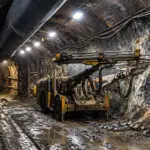
In Zambia, one of the world’s largest copper producers, four companies—including Sino-Metals Leach Zambia—were accused this year of releasing toxic effluents into the Kafue River watershed. In February, a tailings dam collapse resulted in acidic waste spilling into the river, killing fish, livestock, and crops. The incident forced the shutdown of the Kitwe municipal water supply and devastated local livelihoods.
Peru, Chile, and the Democratic Republic of Congo (DRC)—which together host a majority of the world’s copper reserves—accounted for 35% of total global allegations from 2010 to 2024, underscoring the geographic concentration of both copper and conflict.
Indigenous Rights and Inadequate Oversight
The tracker highlighted that 77% of all copper-related allegations involved violations of Indigenous Peoples’ rights, particularly their right to Free, Prior and Informed Consent (FPIC). This has sparked widespread resistance in mining regions, where communities often find themselves sidelined from decision-making even as they bear the brunt of mining’s impacts.
“Rushing to extract more minerals without reducing consumption or showing true respect for our rights is not only reckless—it is unjust and unfair,” wrote Edson Krenak, Brazil cultural survival lead, in the report.
Annabella Rosemberg of Climate Action Network (CAN) International echoed those concerns, urging that the global green transition must be “rights-based” and equitable. “A transition built on exploitative mineral supply chains is unstable, unpredictable, and ultimately unsustainable,” she said.
Corporate Accountability Lags Behind
Despite the escalating number of abuse claims, the BHRRC found that fewer than half of implicated mines have corporate human rights policies in place. Just 20 companies were linked to 60% of all allegations since 2010, with leading names in 2024 including China Minmetals, Georgian American Alloys, and Grupo México.
Moreover, the report identified 157 attacks against human rights and environmental defenders—one in five of all abuse allegations—highlighting the dangerous environment in which opposition to mining is often expressed.
A UN panel last year called for tighter safeguards to protect both communities and ecosystems, recommending that benefits be shared with locals and investments be subject to stricter ethical and environmental standards.
A Fork in the Road
As governments and industries double down on electrification to meet climate goals, copper demand is poised to keep rising. But experts are increasingly warning that unless this demand is matched by oversight, justice, and sustainability, the path to net zero may come at an unbearable cost.
“The extraction of minerals at all costs, without reducing energy demand and rethinking consumption patterns in rich countries, will not solve the climate crisis,” Rosemberg wrote. “It will only deepen inequality and insecurity.”
The world must now decide whether its clean energy ambitions will prioritize not just decarbonization, but also fairness, transparency, and community well-being.