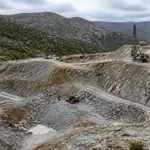
Capstone’s Mantoverde-Santo Domingo district in Chile’s Atacama Region is becoming a larger platform for copper exploration, processing and future mine development.

By Penny Langford
Capstone Copper’s completed acquisition of the San Pietro copper assets gives the company control of a large exploration package between its Mantoverde mine, Santo Domingo project and Sierra Norte property in Chile’s Atacama Region.
The transaction does not add immediate production. San Pietro remains an exploration- and resource-stage project with no published construction schedule or first-production date. Its importance lies in the strategic position of the land package, the scale of its initial inferred resource and the potential to feed a broader district development strategy.
For copper markets, the deal highlights a central theme of the 2026 outlook: companies are placing a higher value on deposits that can be connected to existing mines, processing capacity and permitted infrastructure.

San Pietro acquisition: deal at a glance
Capstone announced completion of the acquisition on Aug. 31, 2026. The company paid approximately US$25 million in Capstone shares to New Golden Exploration Chile SpA, a joint venture indirectly owned by Golden Arrow Resources and Sociedad de Servicios Andinos.

The consideration was satisfied through the issuance of 2,034,970 Capstone shares, calculated at a deemed value of C$15.77 per share after applicable withholding taxes.
The acquired copper concessions cover approximately 16,000 hectares and include the Rincones and Colla deposits. The transaction represents roughly two-thirds of the broader San Pietro land package. Golden Arrow and its partner retain more than 9,000 hectares, including gold-focused exploration ground.

| Item | Reported detail |
|---|---|
| Transaction status | Completed |
| Consideration | Approximately US$25 million |
| Form of payment | Capstone shares |
| Shares issued | 2,034,970, net of applicable withholding taxes |
| Acquired land package | Approximately 16,000 hectares |
| Key deposits | Rincones and Colla |
| Project location | Atacama Region, Chile |
| San Pietro resource | 492 million tonnes inferred |
| Copper grade | 0.23% |
| Gold grade | 0.05 grams per tonne |
| Production status | No commercial production or sanctioned mine plan |
The resource estimate is reported within a US$4.80-per-pound copper pitshell and at a 0.30% copper-equivalent cut-off. It comprises approximately 83 million tonnes of oxide material and 410 million tonnes of sulphide material.
Capstone’s release reports contained metal of approximately 4.44 billion pounds of copper, 770,000 ounces of gold, 107 million pounds of cobalt and 157 billion pounds of iron. These figures are based on an inferred resource and should not be treated as reserves or as evidence of economic viability.
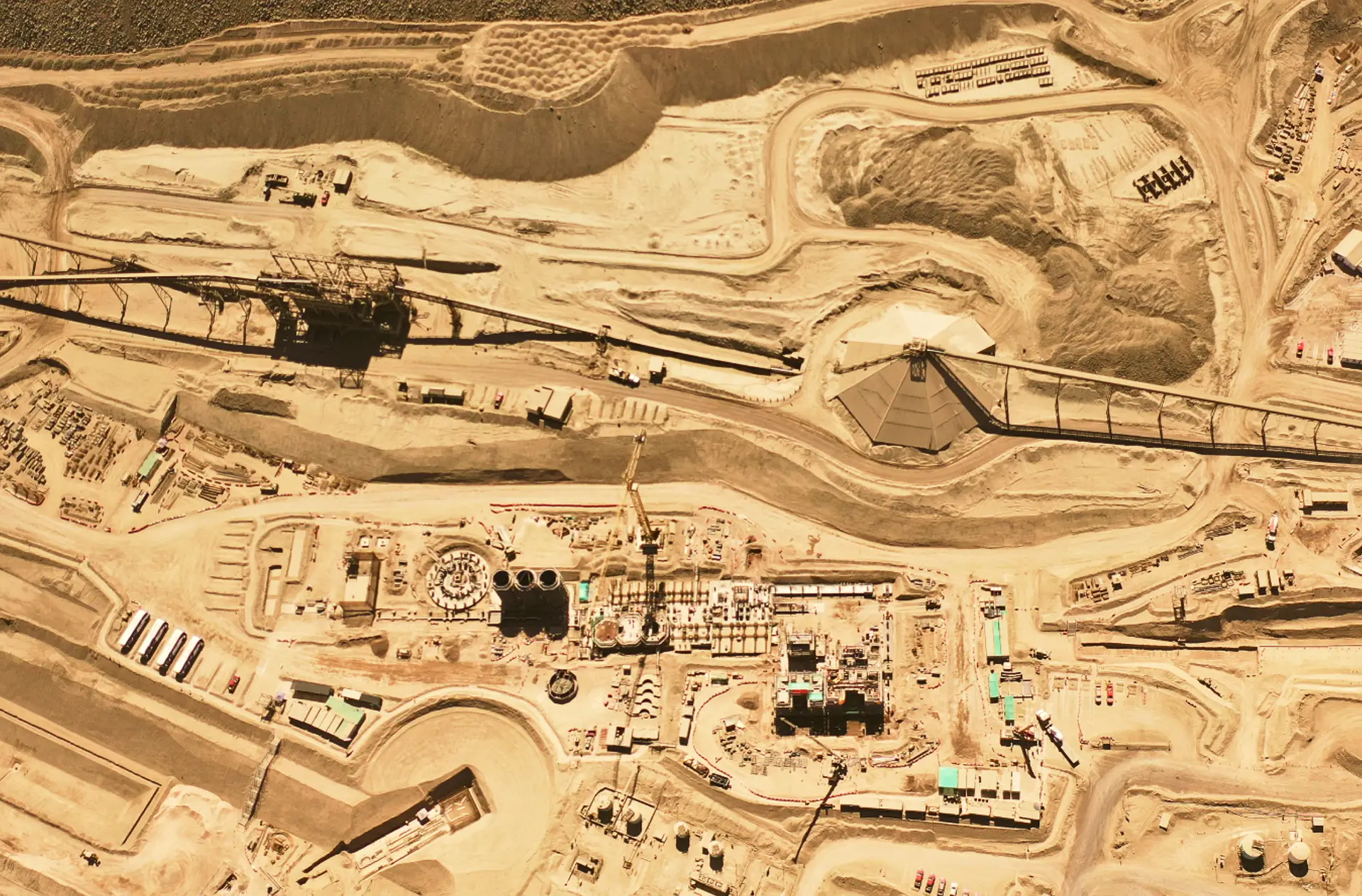
Mantoverde is Capstone’s operating copper-gold mine in the Atacama Region.
Why Atacama consolidation matters
San Pietro is positioned between Capstone’s main Atacama assets. Mantoverde is an operating open-pit copper-gold mine, while Santo Domingo is a fully permitted copper-iron-gold development project located approximately 35 kilometres northeast of Mantoverde. Sierra Norte adds further exploration potential to the district.
Capstone says its combined district position now covers approximately 60,000 hectares, with a further 18,000 hectares associated with an option agreement with Chile’s Empresa Nacional de Minería, or ENAMI.
The strategic case is based on proximity. A standalone exploration project must usually develop its own access roads, power systems, water arrangements, camps, processing plant and logistics network. A deposit inside an established mining district may eventually have more development pathways, although those advantages must still be demonstrated through technical studies.
Capstone’s district plan identifies several potential synergies:
- Use of existing or planned processing infrastructure.
- Potential access to excess SX-EW capacity at Mantoverde.
- Shared technical, operational and permitting expertise.
- Additional oxide or sulphide feed sources.
- Exploration across regional geological structures rather than isolated project boundaries.
- Potential tax and infrastructure efficiencies if multiple projects advance together.
The company has said the Mantoverde-Santo Domingo district could support more than 250,000 tonnes per year of potential copper production under its broader development concept. That figure is not a current production forecast and does not include a sanctioned San Pietro mine plan.
Production timeline: what is known
The most important distinction for investors and operators is between near-term production growth and longer-term exploration optionality.
San Pietro has no publicly disclosed construction decision, capital estimate, feasibility study or first-production date. Capstone has indicated that it will integrate the property into district exploration and development planning, but further drilling, resource verification, metallurgical testing and technical studies are required.
Near-term growth is tied to Mantoverde rather than San Pietro. Capstone’s US$176 million Mantoverde Optimized project is designed to increase sulphide mill throughput from approximately 32,000 tonnes per day to 45,000 tonnes per day. Construction is expected to be completed in the third quarter of 2026, with ramp-up scheduled for the fourth quarter.
Capstone’s 2026 guidance calls for:
| Operating metric | 2026 guidance |
|---|---|
| Consolidated copper production | 200,000–230,000 tonnes |
| Consolidated C1 cash costs | US$2.45–US$2.75 per payable pound |
| Mantoverde copper production | 64,000–74,000 tonnes |
| Mantoverde C1 cash costs | US$1.25–US$1.55 per payable pound |
| Mantoverde Optimized construction | Completion expected in Q3 |
| Mantoverde Optimized ramp-up | Expected in Q4 |
Santo Domingo remains a separate development-stage project. Its feasibility study outlines potential average copper production of approximately 106,000 tonnes per year during the first seven years, with a mine life of more than 19 years. Capstone has not yet included Santo Domingo in operating production guidance.
San Pietro is earlier in the development cycle than Santo Domingo. Its value depends on whether Capstone can convert an inferred resource into a larger, better-defined resource and eventually into economically mineable reserves.
Copper price forecast framework
Available 2026 market forecasts generally place copper in a historically elevated range, although analysts disagree about whether the market will record a deficit or a surplus.
A January Reuters poll of analysts placed the median 2026 copper forecast near US$11,975 per tonne, while Goldman Sachs has presented a more cautious view centred on a US$10,000–US$11,000-per-tonne range. The difference reflects uncertainty over mine disruptions, scrap supply, global growth, inventories and energy-transition demand.
The following framework is an editorial scenario model, not Capstone guidance or an investment recommendation.
| Scenario | Copper price assumption | Market conditions | Potential effect on Atacama strategy |
|---|---|---|---|
| Bear | US$9,400–US$10,500/t | Surplus, slower industrial demand, stronger scrap flows and smoother mine performance | Higher cut-off pressure; exploration spending may be prioritized toward the best targets |
| Base | US$11,500–US$12,700/t | Tight but broadly balanced market; continued grid and electrification demand | Supports sustained drilling and evaluation of district processing synergies |
| Bull | US$13,200–US$14,900/t | Major mine disruptions, low inventories and accelerated power-sector demand | Increases the value of resource conversion and may strengthen the case for faster development studies |
The base case is the most relevant for assessing San Pietro today. Prices in that range could support continued exploration, but they do not remove the technical and permitting work required before a development decision.
The IEA expects total copper demand to reach approximately 30–31 million tonnes by 2030, with clean-energy technologies accounting for roughly 11–12 million tonnes. That long-term demand outlook supports the strategic rationale for adding copper resources, but it does not guarantee that every exploration-stage resource will become a mine.
Operational risks to monitor
The acquisition creates optionality, but it also introduces several risks that could limit the value of consolidation.
1. Resource conversion risk
San Pietro’s current resource is inferred. Drilling is needed to test continuity, improve confidence and identify higher-grade zones. Until that work is complete, the resource cannot support a reserve statement or a bankable mine plan.
2. Metallurgical risk
The deposit contains both oxide and sulphide material, along with gold, cobalt and iron. Those materials may require different processing routes. Metallurgical testing will determine whether San Pietro can produce saleable products using existing district facilities or whether new processing capacity would be required.
3. Infrastructure integration risk
Proximity to Mantoverde and Santo Domingo may reduce development complexity, but it does not automatically create spare capacity. Available SX-EW capacity, power, water, roads, tailings capacity and concentrate logistics must be assessed against competing district projects.
4. Permitting and social risk
Exploration permits are not equivalent to mine-development permits. Any future San Pietro mine would require environmental assessment, water arrangements, community engagement, land access and regulatory approvals.
5. Capital allocation risk
Capstone is already funding Mantoverde Optimized, Santo Domingo advancement and district exploration. Management must balance San Pietro spending against projects with more advanced technical studies and clearer production timelines.
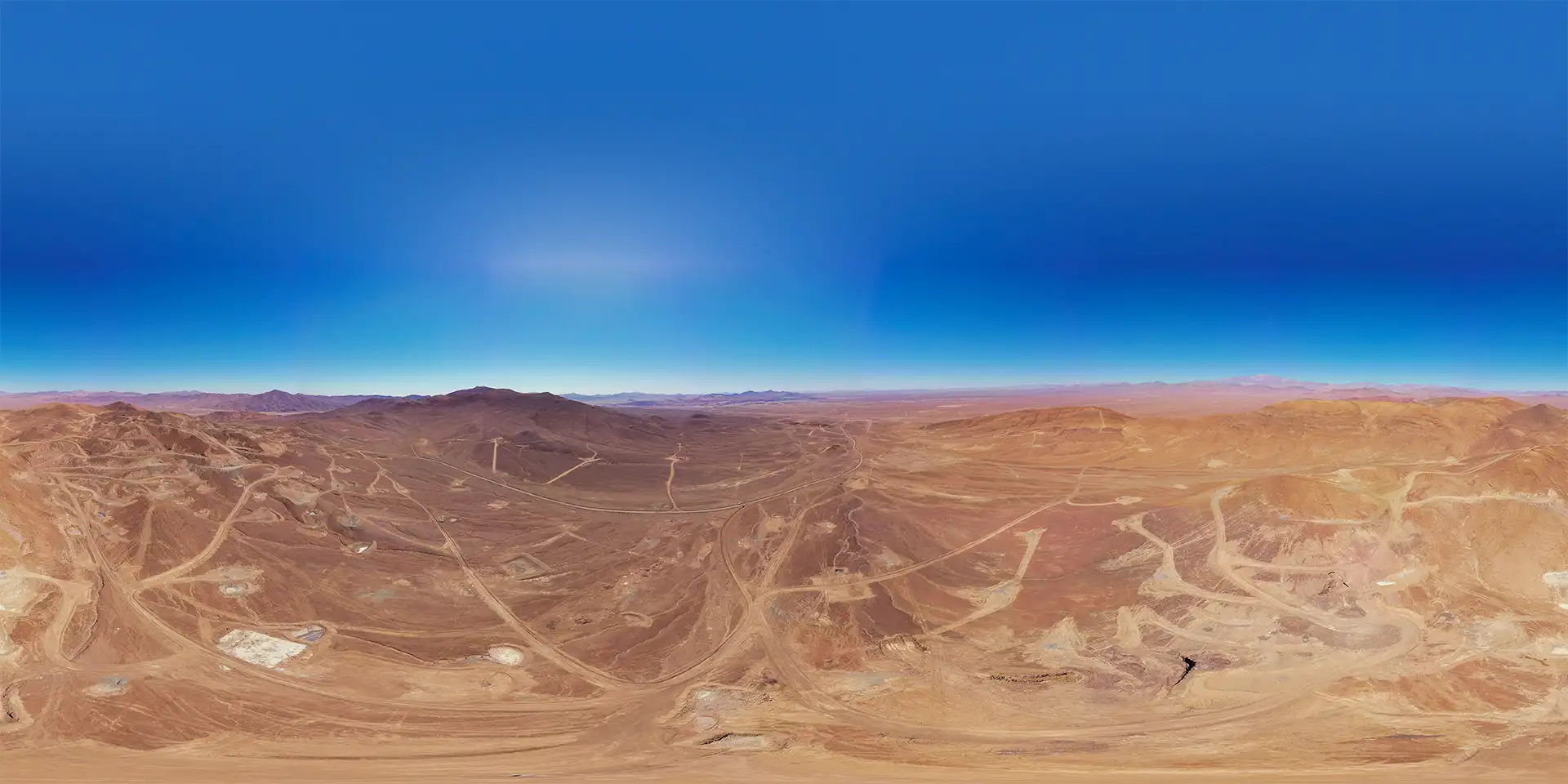
Santo Domingo is a permitted development project within Capstone’s Atacama district strategy.
What the deal means for 2026
San Pietro is unlikely to change Capstone’s reported production in 2026. The near-term operating milestones remain Mantoverde’s throughput expansion and the potential progress of Santo Domingo toward a sanctioning decision.
The acquisition does, however, expand Capstone’s long-term resource base around a district where it already has operating knowledge, infrastructure and a substantial exploration budget. It also gives the company more control over regional geology between its principal Atacama assets.
The strategic test will be whether Capstone can turn land consolidation into measurable advantages: higher-confidence resources, improved feed flexibility, lower infrastructure duplication and a credible sequence for future district development.
For copper markets, the transaction is another example of how companies are responding to a tightening long-term supply outlook. As the industry competes for new tonnes, the most valuable acquisitions may not be producing mines alone. They may also be strategically located resources that can be connected to existing operations.
Related Skillings coverage: Copper supply chains and Arizona’s water constraints, copper smelter pressures, and copper market valuation and M&A premiums.
Shareable social snippets
LinkedIn:
Capstone Copper has completed its approximately US$25 million, all-share acquisition of the San Pietro copper assets in Chile’s Atacama Region. The 16,000-hectare package includes the Rincones and Colla deposits, with a 492-million-tonne inferred resource. The immediate value is not new production; it is district-scale optionality around Mantoverde, Santo Domingo and Sierra Norte.
X:
Capstone Copper’s San Pietro deal adds ~16,000 hectares and a 492Mt inferred resource to its Atacama portfolio. No production timeline has been disclosed. The strategic case rests on future resource growth, shared infrastructure and consolidation around Mantoverde and Santo Domingo.
Sources: Capstone Copper acquisition release; Capstone 2026 guidance; Mantoverde-Santo Domingo district overview; San Pietro technical report; Reuters copper forecast poll; Goldman Sachs copper outlook; IEA copper analysis.