By Charles Pitts

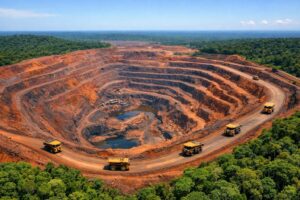
Ecuador is no longer the “quiet neighbor” of the Andean mining world. For decades, while Chile and Peru cemented their status as the world’s copper titans, Ecuador remained largely unexplored and under-developed. That isolation has ended. As 2026 approaches, the country is emerging as a global copper powerhouse, positioned as the next major theater for high-stakes mergers and acquisitions (M&A).
With the world facing a structural copper deficit in 2026, the industry’s largest players: BHP, Rio Tinto, and the Lundin Group: are increasingly looking to Ecuador’s untapped porphyry systems to secure long-term supply. The narrative is shifting from “potential” to “production,” driven by a combination of world-class discoveries like SolGold’s Cascabel and a government eager to tender its “crown jewel” assets.
The Anchor Assets: Cascabel and Llurimagua
The epicenter of Ecuador’s copper gravity is the Cascabel project, held by SolGold. Located in the northern Imbabura province, Cascabel is widely regarded as one of the few remaining “tier-one” copper-gold assets globally. A 2024 Pre-Feasibility Study (PFS) reaffirmed its massive scale, but it is the company’s 2025 execution plan that has set the stage for a 2026 showdown.
SolGold has targeted first production for 2028, a timeline that necessitates a massive capital influx over the next 12 to 24 months. For a junior developer, the multi-billion dollar price tag of an Andean underground mine is a steep climb. This capital gap makes SolGold a prime candidate for a strategic partnership or an outright buyout.



Parallel to Cascabel is the Llurimagua copper-molybdenum project. The Ecuadorian government has scheduled a tender for Llurimagua in 2026, estimating a required investment of approximately $3 billion. As a state-backed process, the Llurimagua tender will serve as a critical “price discovery” event. The terms of the deal and the identity of the winning bidder will dictate the valuation benchmarks for every other copper project in the country.
The Major Players’ Playbook: BHP and Rio Tinto
The interest from mining’s “Big Two” is no longer speculative. BHP has already signaled its strategy for the Andes through its 50:50 joint venture with Lundin Mining in the Vicuña district. This partnership demonstrates a willingness to share risk in complex, high-altitude jurisdictions.
More Read

For BHP, Ecuador is a logical extension of its copper-heavy growth strategy. The company has historically favored high-margin, long-life assets: the exact profile of Cascabel’s Alpala deposit. While BHP has been cautious about overpaying for acquisitions, the looming supply crunch and the de-risking of Ecuador’s regulatory framework under the Noboa administration may force a more aggressive posture in 2026.
Rio Tinto, meanwhile, has a global copper growth agenda but lacks a significant foothold in Ecuador. While the company has focused on its Oyu Tolgoi and Kennecott operations, its need for “greenfield” copper growth is acute. The 2026 Llurimagua tender offers Rio a clean entry point without the complexities of a hostile takeover of a junior like SolGold.
The Lundin Advantage: A Proven Track Record
If BHP and Rio Tinto represent the “heavy armor,” the Lundin Group represents the “special forces.” The group already operates the Fruta del Norte gold mine via Lundin Gold, which stands as a blueprint for successful development in Ecuador. Fruta del Norte proved that high-grade, large-scale underground mines can be built on time and on budget in the Ecuadorian jungle.

Lundin Mining is uniquely positioned to leverage this in-country experience. In 2026, we may see a “Lundin-led” consolidation, where the group either acquires a larger stake in SolGold or partners with a major like BHP to develop Cascabel. The Lundin philosophy of being “first in and best dressed” in emerging districts has historically yielded high returns for shareholders.
Operational Realities and ESG Hurdles
Despite the geological allure, Ecuador remains a challenging environment. The primary risks in 2026 are not below the ground, but above it. Civil society groups and local communities have expressed concerns over water usage and environmental impacts in the biodiversity-rich highlands.
The success of any M&A activity in 2026 will depend on “Social License to Operate.” Investors are no longer just looking at Internal Rates of Return (IRR); they are scrutinizing ESG frameworks. Any major acquirer will need to bring a sophisticated approach to community relations, mirroring the standards set at Fruta del Norte.

2026 Outlook: The Base, Bull, and Bear Case
The 2026 horizon for Ecuador copper M&A can be broken down into three primary scenarios:
- Base Case (Strategic Partnering): Rather than a full takeover, SolGold secures a “cornerstone” investor (likely BHP or a large Chinese state-owned enterprise) through a staged earn-in or project-level joint venture. This allows the major to de-risk the asset while SolGold remains the operator.
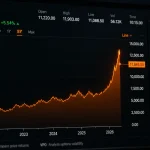
- Bull Case (The “Feeding Frenzy”): A successful Llurimagua tender attracts multiple global majors, sparking a bidding war for SolGold and other mid-tier players like Solaris Resources (Warintza) and Salazar Resources. Copper prices exceeding $11,000/t act as the catalyst.
- Bear Case (Regulatory Stalemate): Political volatility or legal challenges to the mining code delay the Llurimagua tender and SolGold’s permitting milestones. Capital retreats to “safer” jurisdictions like Australia or the United States, leaving Ecuador’s copper in the ground.
Summary of Key Ecuador Copper Projects (2026 Status)
| Project | Owner | Type | 2026 Status |
|---|---|---|---|
| Cascabel | SolGold | Copper-Gold | Technical studies complete; seeking $2B+ development partner. |
| Llurimagua | ENAMI (State) | Copper-Moly | Public tender process for strategic partnership ($3B capex). |
| Warintza | Solaris Resources | Copper-Gold | Advanced exploration; potential for M&A integration. |
| Fruta del Norte | Lundin Gold | Gold-Silver | Operating; serving as the logistical hub for regional expansion. |
| El Domo | Salazar / Adventus | Copper-Gold | Near-term production; testing the mid-tier construction model. |
As the global energy transition accelerates, the race for copper is becoming a race for sovereignty over the most productive districts. In 2026, the industry’s eyes will be firmly on Quito. Those who move early in Ecuador may secure the resources that define the next decade of the copper market.
Social Media Snippet (LinkedIn/X):
Is Ecuador the next global copper titan? ?? As we head toward 2026, assets like SolGold’s Cascabel and the $3B Llurimagua tender are drawing eyes from BHP, Rio Tinto, and Lundin Mining. With a looming copper deficit, the Andean shift is officially underway. Read our deep dive on why 2026 is the tipping point for Ecuador’s mining M&A. #Mining #Copper #Ecuador #M&A #EnergyTransition #SolGold #BHP