TALLINN, Estonia : Neo Performance Materials (TSX: NEO) has successfully commissioned Europe’s first production line dedicated to the separation of heavy rare earth elements (HREEs) at its Silmet facility. This milestone, involving the first commercial-scale production of separated terbium and dysprosium oxides on European soil, represents a fundamental shift in the global magnetics supply chain.

The announcement comes as the European Union accelerates its efforts to secure domestic supplies of materials critical to the energy transition. Until now, the separation of heavy rare earth elements: the chemical process required to turn mixed concentrates into high-purity oxides: was almost exclusively concentrated in China. By operationalizing this solvent extraction line in Estonia, Neo Performance Materials has provided a blueprint for how Western midstream processing can be decoupled from traditional dominant hubs.
The Significance of Terbium and Dysprosium
While light rare earths like neodymium and praseodymium are the primary components of permanent magnets, heavy rare earths are the essential "secret sauce" that allows these magnets to function under high-stress conditions.
Dysprosium and terbium are added to neodymium-iron-boron (NdFeB) magnets to increase their coercivity: their ability to resist demagnetization at high temperatures. This makes them indispensable for:
- Electric Vehicle (EV) Traction Motors: Where high heat and rapid RPMs are standard.
- Wind Turbine Generators: Specifically offshore direct-drive systems where reliability is paramount.
- Advanced Robotics: Requiring high power-to-weight ratios in compact actuators.
- Defense Applications: Including precision-guided munitions and satellite communication hardware.
The successful separation of these elements at the Silmet facility ensures that European manufacturers no longer have to export raw materials for processing only to re-import them as finished oxides or magnets.
More Read



Vertical Integration: From Silmet to Narva
The breakthrough in HREE separation does not exist in a vacuum. It is the center-link in a vertically integrated "Mine-to-Magnet" strategy that Neo has been building in the Baltic region.
In September 2025, Neo opened its Narva magnet plant, the first facility in Europe capable of mass-producing sintered rare earth magnets on an industrial scale. With an initial nameplate capacity of 2,000 tonnes per year, the Narva plant requires a steady, traceable supply of both light and heavy rare earth oxides.
More Read

By producing terbium and dysprosium at Silmet, Neo can now feed its Narva facility with internally sourced, European-processed heavy REEs. This vertical integration reduces logistics costs, minimizes carbon footprints, and, most importantly, provides a level of supply chain transparency that is increasingly demanded by automotive OEMs and renewable energy developers.
This development aligns with broader European initiatives, such as the EU’s strategic move inside the $50B critical minerals reserve plan, which aims to insulate the continent’s green economy from external supply shocks.
Strategic Context: Breaking the Chinese Monopoly
For decades, the global rare earth industry has been characterized by a "bottleneck" in the midstream. While many countries have rare earth deposits, the ability to separate them: especially the heavy variants: has been a technological and environmental hurdle that few Western companies have cleared at scale.
China currently controls approximately 90% of global rare earth separation capacity. Recent export restrictions on gallium, germanium, and certain graphite products from Beijing have underscored the vulnerability of Western high-tech industries. Neo’s move in Estonia is a direct response to this geopolitical reality.
"Our rare earth value chain now spans both light and heavy rare earth processing, enabling the separation and finishing of select elements into value-added, engineered end-use applications," stated Neo CEO Rahim Suleman.
The Estonia facility is currently operating its small-scale solvent extraction line at nameplate capacity. The company has indicated that its primary focus in the near term will be on maintaining stable product purity: reaching the 99.9% or higher levels required for magnetics: before transitioning to a more aggressive routine production schedule.

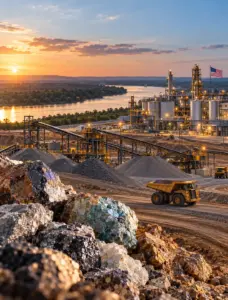
Caption: High-purity rare earth oxides are the essential precursors for the permanent magnets powering the 2026 energy transition.
2026 Outlook: Market Implications and Supply Security
The commissioning of the Silmet line arrives at a time when demand for critical minerals is projected to skyrocket. According to recent industry reports, electric cars are set to drive soaring demand for key minerals, with rare earths among the most supply-sensitive.
For operators and investors, the 2026 outlook for the rare earth sector is defined by three pillars:
- Traceability as a Premium: Automotive manufacturers in the EU and North America are increasingly willing to pay a "sustainability premium" for minerals that are processed under stringent environmental regulations and are fully traceable.
- Policy Support: Governments are no longer leaving supply chains to the "free market." The commissioning of this facility is a win for the European Critical Raw Materials Act, which mandates that at least 40% of the EU’s annual consumption of strategic raw materials be processed within the Union by 2030.
- De-risking Junior Mining: While Neo is an established player, its success in Estonia provides a clearer path for junior miners. Knowing there is a sophisticated separation facility in Europe makes upstream exploration projects like the Per Geijer rare earths project in Sweden more economically viable.
Comparison of Rare Earth Separation Capabilities (Estimated 2026)
| Region | Light REE Separation | Heavy REE Separation | Sintered Magnet Capacity |
|---|---|---|---|
| China | Massive / Dominant | Massive / Dominant | ~200,000+ tpa |
| Europe (Estonia/Neo) | Operational (Silmet) | Newly Commissioned | 2,000 tpa (Expanding) |
| USA (MP Materials) | Operational (Mountain Pass) | Developing / Pilots | Developing (Fort Worth) |
| Australia (Lynas) | Operational (Kalgoorlie) | Developing | Limited |
Technical Challenges and Environmental Standards
The separation of heavy rare earths is notoriously difficult. Unlike light rare earths, heavy elements have very similar chemical properties, requiring hundreds of stages of solvent extraction to achieve high purity.
Neo’s Silmet facility has a historical advantage, having been one of the few sites outside of China with long-term experience in processing rare metals like tantalum and niobium. This expertise has been pivoted toward REEs. Furthermore, the Estonian operations adhere to EU environmental standards, which are significantly more rigorous regarding waste management and chemical handling than those in many other processing hubs. This environmental compliance is a key differentiator for companies appearing on the Skillings Power List of companies dominating the 2026 energy transition.

Conclusion: A New Chapter for European Industry
The production of the first batch of terbium and dysprosium oxides in Estonia is more than a corporate milestone for Neo Performance Materials; it is a proof-of-concept for the Western world. It demonstrates that with the right combination of existing infrastructure, technological expertise, and policy tailwinds, the "unbreakable" monopoly on heavy rare earth processing can be challenged.
As we move further into 2026, the focus will shift from the achievement of first production to the scaling of these operations. With the Narva magnet plant already hungry for these materials, the Silmet separation line is poised to become the beating heart of Europe’s high-tech industrial autonomy.
Social Media Snippet (LinkedIn/X):
? Industry Milestone: Neo Performance Materials (TSX: NEO) has successfully produced Europe’s first batch of separated heavy rare earths (terbium and dysprosium) at its Silmet facility in Estonia. This marks a massive leap toward breaking the global monopoly on magnet materials and securing a domestic supply chain for EVs and wind energy. #CriticalMinerals #RareEarths #EnergyTransition #MiningNews #EUMining #SupplyChainSecurity
Intelligence Newsletter Digest:
- Top Story: Neo Performance Materials commissions HREE separation line in Estonia.
- Market Impact: First domestic supply of terbium/dysprosium for European magnet makers.
- Strategic Move: Complements the Narva sintered magnet plant opened in late 2025.
- Geopolitics: Direct challenge to midstream processing dominance in the East.
- Promotional: Don't miss out: the '2026 Lithium Power Map' presale is now open at skillings.net.