Key Takeaways
- France and Argentina signed a strategic memorandum on Argentina lithium mining and critical minerals.
- The deal aims to expand French investments in Argentina to reduce Europe’s reliance on China.
- French investments in Argentina surged in 2024, led by mining.
- Argentina holds some of the world’s largest lithium reserves.
- Environmental advocates warn of potential impacts on water and communities.
As demand for battery metals accelerates, France is moving to cement its position in the global race for Argentina lithium mining. At the French Embassy in Buenos Aires, officials signed an agreement to deepen cooperation on critical minerals, underscoring Europe’s urgency to secure supplies essential for electric vehicles and renewable energy storage.

Argentina sits at the heart of this competition. Alongside Chile and Bolivia, it forms the so-called “lithium triangle,” a region believed to hold over half of the planet’s known reserves. According to the U.S. Geological Survey, Argentina ranked as the fourth-largest producer in 2023, trailing only Australia, Chile and China. This surge in Argentina lithium mining has made the country a top destination for new investments.
“We see this as a roadmap to anchor mining as a strategic priority in Franco-Argentine relations,” said Laurent Saint-Martin, France’s Minister Delegate for Foreign Trade. “It is also a way to accelerate the rollout of French investments in Argentina.”
French Investments in Argentina Fuel Mining Expansion
For Europe, the stakes are rising. The European Union adopted the Critical Raw Materials Act to cut dependence on Chinese processing and incentivize domestic refining capacity. The act includes incentives for European companies to expand French investments in Argentina and secure long-term access to lithium supplies.
“Countries don’t want to be caught unprepared when supply chains are tested,” said Eduardo López, an energy transition researcher at the Inter-American Development Bank. “The lithium triangle is rapidly becoming the focus of strategic competition.”
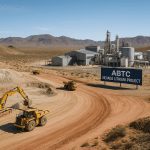
French investments in Argentina surged 43% in 2024, reaching $7.6 billion. Mining has driven much of that growth, notably Eramet’s $850 million launch of Argentina’s first direct lithium extraction plant in Salta Province. The project marked a milestone in Argentina lithium mining, using innovative technology to improve output while reducing environmental impact.

For Buenos Aires, the agreement is an opportunity to attract more capital and technology. Luis Lucero, Argentina’s mining secretary, called the memorandum “a tool that opens a field of cooperation” that will soon evolve into concrete measures supporting Argentina lithium mining.
“Argentina has world-class mineral resources,” Lucero said. “Our role in the energy transition is undeniable.”
Environmental Concerns Over Argentina Lithium Mining
Yet rapid expansion of Argentina lithium mining has sparked concerns. “It is essential that any new projects uphold strict safeguards,” said María Eugenia Di Paola, an environmental law scholar at the University of Buenos Aires. “Otherwise, this will replicate the same extractive model that communities have opposed for decades.”
Analysts expect the France-Argentina accord could become a model for other European deals as global competition intensifies. The International Energy Agency projects lithium demand will quadruple by 2030. For France, the memorandum is part of a strategy to secure critical supplies and expand French investments in Argentina before shortages threaten Europe’s energy ambitions.
“These minerals are not just commodities,” Saint-Martin said. “They are the foundation of our future industrial sovereignty.”