By Charles Pitts

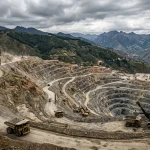
SÃO PAULO : Ero Copper Corp. (TSX: ERO; NYSE: ERO) and Vale Base Metals have announced a significant expansion of the mineralized footprint at the Furnas Copper-Gold Project, signaling a major shift in the project’s scale and economic potential. According to the latest technical update released in June 2026, a 24,000-meter drilling campaign has successfully extended known copper-gold zones beyond previous resource limits, reinforcing the site’s status as a Tier-1 copper discovery in Brazil’s Carajás Mineral Province.
The expansion comes as the project reports a preliminary economic assessment (PEA) featuring a post-tax net present value (NPV) of $2.0 billion and an internal rate of return (IRR) of 27%. These figures, calculated at base-case prices of $4.60 per pound for copper and $3,300 per ounce for gold, position Furnas among the most significant copper discovery sites currently under development globally.
The joint venture, in which Ero Copper is earning a 60% interest from Vale, has accelerated its operational timeline, with the earn-in completion now expected by the end of 2026: roughly two years ahead of the original schedule.
Drilling Results and Resource Expansion
The recent 24,000-meter drilling update is part of a larger 75,000-meter campaign currently underway at the site. The results focus on two primary areas: the Southeast (SE) Zone and the Central Zone.
More Read

In the SE Zone, hole FURN-DD-00357 intercepted 90 meters grading 0.74% copper and 0.50 g/t gold, including a higher-grade interval of 32 meters at 1.17% copper and 0.68 g/t gold. Critically, this intercept extends known mineralization approximately 115 meters down-dip from the existing resource model. Another significant hole, FURN-DD-00354, intersected 45 meters at 1.25% copper equivalent, located 80 meters outside the current inferred resource boundary.

The Central Zone has shown even more dramatic extensions. Hole FURN-DD-00368 returned 41 meters at 1.28% copper equivalent, drilled 220 meters below the previous inferred resource and over a kilometer west of the SE Zone. This suggests the potential for a continuous mineralized corridor connecting the Northwest and Southeast regions of the deposit.

More Read

Furnas Project Economics: Base and Bull Cases
The February 2026 PEA established a robust baseline for the project, though analysts note that the recent drilling results have not yet been integrated into these valuations. The current $2.0 billion NPV is based on a 24-year mine life with an initial capital expenditure of approximately $1.3 billion.
| Metric | Base Case (Cu $4.60/lb, Au $3,300/oz) | Upside Case (Cu $6.10/lb, Au $5,550/oz) |
|---|---|---|
| Post-Tax NPV (8%) | US$2.0 Billion | US$4.7 Billion |
| Post-Tax IRR | 27.0% | 44.0% |
| LOM Contained Copper | 1.2 Million Tonnes | 1.2 Million Tonnes |
| LOM Contained Gold | 2.0 Million Ounces | 2.0 Million Ounces |
| Payback Period | 3.2 Years | 1.8 Years |
The project’s low capital intensity, estimated at $16,000 per tonne of copper equivalent, is a key differentiator in a market where many new greenfield projects struggle with escalating costs. The move by Ero Copper to accelerate drilling with ten active rigs underscores the urgency to bring this capacity online as the global energy transition drives unprecedented copper demand.
Geopolitical and Market Context
The expansion of Furnas is a significant component of the broader mining M&A deals 2026 landscape. As major diversified miners seek to bolster their copper portfolios, the partnership between a mid-tier producer like Ero and a heavyweight like Vale provides a blueprint for successful project development in established mining jurisdictions.
Brazil’s Carajás Province remains one of the world’s premier iron ore and copper-gold districts. The region’s existing infrastructure, including rail and power networks, significantly reduces the logistical hurdles often associated with large-scale mining in remote areas. This infrastructure advantage was highlighted in our recent analysis of Simandou’s infrastructure risks, which contrast sharply with the established networks in Brazil.
Furthermore, the 2026 resource realignment has placed a premium on “clean” copper sources with strong ESG credentials. Ero Copper has indicated that Furnas will benefit from Brazil’s largely renewable power grid, aligning with global trends toward decarbonizing the mining supply chain.

Operational Strategy and 2026 Outlook
Ero Copper’s operational strategy at Furnas is twofold: resource conversion and resource growth. Of the reported 24,000 meters of drilling, approximately 6,000 meters were dedicated to infill drilling aimed at converting inferred resources into the indicated category. This is a critical step for the upcoming Feasibility Study, which will refine the project’s engineering and financial parameters.
The remaining 18,000 meters focused on step-out drilling to test the limits of the deposit. Given that the mineralization remains open at depth and along strike in multiple directions, the year-end resource update is expected to show a substantial tonnage increase.
“The continuity of high-grade mineralization we are seeing at Furnas is exceptional,” said a representative from the project’s technical team. “By hitting these targets two years ahead of our earn-in schedule, we are effectively de-risking the project at a much faster pace than the market anticipated.”
This rapid development is reflective of the broader lithium and critical minerals market recovery, where investors are gravitating toward projects with clear timelines to production and high-margin economics.
Key Risks and Mitigation
While the economics are compelling, the Furnas project is not without risks. Managing a large-scale construction in the Carajás region requires careful coordination with local communities and environmental regulators. Additionally, the $1.3 billion initial capex, while competitive, requires a stable commodity price environment to ensure funding.
However, the partnership with Vale Base Metals provides a level of institutional support and regional expertise that mitigates many of the operational risks typically faced by mid-tier miners. The use of advanced telemetry and autonomous fleet technology, common in modern large-scale extractions, is also expected to enhance safety and efficiency.

The Bottom Line for Investors and Operators
The expansion at the Furnas Copper-Gold Project represents a major milestone for Ero Copper and Vale. With a $2 billion NPV and a clear path to production, the project is set to become a cornerstone of Brazil’s copper output. For the wider industry, the success at Furnas highlights the potential of the Carajás Province to continue delivering world-class discoveries well into the late 2020s.
As drilling continues through the remainder of 2026, the focus will remain on the upcoming resource update and the subsequent Feasibility Study. In a world increasingly hungry for copper, Furnas is quickly moving from a promising exploration target to a critical future supplier.