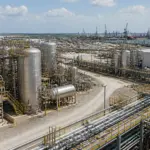
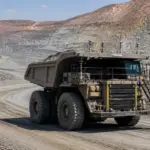
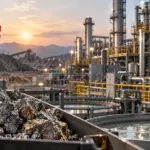
Gold mining infrastructure and processing facilities are becoming more capital-intensive as operators manage higher costs and changing ore profiles.

Gold mining is entering a more selective phase in 2026. High bullion prices have improved project margins, but they have not removed the operational constraints facing producers. Average all-in sustaining costs (AISC) have reached record levels, mine supply has expanded only marginally, and developers are taking longer to confirm whether lower-grade or technically complex deposits can support construction.
The key milestone is the industry cost curve. The World Gold Council’s production-cost data, based on Metals Focus’ Gold Mine Cost Service, shows global average AISC reaching approximately US$1,785 per ounce in the first quarter of 2026. That followed an average of US$1,605 per ounce in the third quarter of 2025, according to the council’s full-year supply analysis.
The implication for operators and investors is straightforward: a project can be technically ready but still economically marginal if its grade, strip ratio, recovery rate or construction schedule moves against it.
The quantified milestone: AISC has moved higher
AISC is not a measure of profitability by itself. It captures the cost of sustaining existing production, including operating expenses, sustaining capital, mine-site exploration, reclamation and related corporate costs. Margins depend on the realized gold price and the quality of production.

However, the direction of the metric matters. A higher AISC means projects need a stronger price environment, better grades or more efficient operations to deliver the same economic return.

| Metric | Latest reported figure | Why it matters |
|---|---|---|
| Global average AISC, Q3 2025 | US$1,605/oz | Up 9% year over year |
| Global average AISC, Q1 2026 | Approx. US$1,785/oz | About 11% above Q3 2025 |
| Global mine production, 2025 | 3,671.6 tonnes | Up approximately 1% year over year |
| Average annual mine-production growth over 10 years | Less than 1% | Shows the difficulty of expanding supply |
| Recycled gold supply, 2025 | 1,404.3 tonnes | Approximately 28% of total supply |
| World Bank 2026 gold-price projection | About US$4,700/oz | Supports margins but raises royalty exposure |
The cost increase has several causes. Higher labor, energy and consumables expenses have combined with increased sustaining capital. Royalties and mining taxes can also rise when gold prices increase, limiting the full benefit of higher revenue.
For a producer with a US$1,785-per-ounce AISC, a gold price near US$4,700 still leaves a substantial gross margin before taxes, financing and growth capital. But the same operation would face a very different outlook if prices moved toward US$3,500 or if production volumes fell during a difficult ramp-up.

Grades are becoming a project-timing issue
Ore grade affects project timing in two ways.
First, a higher-grade zone can improve early cash flow and help a developer finance later phases. Second, lower grades often require larger plants, more material movement and greater energy consumption to produce the same number of ounces.
This is why developers are increasingly separating early production from full project completion. Montage Gold’s Koné project in Côte d’Ivoire, for example, is targeting a first gold pour from its oxide circuit in the fourth quarter of 2026, while the hard-rock comminution circuit is scheduled for completion in the second quarter of 2027. The company reported that approximately US$714.4 million, or about 81% of total upfront capital, had been committed by the second quarter of 2026.
That staged approach can bring revenue forward, but it also creates execution risk. Oxide ore may support an earlier and simpler start, while the larger long-term resource depends on more complex hard-rock processing. The economic value of the project therefore depends not only on the headline resource, but on the timing and cost of each ore type.
The same issue appears in exploration. Montage has planned approximately 130,000 meters of drilling at Koné during 2026, with a resource update expected later in the year. The purpose is not simply to add ounces. It is to establish whether additional drilling can improve mine sequencing, extend higher-grade feed and reduce the risk of a rapid decline in head grade.

Drill-core logging helps developers determine how grade distribution could affect mine sequencing and processing requirements.
Project pipelines are moving through narrower decision gates
Higher gold prices have encouraged more studies and construction programs, but project approval remains selective.
G Mining Ventures’ Oko West project in Guyana illustrates the scale of capital now required. The project’s initial capital estimate is approximately US$973 million, with first gold targeted for the second half of 2027 and commercial production expected in January 2028. The company reported approximately US$292 million spent by the end of March 2026, with about US$525 million in commitments.
Its 2026 growth-capital guidance of US$514 million to US$568 million demonstrates how quickly a single development can absorb capital, contractors and equipment capacity. For companies operating multiple mines, the question is not only whether a project is profitable at a given gold price. It is whether construction can be funded without weakening existing operations.
Permitting and social-license risks add further uncertainty. A S&P Global analysis found that the discovery-to-production timeline for non-operating mines that have completed feasibility studies has stretched toward 30 years. Projects planned to start production from 2026 onward are also exposed to potential delays of several years.
Longer schedules affect economics even when the orebody does not change. Inflation can increase construction costs, debt can accumulate before revenue begins, and equipment or contractor pricing can move higher. A feasibility study completed under one cost environment may therefore require reassessment before a final investment decision.
A gold-price framework for project decisions
The World Bank expects gold prices to average approximately US$4,700 per ounce in 2026 before declining toward US$4,300 in 2027. Its June analysis also notes that mine output is expected to respond only gradually to high prices.
The following framework is illustrative rather than a price forecast. It shows how operators might stress-test timing, grade and cost assumptions.
| Scenario | Gold-price assumption | Operating interpretation | Likely project response |
|---|---|---|---|
| Bear | US$3,200–US$3,500/oz | High-cost ounces become vulnerable; financing margins narrow | Defer marginal pits, prioritize high-grade zones and reduce growth capital |
| Base | US$4,300–US$4,700/oz | Most well-designed projects retain economic support, but cost control remains essential | Advance permitted projects; stage construction and protect contingency |
| Bull | US$5,200–US$5,500/oz | Strong margins improve funding capacity and expand the viable resource envelope | Accelerate expansions, lower-grade phases and infrastructure-heavy projects |
Under the bear case, grade becomes the first line of defense. Mine plans may be redesigned around higher-grade stopes or satellite deposits, even if that reduces near-term production volumes. Under the base case, schedule certainty and capital discipline matter more than maximum throughput. Under the bull case, companies may be willing to approve larger projects, but they would still face inflation in labor, equipment and construction services.
Automation can moderate, but not eliminate, cost pressure
Automation and digital systems are becoming more important as mines move through deeper, lower-grade or more remote deposits. Fleet-management platforms, autonomous haulage, predictive maintenance and real-time ore tracking can improve equipment utilization and reduce unplanned downtime.
Skillings has previously examined the operational implications of autonomous mining technology. The relevance to gold is not limited to large open pits. Underground mines can also use automation to improve drilling accuracy, increase equipment availability and reduce exposure to hazardous work areas.
Technology, however, does not automatically lower AISC. Automation requires upfront capital, reliable communications infrastructure, workforce retraining and integration with existing equipment. Its strongest economic contribution may be improved consistency: maintaining throughput and recovery when grades vary across the orebody.

Processing performance is critical when lower-grade ore requires greater throughput to maintain gold output.
What decision-makers should monitor
The most useful indicators in 2026 will be operational rather than promotional:
- Head grade and grade reconciliation: whether mined grades match the reserve model.
- Recovery rates: whether the processing plant is extracting the expected proportion of gold.
- Sustaining capital per ounce: especially for aging mines and deeper operations.
- Construction commitments: the gap between approved capital, committed spending and remaining funding.
- Commissioning milestones: whether projects are reaching nameplate throughput or only producing early ounces.
- Resource conversion: whether drilling is adding economically mineable material rather than only increasing the resource headline.
- Schedule contingency: the time and capital available if permitting, equipment or contractor work slips.
The sector’s supply outlook reinforces the need for caution. The World Gold Council estimates that 2025 mine production reached a record 3,671.6 tonnes, yet average annual growth over the past decade remained below 1%. High prices alone have not produced a rapid supply response.
Outlook: timing will matter as much as ounces
Gold mining in 2026 is defined by a tension between strong prices and increasingly demanding project economics. High bullion prices support margins, but they also raise royalties, attract higher labor and equipment costs and encourage developers to consider deposits that would have been marginal at lower prices.
The projects most likely to advance are not necessarily those with the largest resources. They are the projects that can demonstrate a credible sequence from permitting to construction, early production, stable grades and controlled capital intensity.
For operators, the priority is to protect cash flow by managing grade, recovery and throughput. For investors and policymakers, the more important question is whether a project can deliver its planned ounces on schedule and at a cost that remains resilient across the price cycle.
In that sense, the defining milestone of 2026 is not another resource announcement. It is the industry’s movement toward a higher cost curve, where project timing, grade quality and execution discipline increasingly determine which gold mines are built.