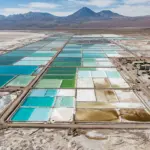
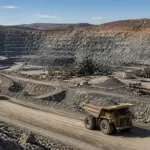
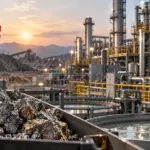
Industrial separation infrastructure illustrates the processing bottleneck at the center of the critical minerals supply chain.

Byline: Penny Langford
The critical minerals supply chain 2026 outlook is being shaped by a widening gap between China’s control of processing and the West’s effort to build alternative capacity.
Some Chinese rare earth suppliers have halted shipments to U.S. customers despite holding export licenses, according to people familiar with the matter cited by Reuters. The reported stoppages began in August as companies sought to avoid potential regulatory or geopolitical penalties.
The development is significant because it adds uncertainty beyond Beijing’s formal export-control system. Even when licenses are available, customers may not be able to rely on consistent delivery if suppliers fear enforcement, sanctions or changing political instructions.

At the same time, the United States and Brazil are moving to strengthen non-Chinese supply chains. The U.S. Export-Import Bank is weighing up to $750 million in support for Aclara Resources’ planned Louisiana separation facility. Brazil’s Senate has approved a national critical-minerals policy with a R$2 billion guarantee fund, while USA Rare Earth has completed its combination with Brazil’s Serra Verde Group.

Together, the developments point to a supply chain being reorganized around three priorities: secure feedstock, domestic processing and financing that can absorb political risk.
China’s shipment halts expose a second layer of supply risk
China’s position in rare earths is often described in terms of mining production, but its more consequential advantage remains processing, separation, metal-making and permanent-magnet manufacturing.

The reported shipment halts demonstrate how supply risk can emerge even before a formal export ban. Companies that have secured licenses may still delay or reject orders if they believe transactions could create regulatory exposure.
That uncertainty is especially important for heavy rare earths such as dysprosium and terbium. These elements are used in high-performance permanent magnets that operate in demanding environments, including electric vehicles, wind turbines, aerospace systems, robotics and defense equipment.
China introduced tighter controls on several rare earths and related magnet materials in 2025. The licensing regime remains in place even where broader measures have been temporarily suspended or delayed. Skillings’ analysis of China’s critical-minerals control deadlines examines how those deadlines could affect manufacturers and downstream buyers.
The result is a market in which the formal rulebook is only part of the commercial risk. Buyers must also assess:
- Whether a supplier will accept a U.S.-linked order.
- How long an export license remains usable.
- Whether material can clear customs without additional review.
- Whether a substitute source can meet chemical and magnetic specifications.
- How much inventory manufacturers need to hold against disruption.
For automakers, defense contractors and electronics manufacturers, this can raise working-capital requirements even when spot prices do not immediately move sharply higher.

Logistics and customs risk can disrupt supply even after a buyer has secured a licensed supplier.
Aclara’s Louisiana project targets the processing bottleneck
Aclara Resources is seeking to establish a heavy rare earth separation facility at the Port of Vinton in Louisiana. The company has said the project will process mixed rare earth carbonates from ionic-clay deposits in Brazil and Chile into separated oxides, including dysprosium, terbium, yttrium, gadolinium and samarium.
The project is expected to require about $277 million in investment, with construction planned to begin in 2026 and completion targeted for 2027, according to Louisiana Economic Development.
Aclara has also received a nonbinding Letter of Interest from the U.S. Export-Import Bank indicating potential support of up to $750 million, with a possible repayment term of as long as 15 years. The financing remains subject to due diligence, underwriting and final approval. It should therefore be treated as a project-finance pathway rather than committed capital.
The Louisiana site is designed to benefit from the Gulf Coast’s chemical industry, port access and industrial workforce. Those factors matter because rare earth separation requires specialized reagents, waste-management systems, technical operators and reliable logistics: not simply a mineral resource.
Aclara says the facility could create 140 direct jobs and about 456 indirect jobs. More strategically, it would provide a U.S.-based separation link for feedstock originating in the Western Hemisphere.
That distinction is central. A mine outside China does not automatically create a secure supply chain if its concentrate or carbonate must still be shipped to China for separation or metal production.
Brazil uses guarantees to push minerals further downstream
Brazil is also attempting to move beyond the traditional model of exporting mineral concentrates.
The Senate approved Bill 2,780/2024, creating a National Policy for Critical and Strategic Minerals. The bill now moves to the sanction stage.
A central measure is the proposed Fundo Garantidor da Atividade Mineral, or FGAM, with an initial federal contribution of R$2 billion. The fund would provide guarantees for eligible projects linked to the production, processing and transformation of critical and strategic minerals.
The broader framework includes up to R$5 billion in incentives for mineral beneficiation and transformation inside Brazil. In total, the public-support package could reach approximately R$7 billion.
The guarantee structure is important because mining and processing projects often struggle to secure affordable debt before construction, commissioning and offtake contracts are complete. A state-backed guarantee can reduce lender risk without requiring the government to provide all project funding directly.
The proposal also emphasizes traceability, innovation and domestic value addition. Companies would be required to contribute a portion of operating revenue toward the guarantee fund and research and development activities during the first six years, subject to the final regulatory framework.
Brazil’s policy could therefore support rare earths, lithium, nickel and graphite projects: but it may also increase expectations that developers build processing capacity domestically rather than export raw material.

Brazil is positioning its mineral reserves as the foundation for a larger domestic processing industry.
USA Rare Earth and Serra Verde create a Western mine-to-magnet platform
USA Rare Earth completed its combination with Brazil’s Serra Verde Group on Sept. 3, creating a company with assets spanning mining, processing, metallization and magnet production.
The transaction, valued at approximately $2.8 billion, includes about $300 million in cash and the issue of roughly 126.8 million USA Rare Earth shares. Legacy Serra Verde shareholders are expected to hold approximately 34% of the combined company, according to the company’s closing announcement.
Serra Verde’s Pela Ema operation in Goiás is important because it contains the four principal magnetic rare earth elements: neodymium, praseodymium, dysprosium and terbium. The project is intended to provide feedstock for downstream processing and magnet production aimed at Western automotive, defense and technology customers.
USA Rare Earth had also completed an upsized $1.55 billion capitalization for a special-purpose vehicle intended to purchase 100% of Phase 1 Serra Verde production. That structure gives the combined platform greater visibility over feedstock and offtake.
The strategic logic is clear: control of a mine is more valuable when it is connected to separation, metal-making and magnet manufacturing. However, integration also concentrates execution risk. The company must now demonstrate that each stage can operate at commercial scale, meet customer specifications and remain competitive against established Asian producers.
Critical minerals supply chain 2026: scenario framework
The following framework is designed to track the main variables for operators, investors and policymakers.
| Scenario | Supply-chain conditions | Likely market effect | Key indicators |
|---|---|---|---|
| Base case | Chinese licensing remains restrictive, but most material continues to move selectively; Western projects advance with delays | Persistent premiums for heavy rare earths and non-Chinese material; higher inventory costs | Shipment approvals, Aclara financing decision, Serra Verde construction milestones |
| Bull case for diversification | Shipment halts broaden or formal export controls tighten; U.S. and Brazilian projects secure funding and offtake | Faster investment in separation, metals and magnets; stronger valuations for advanced non-Chinese projects | New long-term contracts, EXIM approval, Brazil’s implementing regulations |
| Bear case for new capacity | Chinese supply normalizes while Western projects face permitting, financing or commissioning delays | Lower urgency for buyers; project economics weaken before alternative capacity is operational | Rare-earth price compression, cost overruns, delayed construction and weak customer commitments |
The base case remains the most credible because new processing capacity cannot be built as quickly as trade restrictions can be introduced. Even successful projects such as Aclara and Serra Verde will need years to demonstrate reliable commercial output.
What decision-makers should monitor
For mining and processing companies, the most important metric is no longer simply resource size. It is the ability to connect a deposit to qualified processing, logistics, financing and customers.
Operators should monitor four milestones:
- Financing conversion: Whether Aclara’s nonbinding EXIM support becomes approved debt or guarantees.
- Brazilian implementation: How the FGAM is funded, regulated and accessed by private developers.
- Commercial commissioning: Whether Serra Verde and other Western projects can deliver separated products at specification.
- Customer qualification: Whether automakers, defense contractors and magnet manufacturers sign binding offtake agreements.
The supply chain is also becoming more regional. Brazil’s deposits can feed U.S. processing, while U.S. magnet facilities may depend on Brazilian or Chilean material. That creates diversification, but not complete independence. Cross-border logistics, currency exposure, permitting and diplomatic relations will remain part of the risk equation.
The immediate lesson from China’s shipment halts is that supply security depends on more than licensed trade. It depends on having credible alternatives at every stage from mine to magnet.
Aclara’s Louisiana facility, Brazil’s guarantee fund and the USA Rare Earth–Serra Verde combination each address a different weakness. Whether they form a resilient network will depend on execution, not announcements.
For additional context, see Skillings’ coverage of the rare earths supply chain and processing capacity and its analysis of Brazil’s growing non-Asian rare earth capacity.
Shareable takeaways
LinkedIn:
China’s reported halt of some licensed rare-earth shipments to U.S. customers is putting new focus on processing: not just mining. Aclara’s Louisiana project, Brazil’s R$2 billion guarantee fund and USA Rare Earth’s completed Serra Verde merger show how Western supply chains are being rebuilt from mine to magnet.
X:
China’s rare-earth shipment halts show that licensed trade does not eliminate geopolitical risk. Aclara, Brazil’s R$2B guarantee fund and USA Rare Earth–Serra Verde each target a different supply-chain bottleneck: separation, finance and mine-to-magnet integration.