Infrastructure investment and protectionist trade policies set to spur volatility, opportunities in 2025

As President-elect Donald Trump prepares to take office in January 2025, the industrial metals market faces a period of uncertainty and transformation. His proposals, including sweeping tariffs and ambitious infrastructure projects, are expected to create ripples across the sector, driving volatility while opening new opportunities for domestic producers.
Domestic Boost: Tariffs to Encourage Local Production
Trump’s proposed tariffs of 60% to 100% on Chinese goods, alongside a 10% to 20% levy on imports from other nations, are designed to promote domestic manufacturing and reduce reliance on foreign suppliers. While the immediate impact will likely be an increase in production costs for industries reliant on imported metals, such measures could incentivize investment in U.S. production facilities.
“Higher tariffs make domestic metals more competitive,” says Robert Caldwell, a metals procurement strategist. “But expanding capacity to meet increased demand will take time and significant capital.”
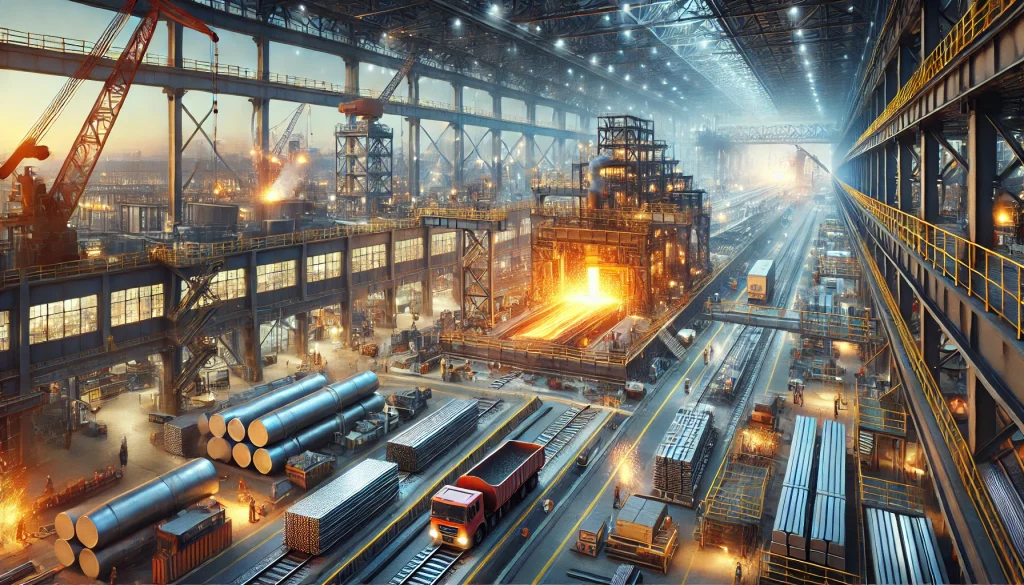
Already, U.S. manufacturers are weighing investments to ramp up production. According to the American Iron and Steel Institute, capacity utilization for steel mills averaged 80% in 2023. If tariffs make imports less viable, utilization could climb to 90% or higher, requiring significant upgrades to meet demand.
Infrastructure Spending: A Double-Edged Sword
Trump’s commitment to revitalizing America’s infrastructure could further boost demand for industrial metals. Projects focused on rebuilding roads, bridges, and water systems could spark demand for steel, aluminum, and copper, potentially driving prices higher.

“Big infrastructure plans could turbocharge metal demand in the short term,” says Elena Perez, a commodity markets analyst. “The question is whether domestic producers can fill the gap fast enough to prevent major price spikes.”
However, the effectiveness of these initiatives hinges on budgetary constraints and implementation timelines. If funding delays or administrative bottlenecks occur, the expected surge in metal demand may be slower to materialize.
Trade Tensions: Risks of Retaliation
Tariffs could also stoke global trade tensions, particularly with China, a leading supplier of industrial metals and raw materials. Beijing has signaled its readiness to retaliate, potentially targeting U.S. exports or restricting the availability of critical materials such as rare earth elements.
“Retaliation is a wildcard,” warns Joseph Lin, head of trade policy at the International Economic Institute. “If China limits the export of key inputs, U.S. manufacturers could face supply shortages, throwing global supply chains into disarray.”
Such disruptions could trigger price volatility, creating challenges for procurement managers attempting to lock in stable pricing for their operations.
Inflationary Pressures on Consumer Goods
Higher production costs stemming from tariffs and elevated demand for metals may feed into inflationary pressures. Manufacturers reliant on industrial metals may pass these costs onto consumers, leading to higher prices for goods ranging from automobiles to household appliances.
According to the Bureau of Labor Statistics, the Producer Price Index for metals rose by 12% during the last major tariff implementation in 2018. Analysts predict similar increases if Trump’s policies come to fruition.
Balancing Act: Opportunities and Risks
For industry players, Trump’s policies represent both opportunities and risks. Domestic producers stand to gain from a more protected market environment, but they must navigate the challenges of scaling operations and potential input shortages. Meanwhile, global trade disruptions could force multinational companies to rethink supply chains, sourcing strategies, and inventory management.
Procurement experts advise adopting proactive strategies to mitigate risks. “Diversifying suppliers and monitoring macroeconomic indicators will be crucial,” notes Sarah Blake, a metals market consultant.
Outlook for 2025 and Beyond
The interplay of tariffs, infrastructure investment, and global trade dynamics will likely define the trajectory of industrial metals in the coming years. While higher prices and increased domestic production seem probable, the ultimate outcome will depend on the balance between policy execution and market adaptation.
“Trump’s policies could reshape the metals landscape,” says Caldwell. “But the path won’t be without friction—industries will need to remain agile to capitalize on these changes.”