By Charles Pitts
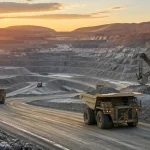
ELKO, Nevada : Komatsu has officially reached a historic milestone in the evolution of industrial automation, commissioning its 1,000th autonomous ultra-class haul truck. The vehicle, a Komatsu 930E-5AT, was deployed at Barrick Gold Corporation’s Nevada Gold Mines (NGM), marking a significant expansion of autonomous technology within the gold mining sector.
The deployment, announced this week, solidifies Komatsu’s position as the primary original equipment manufacturer (OEM) in the autonomous haulage space. Since the commercial launch of its FrontRunner Autonomous Haulage System (AHS) in 2008, Komatsu-equipped fleets have collectively moved more than 11.5 billion metric tons of material across global operations.
Nevada deployment marks a turning point
The 1,000th truck is a 290-metric-ton payload, electric-drive haul truck. It operates without a driver in the cab. Instead, it uses GPS, LIDAR, and radar to move through the mine.
More Read

Its arrival at Nevada Gold Mines, a joint venture between Barrick and Newmont, follows a multi-year partnership focused on improving efficiency in one of the world’s most productive gold regions.

“This is a proud moment for our team and for the industry,” said a Komatsu spokesperson during the commissioning ceremony. “The 930E-5AT has become the backbone of modern autonomous mining, and reaching this 1,000th-unit milestone at a premier site like Nevada Gold Mines highlights the maturity and reliability of this technology.”
For Barrick, the move is part of a broader plan to de-risk operations and improve ore delivery consistency. In Nevada’s complex geological setting, modern open-pit mining depends on tight coordination. Because of that, the FrontRunner system offers a level of predictability that manual haulage often cannot match.
More Read


How FrontRunner works on site
The FrontRunner system is more than a remote-control tool. It is a fleet management system that integrates with the mine’s existing infrastructure. It allows the 930E-5AT to navigate haul roads, interact with loading equipment, and dump material at crushers or waste sites with centimeter-level accuracy.
Key features of the FrontRunner AHS include:
- Predictive Path Planning: The system calculates the most efficient route, which helps reduce fuel use and tire wear.
- Safety Interlocks: The trucks stop immediately if they detect an unexpected obstacle or lose communication with the central hub.
- High-Speed Connectivity: Using 4G/5G LTE and dedicated radio networks, the trucks maintain a continuous data stream for real-time monitoring of machine health and payload metrics.
The 930E-5AT also shows how durable the platform has become. Of the 1,000 autonomous trucks now operating globally, more than 500 are 930E models. The electric drive system suits automation well because it delivers smoother acceleration and more precise speed control than mechanical-drive alternatives.
Why safety and productivity are driving adoption
The main reason for adopting autonomous haulage has changed over the past decade. Early deployments often focused on labor shortages in remote regions such as the Australian Outback and the Atacama Desert. However, in 2026, companies are placing more weight on safety and ESG targets.
Autonomous trucks do not get fatigued, which remains a major cause of accidents in heavy industry. By removing operators from haul roads, miners have reduced near-miss incidents and vehicle collisions.
Productivity gains are also measurable. Autonomous fleets can keep running during shift changes and meal breaks. They can also operate in dust or fog that would limit human visibility. At Nevada Gold Mines, the FrontRunner system has supported a steadier flow of material because it reduces the bottlenecks often seen in manual haul cycles.

From Chile trial to global fleet
Komatsu’s path to the 1,000th truck began in 2008. That year, the first commercial AHS fleet started work at Codelco’s Gabriela Mistral copper mine in Chile. At the time, many in mining still viewed autonomy as a niche experiment.
However, large-scale deployment in Western Australia, particularly in iron ore, showed that the model could work at scale. By the early 2020s, the technology had expanded into coal, oil sands, and gold.
The Nevada Gold Mines deployment stands out because gold miners have generally adopted large-scale automation more slowly than bulk commodity operators. As grades decline and mines become deeper or more expansive, the cost-per-ton benefit of AHS becomes harder to overlook.
Workforce changes as automation expands
The milestone at NGM also shows how mining jobs are changing. There may be fewer drivers in truck cabs. However, demand is growing for workers who can support autonomous fleets.
“The transition to autonomous haulage hasn’t removed the human element; it has elevated it,” noted a regional operations manager at NGM. “We now have a team of technicians, system controllers, and data analysts who manage the fleet from a centralized location. Our people are learning new skills that are essential for the mining and metals industry as it enters the second half of this decade.”
Training programs at NGM include virtual reality simulations and hands-on technical workshops. The aim is to help current workers move into roles that support the high-tech fleet. This approach also aligns with the industry’s push for enhancing decision-making through data and intelligence.

What the milestone suggests for 2026
As Komatsu marks its 1,000th truck, the industry is already focused on the next stage of automation: interoperability and lower-emission hauling.
The 930E-5AT commissioned in Nevada is described as “power agnostic.” That means it can work with future power options, including trolley-assist systems and battery-electric conversions. This matters for companies such as Barrick because they have set carbon-reduction targets.
The industry is also pushing for more open autonomous systems so equipment from different manufacturers can operate on the same haul road. Komatsu’s FrontRunner remains a proprietary platform. However, a fleet of 1,000 trucks gives the company a large operating dataset that could shape future standards for autonomous safety and communication.
For mining investors, the milestone points to operational stability. In a volatile commodity price environment, a more consistent and productive hauling cost can offer a clear advantage. As recent Skillings Mining Intelligence reports have noted, the “AI-Energy Nexus” is increasing focus on hardware that can operate with maximum efficiency and minimum waste.

Conclusion
The commissioning of the 1,000th Komatsu autonomous truck at Nevada Gold Mines is more than a corporate milestone. It also marks the mining industry’s broader shift toward digital and automated operations. As the 930E-5AT begins work in Nevada, it brings lessons from the 11.5 billion metric tons moved by Komatsu autonomous fleets worldwide. For operators, the message is becoming clearer: autonomy is no longer a future concept. It is now part of the operating model at major mines.