By Charles Pitts
The push for critical mineral sovereignty in North America has run into a legal roadblock in southeastern British Columbia. On March 11, 2026, the Supreme Court of British Columbia granted a temporary injunction against West High Yield (WHY) Resources’ Record Ridge magnesium project. The BC Court of Appeal later upheld that decision. As a result, all development work remains paused pending a judicial review set for early May.
The case is larger than a local permitting dispute. It tests how British Columbia applies Indigenous consultation duties and environmental assessment (EA) thresholds to a project tied to North American critical mineral supply.
For the mining industry, Record Ridge is a major magnesium asset. For the Sinixt Confederacy and local advocacy groups, however, it raises questions about environmental risk and territorial rights. As the May 5 hearing approaches, the outcome could shape how regulators balance critical mineral policy with legal oversight.
More Read

Record Ridge project: why the magnesium asset matters
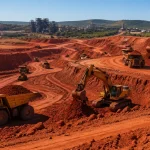
Magnesium has become a strategic priority for both Canada and the United States because it is used in aerospace, automotive lightweighting, and aluminum alloying. Supply is still heavily concentrated in China. West High Yield’s Record Ridge project, located about five kilometers north of the Washington state border, was designed to support a more diversified North American supply chain.

The deposit is sizable. A 2013 resource estimate put Record Ridge at 43 million tonnes of measured and indicated resources with an average grade of 24.6% magnesium. That matters because manufacturers need lighter, high-strength materials as the AI-energy nexus and the shift to electric vehicles drive new demand. In that context, the project has been presented as a potential strategic source of supply.

More Read

Injunction and appeal: what the court has done so far
The legal dispute began when the Save Record Ridge Action Committee (SRRAC) and the Sinixt Confederacy filed for judicial review. They challenged the BC government’s decision to exempt the project from a full provincial environmental assessment.
In March 2026, the Supreme Court of British Columbia found that the risk of “irreparable harm” to community interests justified a pause. West High Yield Resources appealed. However, the BC Court of Appeal dismissed that challenge. Because of that ruling, no development can proceed before the May judicial review.
The injunction blocks construction of access roads and the initial pre-production phase that the company had aimed to start in Q1 2026. The delay has already weighed on the company’s valuation. It has also drawn attention across the junior mining sector, where valuation metrics for critical minerals are increasingly tied to permitting timelines.
Sinixt consultation dispute: why sovereignty is central
The Sinixt Confederacy sits at the center of the Record Ridge dispute. The Canadian government had once declared the Sinixt “extinct” for the purposes of the Indian Act. However, the Supreme Court of Canada’s 2021 decision in R. v. Desautel recognized their ongoing rights in British Columbia as an “Aboriginal people of Canada.”
Because of that ruling, the Record Ridge case has become one of the first major mining tests of how those rights apply in practice. The Confederacy says the project sits on land with major cultural and ecological importance, including the Columbia River system. It argues that the province did not meet its Duty to Consult because it treated the development as a minor industrial quarry rather than a larger mineral project with cross-border implications.

Environmental assessment threshold: 63,500 vs. 75,000 tonnes
The most technical part of the case may also be the most important. Under British Columbia’s Environmental Assessment Act, a mineral mine typically needs a full EA if production exceeds 75,000 tonnes per year.
The Record Ridge proposal has changed over time:
- Initial Proposal: An industrial quarry with capacity of 200,000 tonnes per year.
- Regulatory Pivot: In August 2024, the BC Environmental Assessment Office (EAO) reclassified the project as a mineral mine because of its magnesium content, not a simple rock quarry.
- The Amendment: West High Yield later amended its permit application to 63,500 tonnes per year, which is below the 75,000-tonne threshold for a full EA.
Opponents, including SRRAC, describe this as “project splitting” or “bracket creep.” They argue that environmental risk does not fall just because annual output is reduced on paper. Their focus is the handling of serpentinite rock, which naturally contains asbestos. The judicial review will consider whether the EAO was right to allow a threshold-based exemption or whether the project’s nature and scale require a more extensive review.

Market implications: what operators and investors are watching
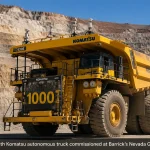
The Record Ridge injunction comes at a sensitive time for BC mining. The province is trying to position itself as a leader in modern open-pit mining technologies. However, the case shows that permitting risk remains a major issue in the Canadian resources sector.
Investors and operators are watching the May 5 hearing for several signals:
- The Sinixt precedent: If the court finds that the Sinixt must be consulted at the same level as established BC First Nations, stakeholder mapping could change across the Kootenay region and potentially along the US-Canada border.
- EA rigidity: If the court requires an EA even though the project sits below the 75,000-tonne threshold, regulators may move away from bright-line rules and toward a more discretionary, impact-based model.
- Magnesium supply chains: Continued delays at Record Ridge may push North American manufacturers to look elsewhere, including emerging projects in Australia or Brazil, because supply security remains a strategic concern for the late 2020s.
Summary data: Record Ridge project profile
| Metric | Detail |
|---|---|
| Owner | West High Yield (WHY) Resources |
| Commodity | Magnesium (Mg) |
| Location | Rossland, BC (near US Border) |
| Current Status | Halted (Court Injunction) |
| Proposed Output | 63,500 tonnes/year |
| Key Legal Hearing | May 5, 2026 |
| Primary Risk | Indigenous Consultation & EA Thresholds |
Conclusion
The Record Ridge injunction is a reminder that critical mineral status does not give a project a free pass through regulatory or social review. West High Yield Resources says the project is a low-impact and important development for the green transition. However, the BC courts have signaled that Indigenous rights and environmental thresholds still carry significant legal weight.
As the May hearing approaches, the case may reshape the regulatory landscape in British Columbia. The central question is no longer just whether a project falls below a formal threshold. It is also whether regulators and courts believe that threshold fully captures the project’s real impact.