Key Takeaways

- Australian scientists have retooled cancer drug discovery techniques for mineral recovery.
- Their peptide-targeting method achieved 98% silver purity and over 95% recovery.
- The new approach could replace toxic, multi-stage mineral processing with a single-step, selective alternative.
- Developed at COEMinerals, the method exemplifies cross-disciplinary research aimed at reducing Australia’s mineral refining bottleneck.
- Implications extend to rare earths critical to energy security and clean tech supply chains.
In a cross-disciplinary leap, Australian scientists have adapted technology from cancer research to pioneer a peptide-based mineral recovery process, offering a potentially revolutionary solution for extracting rare earth and critical minerals. The method, which mimics how targeted cancer drugs locate tumor cells, uses amino acid sequences — peptides — to selectively bind with and separate valuable metals from raw ore.
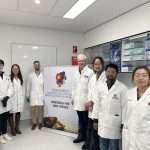
At the helm of this innovation is Professor Chun-Xia Zhao of the University of Adelaide’s School of Chemical Engineering. Working under the umbrella of the ARC Centre of Excellence for Enabling Eco-Efficient Beneficiation of Minerals (COEMinerals), Zhao’s team has achieved more than 98% purity in silver and over 95% recovery — figures that could dramatically outpace conventional methods.
“This is like decoding a DNA strand for metals,” Zhao said. “Nature provides the blueprint — we’re just learning to read it.”
Rethinking Mineral Processing with Biology
Traditional mineral processing is infamously complex, capital-intensive, and environmentally damaging. Techniques like flotation, solvent extraction, and smelting require multiple stages and rely on chemicals that pose serious ecological risks. In contrast, peptide-based mineral recovery offers a selective, single-step process. Each peptide is engineered to recognize and adhere to the molecular surface of a specific metal ion, acting much like a biological ‘lock and key.’
More Read

What makes the method particularly disruptive is its adaptability. In theory, peptides can be tailored to match virtually any element, opening doors to more sustainable extraction of metals used in electric vehicles (EVs), wind turbines, and advanced electronics.

“We’re not inventing new molecules from scratch,” Zhao explained. “We’re repurposing what nature has evolved — molecules that already bind with precision.”
A Convergence of Science and Strategy
The breakthrough highlights the growing power of cross-disciplinary research. Zhao’s team borrowed techniques originally developed in oncology, particularly phage display, a method used to identify proteins that bind to specific cell receptors. By applying this tool to metal ions, the researchers found peptides that could isolate target minerals from a slurry of waste.
More Read

The project is a flagship initiative at COEMinerals, a federally funded centre launched in July 2020 with A$35 million in backing from the Australian Research Council. Comprising scientists from nine universities, the centre aims to solve key industrial and environmental challenges in mineral processing.
Australia, one of the world’s richest sources of critical minerals, remains heavily dependent on offshore facilities — particularly in China — for refinement. Technologies like peptide-based mineral recovery could help shift the locus of processing back onshore, increasing the nation’s control over its mineral wealth.
“This isn’t just a technical win; it’s a strategic one,” said Dr. Gavin Mudd, associate professor in environmental engineering at RMIT, unaffiliated with the research. “It could reduce our reliance on high-impact processes and give us a geopolitical edge in critical mineral supply.”
Environmental Gains and Industry Challenges
The environmental benefits are difficult to ignore. Unlike traditional methods that produce significant tailings and consume large quantities of water and reagents, the peptide system minimizes waste. Moreover, peptides are biodegradable and can be recovered and reused, making the approach appealing for mining companies under pressure to reduce their environmental footprint.
Still, commercial hurdles remain. Peptide synthesis, while increasingly cost-effective, is not yet widespread in mining-scale operations. Scale-up testing will require substantial collaboration with industry partners. Several international entities, including European automakers and Japanese electronics firms, are reportedly exploring pilot partnerships with COEMinerals.
“Moving from the lab to the leach pad is not trivial,” Mudd said. “But the principles are solid, and if the economics work, the adoption curve could be rapid.”
Applications Beyond Silver
Though silver has been the initial focus due to its chemical compatibility and value, the research team is now expanding the peptide library to include neodymium, dysprosium, cobalt, and other rare earth elements essential to decarbonization technologies. These metals are difficult to separate using conventional means, which often involve toxic solvents and radioactive waste.
“We envision a future where every element has a peptide,” Zhao said. “Imagine walking up to a tailings dam and pulling out the metals you want, cleanly and precisely.”
This level of selectivity could also help unlock lower-grade ore bodies previously deemed uneconomical. If viable, the technology would allow miners to extract value from existing waste, reducing the need for new pits and lowering the industry’s overall footprint.
A Broader Shift in Extractive Technology
The emergence of peptide-based mineral recovery is part of a broader push toward biomining and green processing. Other innovations in this space include bioleaching using bacteria and enzyme-assisted ore separation. What sets Zhao’s work apart is the precision and scalability offered by synthetic biology.
“This represents a shift from brute-force chemistry to molecular engineering,” said Dr. Fiona Boyd, a geochemist who has consulted for Rio Tinto and BHP. “We’re starting to treat mineral separation like a medical procedure — targeted, efficient, and clean.”
The convergence of life sciences and extractive industries is not without precedent. Enzymes have long been used in wastewater treatment and oil spill remediation. But mineral processing, with its scale and complexity, has traditionally lagged behind. Zhao’s work could reset expectations.
The Road Ahead
Zhao’s team plans to begin field trials within the next year and is already working with mining companies to assess peptide performance under real-world conditions. If successful, the technology could be deployed at processing facilities across Australia and beyond.
“Scaling up is the next challenge,” Zhao acknowledged. “But we believe we have the foundations in place — scientifically, industrially, and environmentally.”
Amid rising global demand for secure, ethical, and clean mineral supply chains, Australia’s role as a resource provider could hinge not just on what’s in the ground — but how it’s processed.
Peptide-based recovery, once the domain of medical science, may now be the tool that helps secure the future of clean energy.