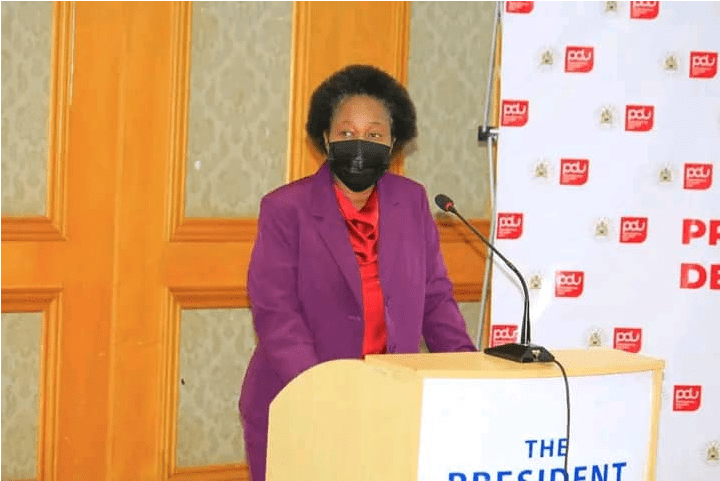
Lilongwe, Malawi – Dr. Jane Banda, the Head of the Presidential Delivery Unit (PDU) and Deputy Secretary for the Office of President and Cabinet (DSPC), has highlighted a critical bottleneck in Malawi’s mining sector: the need for substantial energy infrastructure. Speaking at the Mining Pre-Lab meeting held on Tuesday in Lilongwe, Banda revealed that the mining industry needs at least 230 Mega Watts (MW) of electricity, which constitutes 40% of the country’s current generation capacity.

Inadequate Infrastructure Hampers Mining Growth
Dr. Banda emphasized that the mining sector in Malawi is mired in challenges related to inadequate infrastructure, particularly in terms of energy access and transportation. She stressed the crucial role of electricity in unlocking the full potential of the mining industry. “This means that Malawi needs to prepare well with adequate electricity to make mining tick. We cannot emphasize enough the key role that electricity will play to unlock the mining industry,” Banda asserted.
Related News
- Mining Industry Advances in Social Responsibility: Achieving a Social License to Operate
- Petra Diamonds Secures Long-term Renewable Energy Agreements with Etana Energy for Sustainable Operations
- Mining Volcanic Brine: A Hot Topic for the Energy Transition
- Namibian Government Engages UNESCO and IAEA on Uranium Mining in Omaheke
Energy Requirements Exceed National Consumption Levels
Adding to the discussion, Principal Secretary for Mining, Joseph Mkandawire, pointed out that the energy demands of the mining sector far exceed the current consumption levels in the country. “The amount of energy required in the sector is huge, surpassing the consumption levels in the country,” Mkandawire stated. This revelation underscores the significant challenges Malawi faces in meeting the energy needs of its burgeoning mining sector.
Collaborative Efforts to Address Energy Bottlenecks
Mkandawire mentioned ongoing discussions with the energy sector aimed at addressing these bottlenecks. He explained that the approach to ramping up energy availability for mining would be gradual rather than instantaneous. “Companies will start in a piecemeal approach. It will not come in a bullet but in a staggered manner,” he noted. This phased approach aims to gradually scale up the energy infrastructure to support mining activities without overwhelming the existing power grid.
Upcoming Mining Delivery Lab
In response to these challenges, the PDU plans to conduct a Mining Delivery Lab in June 2024. This initiative aims to troubleshoot and resolve the various hindrances slowing down the advancement of the mining sector. The lab will bring together stakeholders from the mining and energy sectors to develop actionable strategies and solutions.
The Role of Energy in Economic Development
The revelations at the Mining Pre-Lab meeting highlight a broader issue that extends beyond mining: the critical need for robust energy infrastructure to drive economic development in Malawi. The mining sector, with its significant energy requirements, serves as a case study in the importance of reliable and sufficient energy supply for industrial growth.

Current Energy Generation Capacity
Malawi’s current energy generation capacity is limited, and the demand from the mining sector alone is a substantial proportion of this capacity. This situation underscores the urgency for Malawi to enhance its energy infrastructure to support not just mining but other sectors that are pivotal to the country’s economic growth.
Strategic Investments in Energy Infrastructure
To address these challenges, strategic investments in energy infrastructure are imperative. This includes expanding the generation capacity, upgrading transmission networks, and ensuring reliable and affordable energy access for industries. Such investments are critical for creating a conducive environment for mining and other industrial activities, ultimately contributing to economic diversification and resilience.
Importance of Stakeholder Collaboration
The success of these initiatives hinges on effective collaboration between the government, private sector, and international partners. By working together, these stakeholders can develop comprehensive solutions that address the immediate energy needs of the mining sector while laying the groundwork for long-term energy sustainability.
The Mining Pre-Lab meeting in Lilongwe has brought to the fore the significant energy challenges facing Malawi’s mining sector. With a requirement of 230 MW, representing 40% of the country’s current generation capacity, it is clear that substantial improvements in energy infrastructure are needed. The upcoming Mining Delivery Lab in June 2024 represents a proactive step towards addressing these challenges, fostering collaboration, and developing actionable strategies to unlock the full potential of Malawi’s mining industry.
As the country navigates these challenges, the emphasis on energy infrastructure will be pivotal not only for mining but for the broader goal of economic development and diversification. Through strategic investments and collaborative efforts, Malawi can pave the way for a more prosperous and sustainable future.