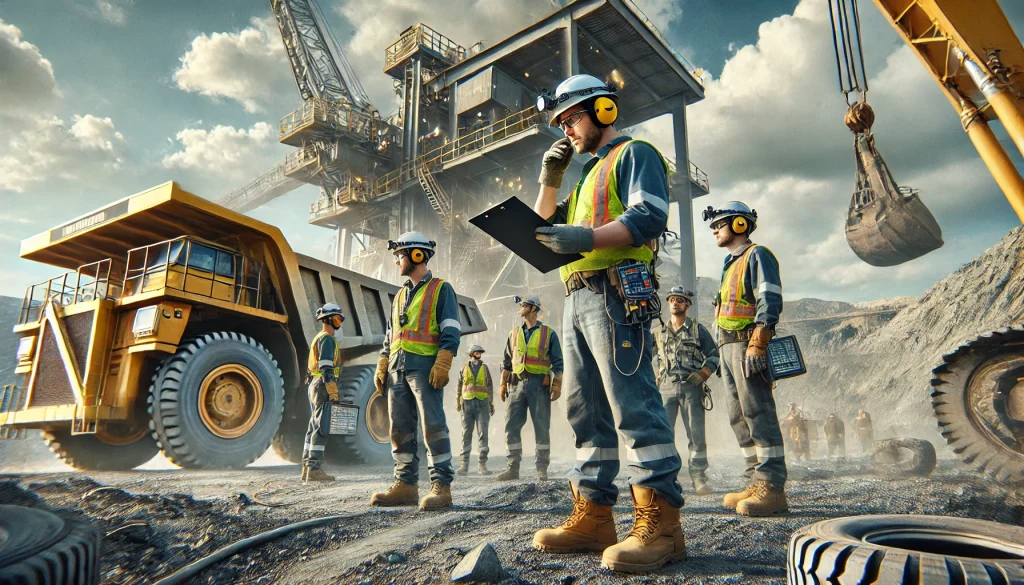
The mining and quarrying sector remains one of the world’s most hazardous industries, with nearly a quarter of workers reporting injuries over the past two years. According to the latest Lloyd’s Register Foundation World Risk Poll, mining ranks as the third most dangerous occupation globally, with a harm rate of 21%, just behind fishing (24%) and construction (22%). This stands above the global average of 18%, highlighting the persistent risks faced by workers in an industry that remains essential to the global economy and the ongoing energy transition, underscoring the need for improved mining occupational safety.
RELATED News
- Saudi Arabia Mineral Strategy Expands Its Energy Playbook to Minerals Amid Transition Challenges
- Rio Tinto and Sumitomo Join Forces to Propel the Winu Copper-Gold Project
Safety Gaps Despite Progress in Mining Occupational Safety
While the report underscores some progress, particularly in the realm of occupational safety training (OST), significant gaps persist that threaten worker well-being. The poll, conducted across 142 countries with over 147,000 respondents, found that although 48% of mining and quarrying workers have received some form of OSH training—above the global average of 30%—a concerning 43% reported having no formal safety training at all. This stark gap in safety preparedness is particularly troubling in an industry where risks are inherent, and the consequences of safety lapses can be catastrophic.
“Safety must remain a non-negotiable priority,” emphasized Mark O’Brien, Chair of the Global Mining Guidelines Group (GMG). “Collaboration and knowledge-sharing across the industry are vital to ensuring that every worker returns home safely.”
Despite some improvements in safety measures over the years, the findings demonstrate that the sector’s safety culture still faces serious challenges, especially as demand for mining increases due to the global shift towards renewable energy. The rush to extract more critical minerals, such as lithium, copper, and cobalt, needed for electric vehicle batteries and renewable technologies, only exacerbates the urgency of tackling mining occupational safety issues.
The Role of Training and Reporting Systems in Mining Occupational Safety
A major part of improving mining occupational safety revolves around strengthening training programs and implementing effective harm-reporting systems. Tim Slingsby, Director of Skills and Education at Lloyd’s Register Foundation, highlighted the importance of regular, updated training and more robust reporting systems as key to reducing injury rates.

While 48% of workers in the sector have received OSH training, the remaining 43%—without formal training—remain at heightened risk. The gap is particularly glaring in regions with weaker safety regulations or where the industry is less mature. Regular training, combined with a culture of reporting unsafe practices, could significantly mitigate the high injury rates in mining.
The GMG, a coalition of industry stakeholders, has been advocating for innovative safety solutions, ranging from artificial intelligence (AI)-driven monitoring systems to more comprehensive training programs. These tools can help detect hazards early, optimize safety procedures, and ensure compliance with safety standards, even in remote mining operations.
Global Trends and Emerging Safety Challenges in Mining
The 2024 Engineering Safer Workplaces: Global Trends in Occupational Safety and Health report sheds light on other emerging challenges facing industries, including mining. One such challenge is improving resilience to severe weather events. As climate change exacerbates extreme weather conditions, mining operations in vulnerable regions may face more frequent disruptions, creating additional safety risks for workers.
Moreover, the report highlights the growing importance of waste management as a safety issue, particularly in mining sectors where toxic byproducts and environmental degradation can compound the risks of injury and health problems for workers and nearby communities. Integrating better waste management practices alongside safety improvements will be crucial as the industry grows, ensuring both mining occupational safety and environmental protection.
Industry Calls for Broader Safety Improvements in Mining Occupational Safety
The World Risk Poll’s findings serve as a wake-up call for the mining sector, emphasizing the need for broader safety reforms across the industry. According to O’Brien, while the global mining community continues to expand and innovate to meet the world’s increasing mineral demands, “the most essential thing is ensuring that miners themselves are not left behind in this race.”
The GMG is pushing for greater industry collaboration and the development of safety innovations that can be universally adopted. From AI-driven systems that predict and prevent potential hazards to advanced training methods that ensure all workers are adequately prepared, there is an increasing recognition that mining occupational safety must evolve with the demands of the industry.
However, for such initiatives to succeed, they require widespread adoption across both large-scale operations and small mining enterprises. Ensuring that safety measures are not just implemented, but maintained across the entire mining ecosystem, will be essential in improving overall outcomes.
Conclusion: A Call for Unified Action on Mining Occupational Safety
Mining, one of the world’s oldest industries, faces a critical inflection point in its safety record. As the sector plays an ever more vital role in the global energy transition, it is essential that safety standards evolve in tandem with technological advancements and the growing demand for minerals.
The Lloyd’s Register Foundation’s report serves as an urgent reminder that while safety protocols have improved, the mining sector must remain vigilant. Industry leaders must collaborate more effectively, improve training and harm-reporting systems, and embrace technological innovations to protect workers on the front lines.
Ultimately, if the mining industry is to meet the challenges of the 21st century—safely and sustainably—it must prioritize mining occupational safety at every level. Anything less risks compromising the future of an industry integral to the clean energy revolution.