By Charles Pitts

The convergence of artificial intelligence and global energy systems has reached a critical inflection point in mid-2026. As data center operators scramble to secure baseload power for increasingly dense GPU clusters, the mining sector has moved from the periphery to the center of the AI trade. The “AI-Energy Nexus”: the structural dependence of advanced computing on copper-heavy grids and carbon-free nuclear power: is now the primary driver of commodity valuations.
In the first half of 2026, grid strain has emerged as the single greatest bottleneck for AI expansion. Utility providers in Tier-1 data center hubs have reported lead times for high-voltage transformers extending beyond 36 months, while the global copper deficit has widened to an estimated 450,000 metric tons. For investors, this shift has transformed traditional industrial miners into essential technology infrastructure providers.
The 2026 Macro Landscape: Power is the New Silicon
The relationship between AI and mining is no longer theoretical. By June 2026, the electricity consumption of global data centers has surpassed 1,100 TWh, nearly doubling since 2022. This surge is driving an unprecedented pull on three specific commodities: copper for the grid, uranium for carbon-free baseload, and silver for high-frequency electronics and solar backup.
“The AI revolution is effectively a power revolution,” notes a recent Skillings market intelligence report. “We are seeing a massive reallocation of capital toward miners that can deliver high-purity copper and uranium on short timelines.”
| Commodity | 2026 Spot Price (Projected Avg) | Primary AI/Energy Driver |
|---|---|---|
| Copper | $12,250 / tonne | Grid expansion, transformer coils, data center cabling |
| Uranium | $88 / lb | SMR deployment, reactor life extensions for baseload |
| Silver | $54 / oz | Solar back-up for data centers, networking hardware |
The Top 10 Mining Stocks Fueling the AI-Energy Nexus
This list identifies the producers and developers most levered to the AI-driven infrastructure build-out as of June 2026.

1. Cameco (CCJ)
As the Western world’s largest pure-play uranium producer, Cameco has become the proxy for AI-nuclear synergy. In early 2026, major cloud providers signed a series of landmark long-term purchase agreements with Cameco to ensure fuel security for dedicated nuclear-to-data-center microgrids. Its ownership stake in Westinghouse further integrates it into the next-generation reactor (SMR) supply chain.
2. Freeport-McMoRan (FCX)
Freeport remains the cornerstone of the copper market. With massive operations in Arizona and Indonesia, FCX provides the high-volume, high-purity copper required for the massive transformers being deployed across the U.S. electrical grid. Its ongoing expansion into automated leaching technologies has allowed it to maintain margins even as operational costs rise.
More Read
3. BHP Group (BHP)
BHP’s focus on “future-facing commodities” has centered on its Australian and Chilean copper assets. Following its successful integration of OZ Minerals, BHP is now the dominant force in the South Australian copper province, a region increasingly targeted by tech firms looking to co-locate compute power with renewable energy and copper production.
4. Ivanhoe Mines (IVN)
The Kamoa-Kakula complex in the DRC has reached Phase 3 expansion in mid-2026, making it one of the largest and highest-grade copper mines globally. Ivanhoe’s ability to deliver low-carbon copper: processed using hydro-electric power: is a major draw for tech companies aiming to meet Scope 3 ESG requirements while building out their AI infrastructure.

5. NexGen Energy (NXE)
With the Rook I project in the Athabasca Basin nearing its first production phase, NexGen is the high-torque uranium play of 2026. Its high-grade deposits are critical for meeting the supply shortfall as old mines deplete and demand for firm power rises. Analysts view NXE as a prime M&A target for diversified majors seeking to de-risk their energy portfolios.
6. Rio Tinto (RIO)
Rio Tinto’s massive investment in the Oyu Tolgoi underground copper mine in Mongolia is finally paying off in the 2026 market. As the mine reaches full production, it provides a stable supply of copper to Asian data center hubs. Rio’s simultaneous focus on silver as a byproduct of its copper and gold operations gives it unique leverage to the AI electronics cycle.
7. Nexa Resources (NEXA)
Focused on Latin America, Nexa has emerged as a key supplier of base metals including copper and zinc. In 2026, its Peruvian assets have become vital for the regional grid upgrades necessary to support the growing cluster of data centers in the Southern Hemisphere.
8. Discovery Silver (DSV)
Silver’s role in the AI nexus is often overlooked but critical. Discovery Silver’s Codero project is one of the largest undeveloped silver resources in the world. As silver demand for solar panels (to power remote data centers) and high-speed networking components surges, DSV offers significant leverage to rising silver prices.
9. Southern Copper (SCCO)
Operating in the low-cost environments of Mexico and Peru, Southern Copper maintains some of the industry’s highest margins. Its massive reserve base ensures it will remain a primary supplier of the “red metal” for the global grid expansion project well into the 2030s.
10. Ero Copper (ERO)
Ero Copper has successfully ramped up its Tucumã project in Brazil, providing a new source of high-purity copper concentrate just as the market enters a structural deficit. Its lean operations and focus on technological efficiency mirror the “compute-efficiency” mantra of the AI companies it indirectly supplies.

Linkable Hook: The AI-Copper Intensity Framework
To understand the valuation of these stocks, analysts use the “Copper Intensity per Megawatt” (CIM) framework. Modern AI data centers require approximately 25 to 40 tonnes of copper per megawatt of capacity, compared to just 15 tonnes for traditional cloud facilities. This increased intensity is driven by the need for more robust cooling systems, high-density power distribution units (PDUs), and massive backup battery arrays.
For more on the long-term outlook for these metals, see our analysis on the copper deficit of 2026.
The Uranium Basaload Narrative
While copper facilitates the transmission of power, uranium provides the stability. In June 2026, the narrative has shifted away from purely renewable data centers toward “Nuclear-First” compute hubs.
“Wind and solar are excellent for supplements, but AI requires 99.999% uptime,” says Penny Langford, Skillings Mining Intelligence Lead. “Nuclear is the only carbon-free solution that can match the load profile of a massive LLM (Large Language Model) training cluster.”
This has led to a renewed focus on uranium producers who can guarantee supply chains outside of geopolitical friction points. The recent silver volatility and geopolitical shifts have only emphasized the importance of secure, domestic mineral sources.

Outlook and Risks: The Geopolitical Bottleneck
While the demand side of the AI-Energy nexus is robust, the supply side faces significant risks. Resource nationalism in key copper and uranium jurisdictions remains a persistent threat. Furthermore, the “L-shaped recovery” in other sectors like lithium: as detailed in our 2026 lithium price forecast: serves as a cautionary tale: over-speculation can lead to volatile correction cycles even in the face of long-term demand.
For operators and investors, the second half of 2026 will be defined by project execution. It is no longer enough to have resources in the ground; the market is rewarding companies that can navigate permitting hurdles and achieve commercial production to meet the AI industry’s insatiable hunger for power.

Summary of Market Intelligence
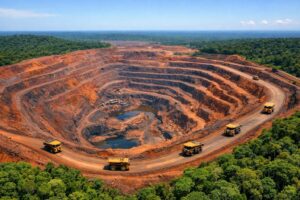
The AI-Energy nexus is the defining industrial trend of 2026. As tech giants move from software optimization to hardware and energy acquisition, the mining companies providing the raw materials for this expansion have become the new gatekeepers of the digital economy. Whether through the massive copper pits of the Andes or the high-grade uranium mines of Saskatchewan, the path to AI supremacy now runs directly through the mining sector.