By Charles Pitts

For decades, the African mining narrative has been defined by a “dig and ship” mentality. Raw ores were extracted from the continent’s rich geological basins and shipped directly to refineries in Asia or Europe, leaving the host nations with environmental scars and minimal economic residue. In 2026, Nigeria is aggressively rewriting that script.
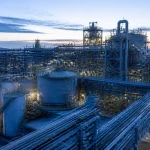
The recent commissioning of the Diamond New Energy lithium processing plant in Nasarawa State marks a structural pivot for West Africa’s largest economy. With a capacity to process 6,000 tonnes of lithium ore per day: roughly 3 million tonnes per year (Mt/yr): the facility is not just an industrial asset; it is a geopolitical statement. Nigeria is signaling that it will no longer function as a raw material pantry for the global North and East. Instead, it is positioning itself as a downstream hub, aiming to capture the value-add that has traditionally been exported to the “China Monopoly.”
The Nasarawa Nexus: 6,000 TPD of Industrial Power
Located in the Endo community of Nasarawa, the Diamond New Energy plant represents a $250 million investment in Nigeria’s industrial future. Developed in partnership with Chinese heavyweights JULING Group and Tiangua New Energy Group (CANMAX), the facility is the largest of its kind in West Africa.
The scale of the operation is unprecedented for the region. The first line, already commissioned, handles 3 million tonnes of ore annually. A second line, currently in progress, is expected to add another 2 million tonnes of capacity, bringing the total throughput to 5 Mt/yr.
More Read



While the project is technically a beneficiation plant: focused on converting raw ore into high-grade lithium concentrate: it represents the critical middle step in the battery value chain. By processing ore locally, Nigeria retains a significantly higher portion of the mineral’s market value, creates over 3,000 direct and indirect jobs, and builds a technical foundation for the eventual domestic production of battery-grade chemicals.
Decoupling from the Export-Only Model
Nigeria’s federal policy has undergone a radical transformation. The government now mandates that investors must establish processing facilities within the country before export permits are granted. This “downstream-first” mandate is designed to break the cycle of commodity dependency.
More Read

Historically, lithium-rich ores from states like Nasarawa and Kogi were trucked to ports and shipped raw. This model deprived Nigeria of the industrial ecosystem required to support a modern economy. The new plant in Nasarawa, combined with Diamond New Energy’s secondary facilities in Ogun State, creates an integrated industrial platform that bridges the gap between extraction and manufacturing.
For investors, this shift adds a layer of complexity but also a layer of stability. Companies that commit to local processing find themselves aligned with national development goals, reducing the risk of “resource nationalism” and securing long-term operational licenses. This strategy mirrors other large-scale African infrastructure plays, such as Rio Tinto’s Simandou rail milestone, where massive upfront capital is being traded for strategic, long-term resource security.
The China Connection: Integration or Independence?
The term “decoupling” is nuanced here. While the plant helps Nigeria decouple from the model of raw ore export, it deeply integrates the country into Chinese technical and financial ecosystems. Diamond New Energy’s partners, JULING and CANMAX, represent a significant portion of the global lithium market demand.

Skeptics argue that by relying on Chinese partners, Nigeria is merely trading one form of dependence for another. However, the Nigerian government views this as a necessary phase of technology transfer. Operating a 3Mt/yr facility requires a sophisticated workforce and reliable power infrastructure: assets that Nigeria can leverage for future, independent industrial growth.
The goal, as articulated by the Ministry of Solid Minerals Development, is to move further down the chain: from concentrates to lithium carbonate, and eventually to lithium-ion battery cells. In this context, the Nasarawa plant is a training ground for the next decade of Nigerian industrialization.
Market Balance and the $19,000 Lithium Floor
The timing of this launch is critical for the global lithium market. As of mid-2026, the market has transitioned from the volatility of 2023-2025 into a period of tight balance. Analysts at Skillings Mining Intelligence have noted that while the lithium surplus has largely been absorbed, the floor price for battery-grade lithium carbonate appears to be stabilizing around the $19,000 per tonne mark.
Several factors support this “soft floor”:
- Incentive Pricing: Marginal projects require prices in the mid-to-high teens to remain economically viable.
- Storage Demand: While EV growth has matured, the surge in grid-scale energy storage (BESS) has created a structural demand buffer.
- Sourcing Diversification: Western and emerging economies are willing to pay a premium for “non-monopoly” supply, though Nigeria’s current output remains closely tied to Chinese offtake.

Nigeria’s 3Mt/yr output adds a predictable, steady stream of concentrate to the global supply, helping to prevent the extreme price spikes that characterized the early 2020s. For the global critical minerals industry, Nigerian lithium represents a high-volume, relatively low-cost supply source that underpins the stability of the energy transition.
Socio-Economic Impact: Jobs and Power
Beyond the balance sheets, the Diamond New Energy plant is a regional economic engine. The facility has already generated over 1,000 direct jobs, many filled by local workers trained in mineral processing and chemical handling. The “indirect” economy: logistics, maintenance, and community services: is estimated to support another 2,000 livelihoods.
Furthermore, a plant of this scale requires stable power. The infrastructure built to support the Nasarawa facility: including substations and upgraded transmission lines: often provides a “power halo” for surrounding communities. This is a crucial component of Nigeria’s broader goal: using the mining sector to solve the country’s chronic infrastructure deficit.

Conclusion: Africa’s Downstream Blueprint
Nigeria’s lithium gambit is a blueprint for the continent. By mandating local processing and attracting major industrial partners, the country is moving beyond the role of a passive resource provider. The 3Mt/yr Nasarawa plant is the first major domino to fall in what Nigeria hopes will be a domestic battery industry by 2030.
The road ahead is not without risks: continued reliance on Chinese technology and the inherent volatility of the lithium market remain significant hurdles. However, for the first time in its mining history, Nigeria is no longer just digging; it is building. In the high-stakes world of the energy transition, that shift from extraction to value-add is the only move that guarantees a seat at the table.