By Charles Pitts

The global mining landscape in July 2026 is defined by a shift from speculative exploration to concrete downstream execution and resource de-risking. As mid-year reporting cycles conclude, the narrative is no longer just about discovering critical minerals but about the infrastructure required to process them and the financial frameworks protecting project economics. From the arid depots of Utah to the lithium-rich states of Nigeria, the industry is witnessing a strategic tightening of supply chains.
This week’s intelligence brief analyzes the capital flows into heavy rare earth separation, the emergence of West African lithium processing hubs, and the technical milestones driving multi-billion-dollar net present value (NPV) revisions in the gold and copper sectors.
M&A and Milestones: Domestic Security and Regional Value Addition
The second week of July has highlighted a dual-track strategy for supply chain security: on-base domestic processing in the United States and aggressive industrialization in West Africa.
REalloys Secures $100M and Tooele Army Depot Partnership
REalloys (NASDAQ: ALOY) has finalized a $100 million private equity financing round, pricing the equity at $14.25 per share. While the capital raise provides a necessary buffer for working capital, the more significant development for the defense industrial base is the company’s conditional selection by the U.S. Army to build a heavy rare earth separation facility at the Tooele Army Depot in Utah.
More Read
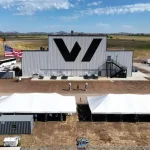
This marks the first instance of a rare earth separation plant being integrated directly onto an active U.S. Army base. The facility is slated to focus on the separation of dysprosium (Dy) and terbium (Tb), oxides that are critical for high-performance magnets used in military guidance systems and aviation. By locating processing within a secure federal framework, REalloys is attempting to mitigate the logistical and geopolitical risks associated with the current overseas-dominated magnet supply chain.


Nigeria Commissions West Africa’s Largest Lithium Plant
In a significant move toward downstream decoupling, Nigeria has formally commissioned the Diamond New Energy lithium processing plant in Nasarawa State. With a capacity of 3 million tonnes per year (approximately 6,000 metric tonnes per day), the $250 million Chinese-backed facility is now the largest of its kind in West Africa.
More Read

The July 4 commissioning, led by Vice President Kashim Shettima, signals a policy shift in Nigeria from raw ore exportation to domestic value addition. This facility is expected to serve as a hub for regional lithium production, providing processed concentrates to global battery manufacturers while creating thousands of local jobs.

Resource and Valuation: P/NAV Rerating at Caldeira and Bullabulling
Valuation models are being recalibrated this month as significant resource confidence upgrades hit the wire, particularly in the ionic clay and Western Australian gold sectors.
Meteoric Resources Surges 246% in Measured Category
Meteoric Resources has released an updated Global Mineral Resource Estimate (MRE) for its Caldeira Rare Earth Project in Brazil. The global resource now stands at 1.6 billion tonnes at 2,317 ppm TREO. However, the headline for investors is the 246% surge in the Measured category, which now totals 128 million tonnes at 2,815 ppm TREO.
The conversion of Indicated to Measured across the three deposits earmarked for the Definitive Feasibility Study (DFS) ensures high confidence in the early years of the project’s mine plan. The project now contains substantial quantities of magnet rare earths, including 209 kt of praseodymium and 34 kt of dysprosium, positioning it as a Tier-1 asset in the ionic clay race.
Minerals 260 Delivers A$2.3B NPV at Bullabulling
In Western Australia, Minerals 260 (ASX: MI6) has released a Pre-Feasibility Study (PFS) for its Bullabulling Gold Project that has significantly outperformed market expectations. The study outlines a post-tax NPV of A$2.3 billion and a robust Internal Rate of Return (IRR) of 43%.
With an initial capital expenditure of approximately A$560 million, Bullabulling is being positioned as a high-margin, long-life open-pit operation. The company has already commenced early works, including a 400-person accommodation village, as it moves toward a Definitive Feasibility Study expected later this year.

Commodity Forecasts: The $19,000 Lithium Floor and Uranium’s Path to $200
Commodity markets in mid-2026 are showing signs of structural support despite broader macroeconomic volatility.
Lithium: A Structural Floor in the Mid-Teens
As of July 10, 2026, lithium carbonate spot prices are trading in the $22,000–$23,000 per tonne range. While this is down from the historic highs of previous years, a new structural floor is emerging. Industry leaders, including SQM, have signaled that the era of $7,000–$8,000 lithium is over, with a cost-based floor now firmly established between $15,000 and $18,000 per tonne.
The “African decoupling” narrative is providing further support for this floor. As countries like Nigeria and Zimbabwe mandate local processing, the sudden influx of raw ore is being constrained, tightening the global balance. Investors are now using $15/kg as a viability hurdle for new projects, assuming that any price dip toward $19,000/t would trigger significant supply curtailments.
Uranium: The Spot Market Scramble
Uranium spot prices have climbed to $85.55/lb this week, but some analysts are looking toward a far more aggressive target. The path to $200/lb is no longer a fringe theory; it is a “stress scenario” based on a primary supply deficit of roughly 20 million lbs per year.
If utilities fail to secure enough long-term contract coverage, they will be forced into a thin and illiquid spot market. A “panic bid” from utilities competing for the same limited physical pounds could drive prices through the $100, $150, and even $200 marks. While not the consensus forecast, the persistent structural deficit makes such a spike a credible risk for under-contracted operators.
Operational Alpha: High-Grade Intercepts and Resource Definition
Operational execution remains the ultimate differentiator for junior and mid-tier miners looking to attract major investment.
Selkirk Copper Hits 2.33% Cu at Minto
Selkirk Copper has reported high-grade results from its Phase 2 drilling at the Minto East zone in the Yukon. Hole 26SCM178 intercepted 2.33% Cu over 4.3 meters, which, when combined with gold and silver credits, yields a 4.28% CuEq grade. These results are particularly significant as they represent a 50-meter step-out from previous drilling, expanding the known high-grade footprint near existing infrastructure.

NexGold Expands Goldboro Campaign to 40,000m
In Nova Scotia, NexGold Mining Corp. has reached the 65% completion mark of its massive 40,000-meter infill and definition drilling program at the Goldboro Gold Project. The campaign is designed to upgrade inferred resources to higher-confidence categories ahead of a Feasibility Study scheduled for October 2026. Recent intercepts, including 12.06 g/t Au over 6.0 meters, continue to demonstrate the grade continuity required for a large-scale open-pit development.
Market Snapshot: July 10, 2026
| Commodity | Price (Spot) | Weekly Change | 2026 Outlook |
|---|---|---|---|
| Copper | $4.48/lb | +1.2% | Structural deficit remains key driver. |
| Gold | $2,420/oz | -0.5% | Consolidation phase; strong institutional floor. |
| Lithium Carbonate | $22,850/t | +2.1% | African processing news supporting prices. |
| Uranium (U3O8) | $85.55/lb | +0.8% | Spot market tightening as utilities reassess contracts. |
| Iron Ore (62% Fe) | $105.40/t | -1.1% | Demand stability from emerging SE Asian hubs. |
Exclusive early access: Download the 2026 Lithium Power Map here.