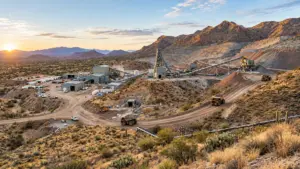
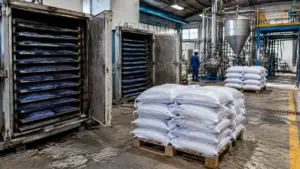
The U.S. Department of War is supporting a US$150 million investment into Blue Moon Metals’ Springer Tungsten Complex in Nevada, tying the planned mine restart to a wider effort to rebuild the country’s tungsten supply chain.

The Springer investment forms part of a US$450 million redeemable preferred-equity investment in The Elmet Group announced by the Department of War on September 14. Elmet has designated US$150 million of that investment for transactions involving the Springer project. A further US$25 million has been set aside by Elmet and Australia-based EQ Resources as standby funding if additional capital is needed to restart the project’s ammonium paratungstate (APT) plant.
The transaction brings together upstream mining, tungsten concentrate supply and APT conversion at the Nevada site. It also gives the Springer project a direct link to Elmet’s downstream tungsten manufacturing business.
Springer Funding Structure
The Springer package has several components.
Elmet will invest US$25 million in new equity in Blue Moon. It will also provide a US$50 million tungsten prepayment facility. The prepayment will be released in two US$25 million tranches. The second tranche depends on agreed development milestones covering the mine, mill, concentrate plant and flotation circuit.
More Read
Blue Moon will repay the prepayment through a 25% credit against sales of Springer tungsten concentrate.

Another US$75 million will go into a joint venture that will own and operate the Springer APT plant. Elmet will hold 70% of the joint venture, Blue Moon 20% and EQ Resources 10%. Elmet will operate the APT facility. Blue Moon will retain ownership and operation of the mine and mill.
The parties have also agreed on concentrate supply arrangements. The APT plant will process material from Springer and EQ Resources’ operations under the contemplated structure.
More Read
The transactions remain subject to definitive agreements, regulatory approvals and other closing conditions.
Mine Restart Targeted for 2027
Blue Moon expects the Springer mine and mill to return to production in the fourth quarter of 2027. The company targets a restart of the APT plant in the second half of 2028. These remain company targets and depend on project execution and completion of the required transactions.
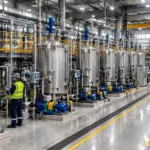
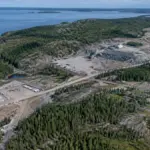
Springer includes open-pit and underground mining areas, a 1,200-tonne-per-day mill and an existing APT plant with potential capacity of 4,000 tonnes per year.
The site received approval from the State of Nevada for its bonding requirements on August 20, allowing construction and redevelopment work to begin.
Blue Moon is also updating the geological information for Springer.
The company cites a historical estimate of 10.7 million tonnes grading 0.45% tungsten trioxide (WO₃). The estimate comes from historical data and reports prepared in 1984. Blue Moon has not completed the work needed to verify it under current NI 43-101 standards and does not treat it as a current mineral resource. Further drilling is planned to update the estimate.
APT Plant Adds a Critical Processing Link
The investment targets more than mine production.
The Department of War said its US$450 million investment in Elmet will establish the only independent ammonium paratungstate facility in North America. The department identified APT processing as a major tungsten supply-chain bottleneck. It also said China currently accounts for an estimated 85% of global tungsten supply.
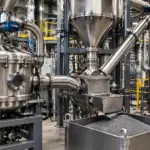
APT is an intermediate product in tungsten processing. The planned Springer facility would therefore sit between mined concentrate and downstream tungsten products.
For the U.S. supply chain, the distinction is important. Restarting a mine can increase domestic concentrate production, but downstream processing capacity is needed to turn that concentrate into material for manufacturing.
The Springer plan addresses both stages.
Elmet Expands Downstream Capacity
Elmet’s wider investment will also support its existing U.S. manufacturing operations.
The Department of War said more than US$165 million of the US$450 million commitment will support facilities in Maine, Michigan and Ohio. The investment is expected to expand domestic tungsten processing and manufacturing capacity.
Elmet has also established Elmet Refining & Trading as a new division. The unit is intended to support tungsten sourcing, refining and trading across the company’s supply network.
The Department of War said Elmet supports more than 100 of its programs. Those applications include missiles, munitions, aerospace, propulsion, naval systems and other defense-related manufacturing.
Australia and Spain Become Part of the Supply Network
EQ Resources adds an allied mining component to the Springer structure.
The Australian company operates the Mt Carbine tungsten operation in Queensland and the Barruecopardo project in Spain. Under the Springer agreement, EQ Resources will hold 10% of the APT joint venture. It will also supply tungsten concentrate to the facility under an eight-year offtake agreement covering 4,000 tonnes of contained WO₃.
That arrangement gives the planned APT plant access to concentrate beyond Springer.
The joint venture can also source additional material if Springer or EQ Resources cannot supply their allocated volumes.
Government Investment Supports a Larger Tungsten Strategy
The Springer transaction sits inside a broader U.S. government push to strengthen domestic tungsten capacity.
The Department of War’s US$450 million commitment to Elmet uses redeemable preferred equity through the Industrial Base Analysis and Sustainment program. The department said the investment is intended to expand domestic tungsten capacity and reduce exposure to supply chains dominated by foreign producers.
A separate Defense Logistics Agency agreement with Elmet provides for purchases of tungsten ores, concentrates and sodium tungstate for the U.S. National Defense Stockpile. The contract has a ceiling of up to US$2 billion, according to the transaction announcement.
The two arrangements serve different purposes. The Elmet investment provides capital for production and processing capacity. The stockpile agreement provides a potential government purchasing channel for qualifying tungsten materials.
For Springer, the immediate objective is straightforward: restart the Nevada mine and mill, then bring its APT plant back into operation.
If the announced schedule is achieved, the project would add a new U.S. source of tungsten concentrate and a domestic APT conversion facility. The development would also connect that capacity with Elmet’s downstream manufacturing network and tungsten supply from allied producers.
For now, the key milestones are the closing of the Springer transactions, completion of project development work and the resource-definition program, followed by the targeted mine restart in 2027 and APT restart in 2028.