By Charles Pitts

OTTAWA : Canada and Japan are formalizing a coordinated critical mineral stockpile strategy designed to insulate high-tech and battery supply chains from Chinese market dominance and heightened geopolitical volatility. The alliance, built on a series of bilateral agreements and Memoranda of Cooperation (MOC), signals a shift toward “friend-shoring” essential commodities to ensure industrial resilience through 2026 and beyond.
The strategy marks a significant departure from traditional market-led procurement. By integrating Japan’s state-backed investment model with Canada’s vast mineral endowment, the two nations aim to create a physical and financial buffer against export restrictions and price manipulation. This move comes as G7 nations increasingly view critical minerals: including lithium, nickel, cobalt, and copper: as national security assets rather than mere trade commodities.
The Strategic Pivot: Building a “China Alternative”
The primary driver for the Canada-Japan partnership is the urgent need to decouple midstream processing and upstream supply from Chinese influence. China currently controls approximately 60% of worldwide critical mineral production and over 80% of refining capacity. Recent export controls on minerals such as gallium, germanium, and antimony have underscored the vulnerability of global manufacturers.
Under the new framework, Canada and Japan are exploring “mutually complementary” stockpiling arrangements. Unlike private-sector inventory management, these state-coordinated reserves are intended for use during supply emergencies or period of extreme market distortion. This approach mirrors the established Japan Organization for Metals and Energy Security (JOGMEC) model, which uses state capital to secure offtake agreements and maintain physical reserves for Japanese industry.
More Read

For Canada, the partnership offers a pathway to move beyond being a raw material exporter. By aligning with Japanese industrial giants like Panasonic, Mitsubishi, and Mitsui, Canada is positioning itself as a hub for refining and battery component manufacturing. This integration is essential for the North American project outlook, where localized supply chains are becoming a requirement for regional automotive subsidies and tax credits.


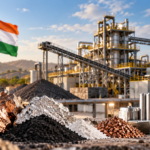
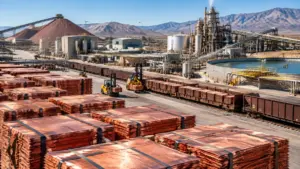
Automated refining facilities are central to the Canada-Japan strategy to move processing away from non-market economies.
JOGMEC and the Mechanism of State-Backed Security
Japan’s JOGMEC is the cenatral architect of this collaborative model. For decades, JOGMEC has provided equity participation and loan guarantees to mining projects worldwide in exchange for stable supply. In the Canadian context, this means Japanese firms are no longer just buyers; they are becoming equity partners in the development of Canadian assets.
More Read

The coordinated stockpile strategy involves three main pillars:
- Joint Project Financing: Using Japanese state-backed credit to de-risk high-capex Canadian mining and processing projects.
- Emergency Release Coordination: Establishing protocols for the shared release of mineral reserves during global shortages to prevent industrial shutdowns.
- Technical Standardization: Aligning ESG and transparency standards to ensure that minerals entering the Canada-Japan loop meet “clean” criteria, effectively creating a premium market for non-Chinese supply.
This state-led intervention is a response to the “price-gap” challenge. Historically, Chinese producers have been able to flood the market with low-cost materials, making it difficult for higher-cost Western projects to achieve Final Investment Decisions (FID). A coordinated stockpile can act as a “buyer of last resort,” providing a price floor that allows Canadian projects to remain viable even during cyclical downturns.
Impact on Global Supply Chains and Logistics
The operational impact of this strategy is already being felt across the logistics sector. The focus is shifting toward “secure corridors” where minerals are extracted in Canada, refined in localized hubs, and then shipped to Japanese or North American battery plants.
The move toward stockpiling requires a massive expansion of specialized storage infrastructure. Unlike traditional commodities like coal or iron ore, many critical minerals require climate-controlled or high-security environments to prevent degradation or theft. This infrastructure is increasingly being integrated into the broader supply strategy of major mining firms, who see secure logistics as a competitive advantage in a fragmented global market.

Large-scale extraction projects in Canada are receiving increased attention from Japanese investors seeking long-term supply security.
Commodity Focus: Lithium, Nickel, and Copper
While the strategy covers 31 minerals identified by the Canadian government, the immediate priority remains the “battery quintet”: lithium, nickel, cobalt, manganese, and copper.
- Lithium and Nickel: Canada’s hard-rock lithium deposits and high-grade nickel sulfides are seen as the most viable alternatives to Chinese and Indonesian supply. Japanese battery makers have expressed a clear preference for Canadian nickel due to its lower carbon footprint and adherence to strict environmental regulations.
- Copper: As the “metal of electrification,” copper is a critical component of the energy transition. The Canada-Japan alliance is looking at ways to expedite the permitting of major copper-gold porphyry deposits, particularly in British Columbia and Ontario.
- Antimony and Rare Earths: Following China’s export bans on antimony, Canada and Japan have accelerated discussions on identifying and developing domestic rare earth elements (REE) to bypass the Chinese processing monopoly.
| Mineral | Current Reliance on China | Canada-Japan 2026 Objective |
|---|---|---|
| Lithium | High (Refining) | Integrated Mine-to-Battery supply |
| Nickel | Moderate (Market Pricing) | ESG-premium supply chains |
| Graphite | Extreme (Anode Production) | Development of synthetic and natural alternatives |
| Rare Earths | High (Magnets/Refining) | Joint pilot processing facilities |
| Copper | Moderate | Increased offtake for Japanese smelting |
Geopolitical Risks and the 2026 Outlook
The strategy is not without risks. The primary challenge is the speed of implementation. Building a new mine in Canada can take over a decade, while the transition to non-Chinese supply is needed immediately. Furthermore, China has shown a willingness to retaliate against “de-risking” measures by targeting the agricultural or manufacturing exports of participating nations.
However, the consensus among policymakers in Ottawa and Tokyo is that the cost of inaction is higher. The 2026 outlook for the critical minerals sector is defined by this tension between market efficiency and national security. Investors are increasingly looking at projects that have secured “strategic” backing from G7 governments, as these projects are more likely to navigate the complexities of modern trade wars.
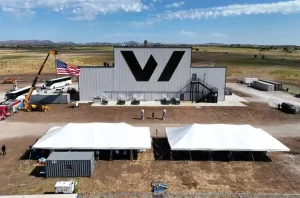
The “Project Vault” concept in the United States and similar reserve mechanisms in the European Union are expected to link with the Canada-Japan stockpile. By 2026, we may see the emergence of a multi-national “Critical Minerals Reserve” that functions similarly to the Strategic Petroleum Reserve (SPR), providing a safety net for the global energy transition.

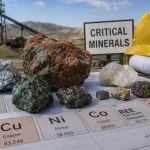
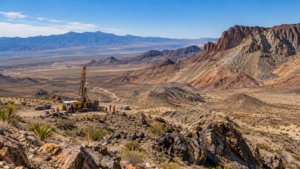
Geographical concentration of minerals remains a challenge, but Canadian resources offer a stable alternative to volatile jurisdictions.
Operational and Financial Implications for the Industry
For mining operators and juniors, the Canada-Japan strategy translates into a more diversified capital stack. Traditional equity markets have been volatile, but “patient capital” from Japanese trading houses offers a stabilizing force. Operators who can demonstrate a secure path to refining: either through domestic facilities or through Japanese partnerships: are finding it easier to attract valuation premiums.
Furthermore, the emphasis on stockpiling could lead to a decoupling of physical and paper prices. If a significant portion of global supply is locked in strategic reserves, the “available” spot market could become more volatile, even as the “strategic” market remains stable. This creates a dual-track pricing environment that will require sophisticated risk management from both producers and consumers.
As Canada and Japan move from policy discussion to physical implementation, the impact on the global supply chain will be structural. The era of just-in-time mineral procurement is being replaced by a model of just-in-case security, with Canada and Japan leading the way in redefining what a resilient mining industry looks like in the 21st century.

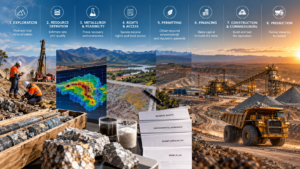
Technological integration and data-driven logistics are the final pieces of the coordinated stockpile strategy.