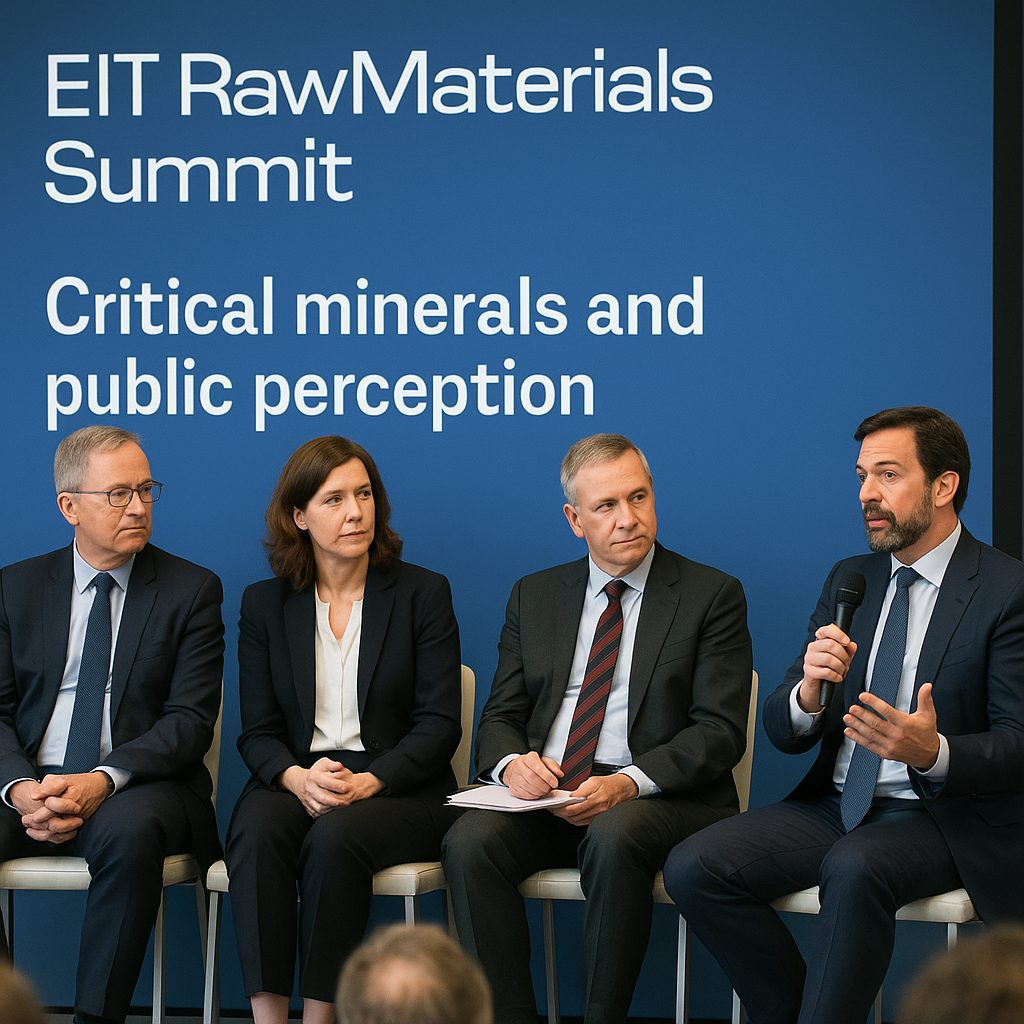
The European Union’s ambitions to secure its own supply of critical minerals face a less visible but potent threat: poor public perception. At the EIT RawMaterials Summit in Brussels, top officials and executives warned that negative societal views on mining are obstructing both policy implementation and private investment.

“Meeting demand for critical minerals requires a profound shift in public perception and more education,” said Bernd Schäfer, CEO of EIT RawMaterials, in his opening keynote. The summit, running May 13–15, convenes leaders from government, academia, and the mining industry to assess Europe’s ability to wean itself off foreign mineral dependencies.
Public Trust Below Tobacco Industry Levels
Paul Gait, head of strategy at Anglo American, noted that public perception of mining in Europe ranks lower than that of the tobacco industry. “Mining should be thought of as equally essential as agriculture,” Gait said. Without that recognition, he argued, Europe cannot meaningfully transition to clean technologies that rely heavily on critical minerals like lithium, cobalt, and rare earths.
CRMA Implementation Stalled by Misconceptions
The EU’s flagship Critical Raw Materials Act (CRMA), passed in 2023 to secure supply chains, has already encountered roadblocks. According to Krzysztof Galos, Undersecretary of State at Poland’s Ministry of Climate and Environment, public perception has become a greater obstacle than financing or permitting delays.
“This [poor awareness] is an under-appreciated issue,” Galos said. “Changing the mindset of whole societies regarding mining—from local resistance to regional support—is a great challenge, but it must be done.”
Galos emphasized the need to reshape attitudes through long-term educational investment. “We must begin in primary schools with targeted programs in geology, mining technologies, and materials science,” he said.

Education as Strategy
EIT RawMaterials has already rolled out continent-wide educational efforts, including the Raw Materials Academy and its Higher Education Initiative, which aims to reach over 150,000 students by 2027. These programs are designed to make critical minerals more relatable—and acceptable—to the public.
“Without public backing, even the best policies will fail,” Schäfer told attendees.

Related News:
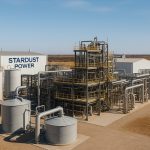
- Stardust Power’s Oklahoma Lithium Facility Avoids Wastewater Permit with Closed-Loop System
- Carney Assembles Economic Team with Ex-Goldman Banker and Quebec Power Broker
- Sanatana Resources Secures Gold Strike Two in Yukon Mining Project Expansion
- Peru Suspends Mining After Pataz Gold Mining Massacre Leaves 13 Dead
Local Wins Drive Broader Change
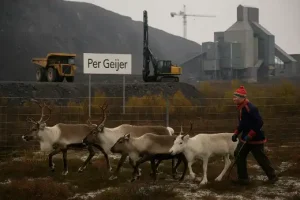
Savannah Resources, operator of the Barroso lithium project in Portugal, has faced its own public perception challenges. CEO Emanuel Proença said the company focused on creating local partnerships and jobs to change the narrative around mining.
“People don’t respond to data; they respond to impact,” Proença said. “The Barroso region needed revitalization, and our project became part of the solution.”
Designated a strategic project under the CRMA, Barroso’s progress has underscored how public perception can evolve when projects are transparent and economically inclusive.
From Messaging to Diplomacy
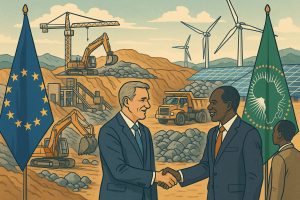
Improved public perception also strengthens the EU’s global hand in securing critical minerals. Europe has already signed 14 strategic partnerships with mineral-rich nations from Chile to Kazakhstan. Yet domestic opposition continues to blunt the impact of these geopolitical moves.
“There’s an urgent need for alignment between national strategy and local sentiment,” said one summit delegate. “The perception gap is Europe’s soft underbelly.”
Rewriting the Narrative
As the energy transition accelerates, Europe finds itself in a paradox: it leads the world in climate ambition but falters in securing the very materials needed to realize it. For this contradiction to resolve, the mining sector must reshape its identity—not just operationally, but narratively.
The message from Brussels is clear: fixing the supply of critical minerals starts with fixing public perception.