Key Takeaways
- The European Union significantly expanded funding and technical assistance for African mining projects in early 2025.
- Initiatives target critical minerals like cobalt, lithium, and rare earths, aligning with Europe’s clean energy ambitions.
- Analysts caution about potential dependency and governance risks for African nations.
- The new funding stream underscores global competition over strategic resources.
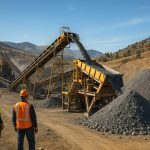
The EU mining investment in Africa 2025 has emerged as one of the bloc’s largest funding initiatives, with €1.3 billion committed to accelerating critical minerals development across the continent. The program underscores Europe’s determination to secure reliable supplies of critical minerals vital to its clean energy transition and industrial competitiveness. Officials close to the agreements describe the initiative as a strategic inflection point in EU policy. “We are no longer in the era of symbolic support,” said Anika Reiter, a senior EU trade advisor. “This is a structural commitment to Africa as an essential partner in Europe’s energy and industrial ambitions.”

The funding targets a portfolio of mining projects spanning over a dozen African nations, including the Democratic Republic of Congo, Zambia, Namibia, and Mozambique. Cobalt, lithium, rare earths, and nickel—key inputs for electric vehicles and renewable power—are among the priority minerals.
“This is about more than extraction,” Reiter said. “It is about creating industrial value chains and sustainable development outcomes.”
Yet the scale of new European funding has rekindled longstanding debates about resource governance and economic sovereignty. Development analysts warn that without stronger domestic frameworks, African countries could see a familiar pattern of foreign-driven extraction without transformative benefits.
“We have seen commodity booms come and go with limited impact on structural development,” said Saliou Diop, a researcher with the Institute for Security Studies in Dakar. “To avoid repeating history, African governments will need to ensure local processing, fair revenue sharing, and environmental accountability.”
More Read

| Country | Target Minerals | EU Funding Allocation (€) | Local Processing Plans |
|---|---|---|---|
| Democratic Republic of Congo | Cobalt, Copper | 400 million | Under negotiation |
| Namibia | Lithium, Rare Earths | 250 million | MOU signed |
| Zambia | Copper, Cobalt | 300 million | Processing hub planned |
| Mozambique | Graphite, Rare Earths | 150 million | Feasibility study underway |

Growing Demand, Growing Competition
Europe’s investment push comes as global demand for strategic minerals intensifies. Benchmark Minerals Intelligence forecasts that lithium demand will more than triple by 2030, driven by surging battery manufacturing. European automakers and clean energy producers have pressed policymakers to secure alternative supply chains that reduce dependence on China.
More Read
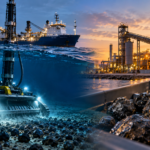
Over the past decade, Beijing has committed tens of billions of dollars in African mining infrastructure and long-term offtake agreements. The United States has also stepped up engagement, launching the Minerals Security Partnership to support critical mineral production in partner countries.
Josep Borrell, the EU’s high representative for foreign affairs, framed the funding program as a response to this global contest. “Our own energy transition must not come at the expense of Africa’s environment or its future,” he said. “This partnership is designed to raise standards and create shared prosperity.”
Some African governments see the European initiative as a chance to leverage growing competition for minerals to secure better terms. “The world is finally recognizing Africa’s central role in the clean energy economy,” said Zambia’s Mines Minister Paul Kabuswe. “Our task is to turn this recognition into tangible development outcomes.”
Technical Assistance and Policy Modernization
Alongside financing, the EU is deploying technical assistance teams to help African governments improve regulatory oversight, modernize mining cadastres, and strengthen environmental compliance. Officials in Namibia said a new memorandum of understanding with Brussels would help attract investors to lithium and rare earths projects.
“Technical support can be as important as capital,” said Anna Müller, an analyst at the German Institute for International and Security Affairs. “If African regulators can create transparent, predictable frameworks, project financing will follow.”
Civil society groups have cautiously welcomed the emphasis on standards but note that past commitments by foreign investors often fell short in practice. “Communities have heard promises of sustainable mining before,” said Yvonne Mavimbela, a Johannesburg-based energy policy expert. “The test will be whether this effort delivers accountability.”
Potential for Transformation—and Dependency
The EU’s intervention comes as many African economies are still grappling with uneven recovery from the pandemic and the economic aftershocks of Russia’s invasion of Ukraine. While rising mineral prices have improved fiscal positions in some countries, volatility and governance gaps remain persistent risks.
“The rush to secure critical minerals could entrench extractive dependency if countries don’t negotiate strong provisions for local value addition,” Diop said. “This is a unique opportunity to break out of that cycle.”
Some governments are already moving in that direction. Zambia and the DRC have announced plans to create special economic zones to process copper and cobalt domestically. Namibia has signaled it will require a share of lithium to be refined locally.
European policymakers say they will support these efforts. “Our approach is not to replicate old models,” Reiter said. “We are committed to supporting industrialization alongside resource development.”
The Stakes for Europe’s Transition
For Brussels, the stakes extend beyond economic resilience. The EU has set legally binding targets to achieve climate neutrality by 2050, with battery storage and electrification at the core of its strategy. Any disruption to critical mineral supply chains could undermine decarbonization plans.
A recent European Commission assessment warned that the bloc faces “severe supply risk” in 17 raw materials, many of which are concentrated in a handful of countries with underdeveloped infrastructure and regulatory systems.
“The vulnerabilities exposed by the pandemic and geopolitical tensions have been a wake-up call,” Borrell said. “Diversifying supply sources is no longer optional.”
Still, observers caution that supply diversification must go hand in hand with governance reform. “Investment without accountability will not deliver stability,” Mavimbela said. “Sustainable development requires that communities benefit from the resources beneath their land.”
A Moment of Decision
As funding agreements move from headline pledges to project execution, scrutiny is likely to intensify. The EU has promised annual reviews, independent audits, and performance benchmarks tied to environmental and social standards.
African governments, for their part, face pressure to demonstrate that new mineral wealth can translate into broader prosperity. “This is a chance to turn resource endowments into development engines,” Kabuswe said. “It is also a test of our political will.”
The months ahead will reveal whether Europe’s record investment marks a genuine turning point—or simply the next iteration of an old pattern.