The mining industry faces challenges in mining equipment maintenance, as corrosion monitoring in mining becomes essential to maintain structural integrity and operational efficiency. Recent research published in Applied Sciences has highlighted the urgent need for advanced monitoring and maintenance strategies to combat these risks. The study leverages spectral and wavelet analysis to enhance the detection of corrosion’s subtle yet damaging effects on mining equipment, particularly focusing on the rotary arm of an ERc 1400-30/7 bucket excavator. This article delves into the findings, implications, and potential shift in maintenance practices within the industry.

Corrosion Monitoring in Mining: A Silent Threat to Operations
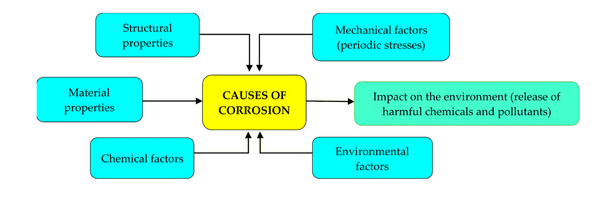
Corrosion impacts the mining industry, where harsh environmental conditions accelerate the degradation of metal structures, emphasizing the need for effective corrosion monitoring in mining. Traditional methods of assessing structural health often miss early signs of material fatigue and decay. This not only affects safety but also results in substantial economic losses due to unexpected equipment failures and increased maintenance costs.
The study conducted by researchers Radu S.M., Vîlceanu F., and colleagues addresses these challenges by introducing advanced analytical techniques—specifically spectral and wavelet analysis—that provide a more detailed understanding of how corrosion impacts mining equipment maintenance. Early detection of corrosion-related issues could be key to extending the lifespan of critical machinery and improving overall operational safety.
Limitations of Traditional Mining Equipment Maintenance Methods
Existing approaches to mining equipment maintenance, such as static and dynamic analyses, often lack the sensitivity needed to detect the gradual changes caused by corrosion. These methods may not capture localized degradation or transient events that could signal early damage. This gap in detection capabilities leaves operators vulnerable to unforeseen equipment failures.
The study identifies the shortcomings of these traditional analyses and argues for the integration of more sophisticated techniques, such as spectral and wavelet analysis, which offer a deeper insight into the structural changes induced by corrosion. These methods provide a multi-resolution view of the equipment’s dynamic response, allowing operators to identify early signs of deterioration that might otherwise go unnoticed in corrosion monitoring in mining.
You might be interested
- China Tightens Export Controls on Antimony Amid Rising Geopolitical Tensions
- Strategic Move: WSP Global Acquires Power Engineers for $1.78 Billion
- Illegal Mining Gangs Devastate Amazon Rainforest in Pursuit of Green Energy Minerals
- Indian Miner Vedanta Reports 37% YoY Profit Surge in Q1 2024
- Glencore Faces $150 Million Fine in Swiss Bribery Probe: What You Need to Know
Methodology: Spectral and Wavelet Analysis in Mining Equipment Maintenance
The research focused on the rotary arm of an ERc 1400-30/7 bucket excavator, subjecting it to a series of corrosion tests crucial for mining equipment maintenance. The first step involved preparing the surface with abrasive discs to enhance the accuracy of ultrasonic measurements, which were used to assess the metal’s thickness at various points. This non-destructive approach ensured that the testing process did not compromise the equipment’s integrity.

Subsequent spectral analysis transformed the collected time-domain signals into the frequency domain, enabling the identification of dominant frequencies associated with the structure’s response. This provided crucial insights into how corrosion alters the equipment’s natural frequencies and overall structural performance.
Wavelet analysis was also employed to capture transient features and localized changes in structural behavior over time. By offering a more nuanced, multi-resolution analysis, this technique revealed subtle variations in the equipment’s dynamic response that could indicate early signs of corrosion, highlighting its importance in mining equipment maintenance. For more on the detailed methodologies used, you can access the full study here.
Key Findings: Implications for Corrosion Monitoring in Mining
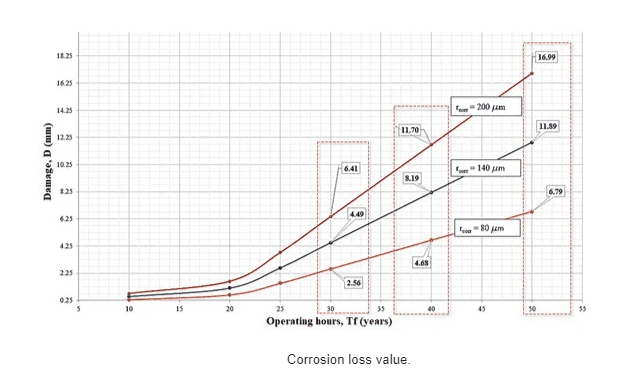
The study’s findings highlight the impact of corrosion on mining equipment maintenance. Ultrasonic testing revealed measurable reductions in the thickness of the metallic components, establishing a baseline for assessing the structural health of the excavator’s rotary arm. Spectral analysis demonstrated that corrosion led to shifts in the equipment’s natural frequencies, indicative of changes in stiffness and mass distribution—key factors that could trigger resonance conditions and affect operational safety.
Wavelet analysis further highlighted localized changes in structural response, capturing transient events that traditional methods might overlook. These subtle shifts provide early warning signs, allowing for timely maintenance interventions that can prevent catastrophic failures. For further insights on how these findings influence mining operations, you can read the study’s discussion here.
Enhancing Mining Equipment Maintenance with Advanced Monitoring
The study’s results have significant implications for the mining industry, advocating for a shift in mining equipment maintenance practices. By integrating advanced analytical techniques like spectral and wavelet analysis, operators can adopt a more proactive approach in corrosion monitoring in mining, identifying early signs of structural degradation. This shift promises to enhance the safety, reliability, and longevity of mining equipment, ultimately leading to substantial cost savings and operational improvements.
Given the harsh conditions typical of mining environments, the adoption of these advanced monitoring strategies could reduce the frequency of unexpected equipment failures and extend the useful life of critical machinery.
Enhancing Safety and Efficiency in Mining Equipment Maintenance
Corrosion presents ongoing challenges in the mining industry, affecting the safety and efficiency of essential equipment. This recent study highlights the limitations of traditional mining equipment maintenance methods and underscores the value of advanced analytical techniques like spectral and wavelet analysis. By providing early detection of structural degradation, these methods pave the way for more effective maintenance strategies that can reduce risks and extend equipment lifespan.
As the industry seeks to enhance safety and reduce costs, integrating these advanced techniques into routine mining equipment maintenance practices could transform how mining companies manage the impact of corrosion. Future research should continue to refine these methods and explore their broader application across sectors vulnerable to corrosion, ultimately boosting the resilience of critical infrastructure.