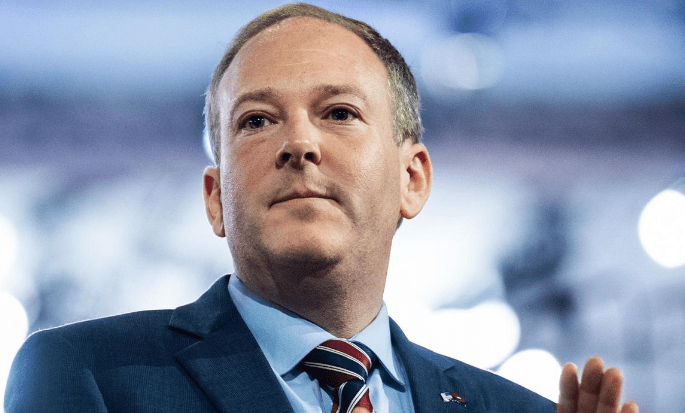
In a move that underscores President-elect Donald Trump’s commitment to reversing environmental regulations and promoting energy independence, former New York congressman Lee Zeldin has been nominated to lead the Environmental Protection Agency (EPA). Zeldin, a Long Island Republican, is expected to champion Trump’s policies on deregulation and fossil fuel expansion, attracting both praise from industry proponents and criticism from environmental advocates.

Related News
- Liberia Proposes New Royalties on Iron Ore to Boost Economic Recovery
- BHP Achieves Record Iron Ore Production for Second Consecutive Year
- Cleveland Port’s Iron Ore Conveyor System to Undergo $5M Modernization
- Iron Ore Futures Surge to 5-Week High Amidst Steel Market Improvement and Pre-Holiday Restocking
Lee Zeldin: A Leader Aligned with Trump’s Deregulatory Agenda
If confirmed by the Senate, Zeldin will lead a powerful regulatory body responsible for standards on air, water, chemicals, and biofuels that impact nearly every sector of the U.S. economy. Trump, in a statement, expressed that Zeldin’s leadership would bring “fair and swift deregulatory decisions” aimed at fostering American business while upholding high environmental standards. This appointment reinforces Trump’s broader goal to accelerate domestic energy production, including support for gas-fired power plants and reductions in emissions regulations.
“He will ensure fair and swift deregulatory decisions that will unleash the power of American businesses,” Trump stated, reflecting the administration’s aim to ease constraints on traditional energy sectors. Trump argues that these sectors have been unduly constrained by regulatory measures under the Biden administration.
Zeldin will oversee efforts to roll back Biden-era regulations, including rules mandating reductions in greenhouse gas emissions for sectors like transportation and electric power. Scaling back these policies could extend the operation of coal-fired power plants, which have faced closures as renewable energy demand grows to meet rising power needs in data centers and heavy industry.
Zeldin’s Environmental Record: Mixed Reviews
Zeldin’s environmental record is mixed. The League of Conservation Voters, which tracks lawmakers’ voting records on environmental issues, assigned him a lifetime score of just 14%, dropping to 5% in his final year in office. However, Zeldin has occasionally crossed party lines on environmental issues. In 2018, he joined New York senators Chuck Schumer and Kirsten Gillibrand in urging then-Interior Secretary Ryan Zinke to oppose offshore drilling near Long Island.
Zeldin has signaled his alignment with Trump’s energy policies, stating on social media his intentions to “restore US energy dominance” and “revitalize the auto industry” to create American jobs. He also emphasized his goal to position the U.S. as a global leader in artificial intelligence, hinting at potential efforts in AI-driven energy technology.

Supporters See an Opportunity for Reform
Supporters of Zeldin’s appointment, including former EPA chief of staff Mandy Gunasekara, praised the decision, describing Zeldin as a leader capable of aligning the EPA with Trump’s agenda. “It’s going to be great having someone with a fresh perspective come in to institute major reforms,” Gunasekara said, highlighting Zeldin’s success in advancing Republican priorities in traditionally Democratic areas in New York.
Gunasekara suggested that Zeldin’s appointment could lead to sweeping changes in EPA operations, including adjustments to stringent emission standards and potential shifts in the agency’s enforcement policies.
Environmental Advocates Warn of Regressive Policies
Critics have expressed alarm at Zeldin’s nomination, with environmental groups voicing concerns about the direction the EPA might take under his leadership. Ben Jealous, executive director of the Sierra Club, described Zeldin as an “unqualified, anti-American worker” with a record of opposition to clean air and water safeguards. Jealous accused Trump of prioritizing corporate interests over public health, warning that the nomination signals an aggressive rollback of critical environmental protections.
The potential shift in EPA leadership is expected to impact policies directly related to clean air and water standards. Environmentalists are particularly concerned with vehicle emission regulations, which the Trump administration has indicated it will review. Existing Biden-era standards for model years 2027-2032 mandate strict emission reductions that have nudged automakers toward electric vehicle (EV) production. Zeldin may lead efforts to ease these standards, potentially slowing the transition to EVs.
Speculation on Major Structural Changes for the EPA
In addition to regulatory rollbacks, Trump’s transition team has reportedly discussed relocating the EPA headquarters from Washington, D.C., to another region. If implemented, this relocation would affect approximately 7,000 EPA employees, potentially impacting the agency’s operational efficiency and employee morale.
Zeldin’s nomination follows Trump’s recent selection of fellow New Yorker Rep. Elise Stefanik as U.N. ambassador, indicating a preference for allies with strong regional and political connections. Zeldin, who defended Trump during his first impeachment and narrowly lost a gubernatorial race in New York, joins a list of high-profile Republicans appointed to key roles in the incoming administration.
A New Era for Environmental Policy
Zeldin’s nomination to lead the EPA marks a pivotal moment in U.S. environmental policy, setting the stage for possible recalibrations in standards governing everything from power plant emissions to vehicle fuel economy. While industry supporters anticipate that Zeldin’s leadership will revitalize traditional sectors and reduce regulatory burdens, environmental advocates worry it may represent a step backward in the fight against climate change and pollution. As the Senate considers Zeldin’s confirmation, his tenure could profoundly shape U.S. environmental policy for years to come.