A $1.8 billion UAE US critical minerals partnership with Orion Resource Partners marks a strategic inflection point in global mineral geopolitics — shifting from oil dependence to mineral security in the race for energy transition metals.

When the United Arab Emirates (UAE) announced a $1.8 billion deal with New York–based Orion Resource Partners this week, the move reverberated across Washington, Abu Dhabi, and beyond. It wasn’t a routine investment announcement — it was a clear signal that energy power is no longer defined by oil wells but by the supply chains of lithium, copper, and rare earth elements.
Under the agreement, the UAE, the US government, and Orion Resource Partners have formed the Orion Critical Minerals Consortium, jointly capitalized at US $1.8 billion, with each partner contributing approximately US $600 million. The fund aims to expand to US $5 billion by bringing in other sovereign and institutional investors to acquire or finance production-ready mining and refining projects supporting EVs, renewables, and advanced manufacturing.
From Oil Security to Mineral Security
The UAE US critical minerals partnership represents a deliberate evolution from petro-finance to electro-finance. For decades, energy diplomacy revolved around oil security; today, it revolves around critical minerals.
According to the International Energy Agency (IEA), global lithium demand will rise more than sixfold by 2030, driven by EV batteries and grid storage. Copper, the metal wiring the energy transition, faces a 3.5 million-ton deficit by 2026 as supply plateaus. Meanwhile, China controls roughly 70 percent of the world’s rare-earth refining capacity, creating strategic vulnerabilities for Western and Middle Eastern economies.
More Read

By investing in assets close to production — rather than exploration — the consortium seeks speed, scale, and certainty. Orion’s managing partners noted that “speed to production, ESG compliance, and regional diversification” are the venture’s guiding principles.

Why the US Is All In
The US government’s involvement, likely through facilitative agencies such as the Development Finance Corporation (DFC) and Export-Import Bank (EXIM), aligns with Washington’s broader objective to de-risk mineral supply chains from over-reliance on China and Indonesia.
For the United States, the partnership is both a strategic hedge and a financial innovation — blending private capital with national resource policy. The UAE’s investment arms, including Mubadala and Masdar, already hold extensive global stakes in energy transition infrastructure. This consortium embeds that capital within the heart of mineral supply networks critical to clean-energy manufacturing.
More Read

A senior US official told Reuters earlier this year, “We’re not replacing China overnight, but building transparent, allied supply lines that ensure metals flow securely into the clean-energy economy.”
How the Orion Critical Minerals Consortium Will Operate
The fund will target brownfield and near-production mining projects, reducing geological risk while accelerating output. Its investment thesis includes:
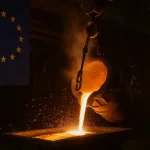
- Refining and midstream capacity, particularly for lithium hydroxide, nickel sulphate, and rare-earth separation.
- Offtake and supply-chain agreements that guarantee secure mineral flows to allied industries.
- Sustainability-linked project finance mechanisms tied to ESG performance.
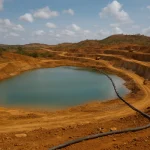
Initial focus regions include Namibia, Zambia, Morocco, Chile, and Brazil, alongside expansion capital for select North American mines. The UAE’s position as a neutral logistics and finance hub, combined with Orion’s technical vetting capacity, could make the fund one of the fastest-deploying pools of mineral capital globally.
ESG as Competitive Advantage
Unlike conventional resource funds, the UAE US critical minerals partnership embeds a comprehensive ESG framework aligned with OECD and IFC Performance Standards. Screening priorities include:
- Water stewardship in lithium and copper operations.
- Worker safety and local-community inclusion during mine development.
- Transparent offtake pricing to discourage speculative mark-ups and corruption.
For the UAE, ESG is not merely compliance—it’s strategic branding. By positioning itself as a responsible energy-transition investor, Abu Dhabi seeks to differentiate its capital from purely extractive models and align with Western expectations for sustainability transparency.
Market Implications for the Mining Sector
Market observers describe the deal as both symbolic and catalytic. Symbolic, because it underscores the UAE’s rise as a non-Western anchor in resource diplomacy; catalytic, because it injects much-needed liquidity into a sector facing chronic under-investment.
According to S&P Global Market Intelligence, the global mining industry needs over US $400 billion in fresh capital by 2035 to meet net-zero demand trajectories. Funds like Orion’s could provide the missing financial muscle for mid-tier producers and emerging jurisdictions.
Following the announcement, lithium carbonate futures on the Shanghai exchange ticked upward, and copper equities in Toronto and Sydney registered modest gains—signs that investor sentiment is pivoting toward long-term mineral security plays.
India’s Strategic Window
For India, this deal is a strategic signal. As one of the fastest-growing EV and solar markets, India’s mineral demand is surging—but its domestic supply and refining base remain limited. The UAE’s proximity and long-standing economic ties open possibilities for triangular cooperation: Indian manufacturers sourcing via UAE-backed projects or co-investing in refining infrastructure abroad.
India’s recently launched Critical Minerals Mission—tasked with developing more than 30 priority assets—could benefit from UAE collaboration, particularly in project finance and processing expertise.
Skillings Analysis
1. Financing Meets Geopolitics
The UAE US critical minerals partnership blurs the line between statecraft and capital allocation, embedding foreign policy into mineral finance. Expect more hybrid investment models linking sovereign funds to resource security.
2. From Exploration to Acceleration
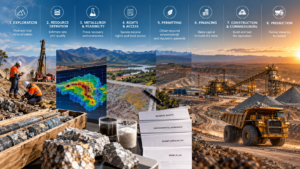
By funding production-ready projects, Orion and the UAE bypass long discovery timelines, betting instead on rapid cash-flow generation and scalable output.
3. ESG as a Market Differentiator
ESG compliance has evolved from an ethical checkbox to an operational necessity — crucial for licensing, financing, and reputational stability.
Outlook: The Next Phase of Mineral Diplomacy
Over the coming quarters, analysts expect the consortium to unveil its first investments in Africa and Latin America, expand participation to Asian and European sovereign investors, and explore downstream refining ventures in the UAE.
If the fund achieves its US $5 billion target, it will rank among the top five private critical-mineral investment pools worldwide—potentially shaping pricing, processing, and geopolitics across the EV and renewable ecosystem.
As the clean-energy race intensifies, the UAE US critical minerals partnership stands as a blueprint for the new mineral order—one defined not by extraction alone, but by who finances, refines, and governs the metals that power the next century.