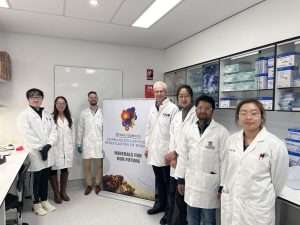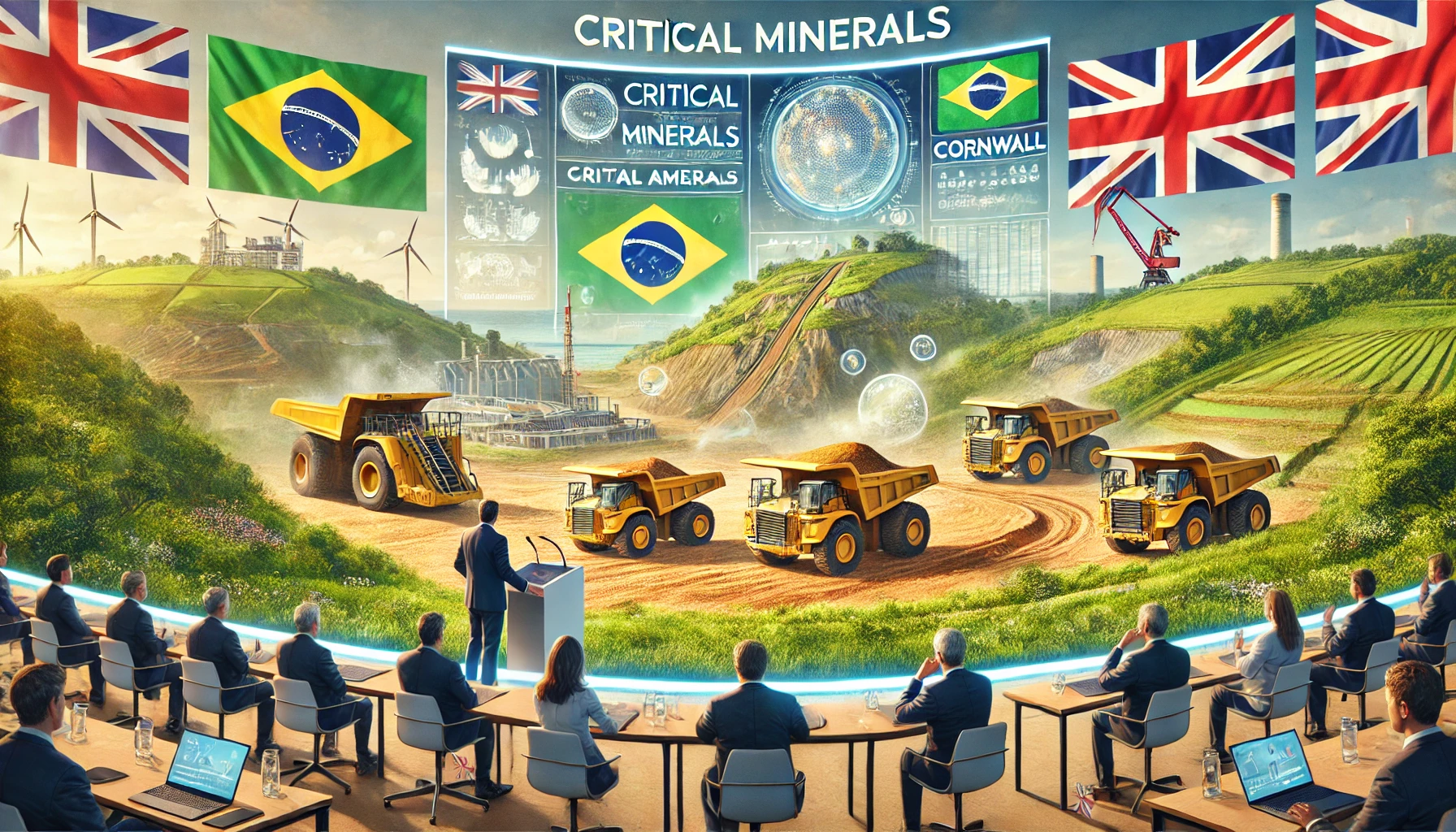

At a pivotal seminar on October 3, British experts urged the UK to reassess its domestic mining potential, inspired by Brazil’s growing influence in the global critical minerals market. The event, hosted by the UK Department for Business & Trade and the Brazilian Embassy, emphasized the need to harness local resources to remain competitive in a sector essential for the energy transition and advanced manufacturing.
Brazil’s Blueprint for Success
Brazil has made significant progress in establishing itself as a major player in the critical minerals market. The country is the world’s leading producer of niobium and has increased its production of nickel, graphite, and rare earth elements (REEs)—materials crucial for electric vehicles (EVs) and renewable energy technologies.
Dr. Kathryn Goodenough, principal geologist at the British Geological Survey, highlighted Brazil as an example the UK should follow. “Brazil’s mining industry is thriving. We should learn from its approach to integrating mining into the economy while focusing on our domestic resources as well,” she said.
Vale, Brazil’s mining giant, has played a pivotal role in this progress by investing in cutting-edge technology and sustainable practices. Rafael Bittar, Vale’s vice president, spoke about the company’s efforts to minimize environmental impact through innovations such as robotics and artificial intelligence (AI). “We need a roadmap for zero-residue and carbon neutrality,” he stated.
The UK’s Underutilized Potential
Although the UK is a global hub for mining finance—with institutions like the London Metal Exchange at its core—its domestic mining capabilities remain underdeveloped. “There’s a perception that the UK has no active mining industry, but this isn’t true,” Goodenough explained. “We have a rich mining heritage, particularly in Cornwall, where companies like Cornish Lithium and British Lithium are advancing projects to tap into lithium resources.”

The UK government has begun addressing these gaps through its Critical Minerals Strategy, launched last year. The strategy focuses on three key areas: accelerating domestic production, collaborating with international partners, and enhancing international markets. The goal is to secure a stable supply chain of critical minerals by maximizing local extraction where possible and investing in skills and research to develop new mining technologies.
Cornwall already hosts over 110 companies tied to mining. The government’s £25 million investment in green industry centers, including funding for the University of Exeter, reflects the UK’s long-term ambitions. However, the need for deeper domestic engagement with critical minerals remains urgent.
Brazil’s Graphite Growth and Global Role
Brazil’s potential as a major supplier of materials vital to the EV revolution—particularly graphite—was another key focus. While the country currently produces just 3% of global graphite, this share is expected to rise. The Santa Cruz mine, operated by South Star Battery Metals, is projected to produce 12,000 tonnes annually, with Brazil’s output expected to surpass 56,000 tonnes by 2028.
This expansion comes at a critical time as the US, through its Inflation Reduction Act (IRA), seeks to strengthen domestic and allied sources of critical minerals. Brazil stands to benefit if it secures a free trade agreement (FTA) with the US.
Toward Sustainable Mining Practices
The seminar also emphasized the increasing importance of environmental, social, and governance (ESG) factors in mining. Companies like Sigma Lithium have emerged as leaders in sustainable mining practices in Brazil. Sigma’s CEO, Ligia Pinto, stressed the company’s commitment to avoiding toxic chemicals and carbon emissions, alongside its initiatives to support local communities.
“The success of critical minerals mining will depend not only on the resources we extract but on the way we extract them,” Pinto remarked, highlighting the balance between profitability and environmental responsibility.
Reviving the UK’s Mining Industry
For the UK, the seminar highlighted the need to revitalize its mining sector. While Brazil is focusing on scaling up production and integrating into global supply chains, the UK must accelerate its domestic efforts or risk falling behind in the race for critical minerals. Dr. Goodenough’s comments reflect the growing belief that the UK must explore its own potential rather than rely solely on international partnerships.
“There’s a future for mining in the UK. The world is changing, and we need these materials for the energy transition. We just have to be willing to look closer to home,” she concluded.
Conclusion: Time for Action
As Brazil positions itself as a leader in critical minerals, the UK faces a pivotal moment. With global demand for critical minerals rising, particularly for green technologies, the time has come for the UK to rethink its domestic mining strategies. The seminar’s discussions made it clear that while partnerships with countries like Brazil are valuable, the UK must also leverage its own resources, tap into its mining heritage, and prioritize sustainable practices.