The Impact of Technological Innovations on the Industry
Automation and Artificial Intelligence (AI) have revolutionized various sectors, bringing about significant changes in how businesses operate. These advancements have streamlined processes, increased efficiency, and improved productivity. With the integration of automation and AI technologies, companies can now automate repetitive tasks, allowing employees to focus on more complex and strategic activities. This has led to increased job satisfaction and the ability to achieve higher levels of innovation. As the trade industry continues

Automation and AI are revolutionizing the mining industry with cutting-edge technology. Autonomous equipment, like self-driving trucks and automated drilling systems, are increasingly being adopted in modern mines. These technologies enhance safety by reducing the need for human presence in hazardous environments. AI systems are also utilized to analyze large volumes of data, enhancing decision-making processes and operational efficiency. The implementation of AI has resulted in substantial cost reductions and a decrease in environmental impacts through the optimization of resource extraction and waste reduction.
The Importance of Real-Time Monitoring and IoT
Mining operations are being transformed by the integration of the Industrial Internet of Things (IIoT) and real-time monitoring systems. Continuous monitoring of equipment and environmental conditions is made possible by sensors and wireless communication technologies. With the ability to collect data in real-time, companies can now implement predictive maintenance strategies to minimize downtime and proactively prevent accidents. Virtual replicas of physical systems, known as digital twins, play a crucial role in simulating and optimizing mining processes, leading to improved efficiency and safety.
Exploring the World of Drones and Virtual Reality
There has been a growing trend in utilizing drones for surveying and mapping mining sites, which offers precise geophysical data while ensuring the safety of workers by eliminating the need for them to be exposed to hazardous conditions. Exyn Technologies and other companies have successfully created drones that can effectively navigate dark underground mines, providing real-time, high-resolution 3D maps. Virtual reality (VR) is also being used for training purposes, providing immersive simulations that enable miners to practice complex tasks in a controlled environment, thus minimizing the risk of accidents on-site.
Addressing Safety Concerns and Recent Tragedies
In light of these technological advancements, it is evident that the mining industry still grapples with considerable safety obstacles. In May 2024, three tragic fatalities occurred, adding to the already devastating toll of mining-related deaths this year, which now stands at seven. This serves as a clear reminder of the inherent risks associated with mining operations. The Mine Safety & Health Administration (MSHA) has taken a proactive approach to addressing these concerns by initiating the “Stand Down to Save Lives” campaign, which aims to promote safety and health in mining sites. This initiative promotes open dialogue regarding typical risks and comprehensive inspections of work environments and machinery.
Exploring Sustainability and Environmental Impact
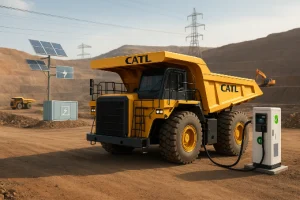
The mining industry has also placed a significant emphasis on sustainability. The increasing use of battery-electric vehicles (BEVs) is significantly reducing harmful emissions and the requirement for extensive ventilation in underground mines, resulting in more environmentally friendly operations. In addition, there are ongoing efforts to decrease water usage and waste by implementing advanced technologies and optimizing processes.

Exploring the Future of Mining
In the future, the mining industry is projected to move towards greater automation, digitalization, and sustainability. Exploring emerging technologies like fluidized mining, which includes unmanned mining and automated sorting, is helping to overcome the limitations of traditional mining methods. These exciting advancements have the potential to greatly improve the profitability of mines while prioritizing the welfare and security of workers.