By Penny Laneford

Washington has finally stopped pretending that digging holes is the hard part. For decades, the Western mining narrative focused almost exclusively on extraction: finding the deposit, permitting the pit, and getting the ore to the surface. But the Department of Energy’s (DOE) latest $500 million infusion into the domestic battery supply chain proves the focus has shifted. The bottleneck isn’t the mine. It’s the refinery.
On March 13, 2026, the DOE’s Office of Critical Minerals and Energy Innovation dropped a half-billion-dollar hammer. This isn’t a speculative exploration fund. It is a targeted strike on the midstream sector: processing, recycling, and component manufacturing.
The strategic calculus here isn’t subtle: The U.S. is tired of shipping raw materials across the Pacific only to buy them back as high-value chemicals. We are subsidizing the “black box” of the supply chain to break a foreign stranglehold that has lasted far too long.
The Midstream Pivot: Why Extraction Isn’t Enough
If you’re a junior miner today, your pitch deck better have a processing strategy. The DOE is making it clear that “digging and shipping” is a legacy model that no longer fits the national security profile. This $500 million round: the third of its kind: targets the conversion of raw lithium, nickel, and cobalt into battery-grade materials.
More Read
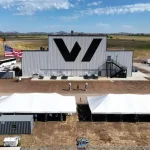
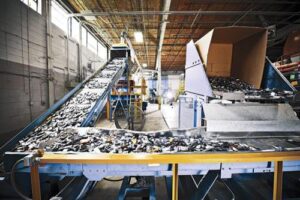
The industry is currently staring at a massive disconnect. We have plenty of “announced” mines, but the infrastructure to turn that ore into something a Gigafactory can actually use is embarrassingly thin. Per facility, the capital expenditure for a modern refinery can dwarf the cost of the mine itself. That’s not a typo. It’s a barrier to entry that only federal backing can reliably bridge in the current high-interest-rate environment.


A candid, wide-angle shot of a midstream processing facility under construction in the American Midwest. The image shows raw steel beams, mud-caked utility vehicles, and workers in weathered high-visibility gear huddling over a blueprint on a makeshift wooden table. No glossy filters, just the grit of industrial expansion.
Lithium Price Forecast 2026: The Stability Mandate
The timing of this grant coincides with a pivotal moment for the white gold. The lithium price forecast 2026 is beginning to decouple from the wild volatility of the early 2020s. Analysts are looking at a base case where spodumene concentrate and lithium carbonate settle into a range that allows for predictable margins: if, and only if, processing costs are contained.
More Read
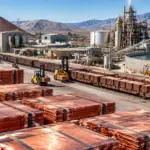
By funding domestic processing, the DOE is effectively de-risking the “S” in the ESG equation for Western OEMs. If a junior miner can prove they have a direct line to a DOE-funded refinery, their valuation shifts from “exploration risk” to “infrastructure asset.”
We’re seeing this play out in real-time with projects like the Trafigura Smackover lithium update, where the timeline is dictated less by the resource and more by the technical hurdles of Direct Lithium Extraction (DLE) and subsequent refining. The $500M bet is designed to ensure those hurdles don’t become dead ends.
Nickel Market Outlook: Breaking the Class 1 Monopoly
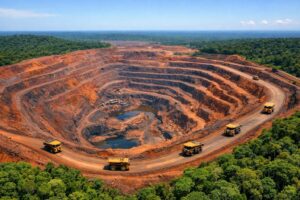
Nickel is the other side of the coin, and it’s a mess. The nickel market outlook remains clouded by massive oversupply from Indonesian laterite projects, often backed by Chinese capital and processed using carbon-heavy High-Pressure Acid Leaching (HPAL).
For a U.S. battery sector trying to claim “clean” credentials, Indonesian nickel is a bitter pill. The DOE’s funding is looking for the “third way”: advanced processing of domestic or FTA-partner ores that can produce Class 1 battery-grade nickel without the environmental baggage.
This is about more than just supply; it’s about a price premium for “clean” molecules. If the U.S. can’t compete on raw volume with Indonesia, it must compete on processing efficiency and carbon intensity. The grants are the catalyst for that efficiency.
![[IMAGE] us-mining-operations-briefing.webp](https://cdn.marblism.com/wtFzngOH58z.webp)
The $500M Breakdown: Where is the Money Going?
The DOE isn’t just cutting checks. The Notice of Funding Opportunity (NOFO) is specific. It’s looking for three things:
- Commercial-Scale Processing: Turning raw feedstock into precursor materials.
- Recycling and Recovery: Extracting value from manufacturing scrap and “black mass” from end-of-life batteries.
- Component Manufacturing: The actual cathodes and anodes that make the battery hum.
Letters of intent are due March 27, 2026. Full applications by April 24. That is a breakneck pace for federal bureaucracy. The message is clear: the energy transition isn’t waiting for a 10-year permitting cycle.
The focus on recycling is particularly telling. The DOE knows that primary mining won’t be enough to meet the 2030 mandates. We need to recapture every milligram of cobalt and nickel already in the system. Projects focused on “circularity” are moving to the front of the line. This isn’t just “mining news”; it’s the birth of a secondary resource industry that will eventually rival the primary pits.
Geopolitics as a Driver
Energy Secretary Chris Wright hasn’t been shy about the “hostile foreign actor” problem. China currently controls roughly 80% of the global cobalt refining capacity and nearly 60% of lithium processing.
“We’ve relied on others to do the dirty work, and now we’re paying the price in strategic vulnerability,” is the unspoken sentiment behind these grants. This $500M is part of a larger, $1 billion-plus push into critical minerals that we’ve seen across Latin America and domestic frontiers. It’s a counter-offensive.
For more on the geopolitical side of this struggle, look at how the U.S. is pouring capital into Latin American minerals to bypass the Chinese “chokehold.” The domestic grants are the “home front” version of this global strategy.

A documentary-style photo of a scientist in a non-sterile, working laboratory environment. They are holding a glass vial of dark grey powder: refined cobalt: while standing in front of a dated but functional chemical reactor. The lighting is fluorescent and harsh, highlighting the reality that high-tech minerals often come from low-glamour industrial settings.
What Junior Miners Need to Know
If you are a junior miner or an investor in one, the “pure play” extraction model is dying. The DOE is rewarding vertical integration: or at least very tight partnerships.
The “DOE-ready” project in 2026 looks like this:
- A defined resource in an FTA-friendly jurisdiction.
- A pilot-scale processing flow sheet that has been independently verified.
- A “Life Cycle Assessment” (LCA) that proves the project is cleaner than the Chinese alternative.
- An offtake agreement, even if non-binding, with a domestic battery manufacturer.
Without these, you aren’t just fighting geology; you’re fighting for relevance in a market that is being fundamentally reshaped by government policy. The Skillings Mining Intelligence report from March 16 highlighted this exact shift: the “Critical Minerals Corridor” is as much about the road to the refinery as it is about the mine itself.
The Inflection Point
2026 is the year the “battery revolution” gets real. We’ve had the hype. We’ve had the “lithium rush” of 2022 and the subsequent crash. Now, we are in the deployment phase.
The $500 million from the DOE is a signal to the private markets. It says: “We are committed to the midstream.” For every dollar the DOE puts in, private equity and institutional capital usually follow with three or four more.
But there’s a grim reality here: not everyone gets a prize. These grants are designed to pick winners. The DOE is looking for projects that can scale now, not in 2035. If you can’t show a path to commercial production within this decade, you’re likely screaming into the void.
The strategic calculus isn’t subtle. The U.S. is rewiring its industrial DNA in real-time. Whether it’s uranium ISR technology or lithium refining, the goal is the same: domestic control over the fuel of the future.
Final Assessment
The DOE’s $500M bet is a necessary, if belated, admission that the midstream is the true seat of power in the energy transition. For the mining industry, this means the era of “dig and ship” is over. The new era belongs to the processors, the recyclers, and the miners who have the foresight to build a bridge to the downstream.
Those who ignore this shift: who think a high-grade assay is enough to secure a future: are going to find themselves on the wrong side of the geopolitical fence. The money is moving. The tech is moving. The only question is who has the infrastructure to catch it.