By Charles Pitts

Nobody likes to admit when a flagship asset becomes an anchor. But for SSR Mining, the weight of the Copler mine in Turkey had finally become too heavy to pull. On March 5, 2026, the Denver-based miner didn't just trim its sails; it cut the line entirely.
In a move that caught some off guard and relieved many others, SSR Mining announced a binding memorandum of understanding to sell its 80% stake in the Copler Gold Mine to Cengiz Holding for a cool $1.5 billion in cash. It is a massive M&A deal that signals the end of an era for SSR in eastern Anatolia and a desperate, necessary pivot to the relative safety of the Americas.
The market’s reaction was a standing ovation. SSR Mining’s Nasdaq-listed shares jumped 15% to $33.26: the highest level since 2011. That’s not a rounding error. That’s a collective sigh of relief from investors who have been waiting for the other shoe to drop ever since the disaster of 2024.
The Ghost of Erzincan: Why Turkey Became Untenable
To understand why a company would walk away from a mine that has been its crown jewel for 13 years, you have to look at the dirt. Specifically, the dirt that moved when it shouldn’t have.
More Read
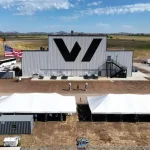
The February 2024 landslide at the Copler mine wasn’t just a "technical hiccup." It was a catastrophic failure of a heap leach pad that buried workers and triggered a massive environmental and regulatory crackdown. For over a year, SSR Mining has been trying to navigate the fallout. They’ve been "coordinating with authorities" and "preparing for a safe restart," which is corporate-speak for begging for permission to breathe.

But the autopsy of the 2024 incident revealed something much uglier: an engineered design flaw. This wasn't bad luck. It was bad math. And when your math fails in a foreign jurisdiction where the regulatory winds can shift overnight, your risk profile goes through the roof.

More Read

The reality is that SSR Mining could no longer afford the reputational or operational baggage of Copler. By selling to Cengiz Holding: one of Turkey’s largest industrial conglomerates with deep domestic ties: SSR is handing the political and regulatory headache to a player that actually knows how to navigate the local landscape. For SSR, the $1.5 billion is more than a price tag; it’s an escape hatch.
Rebuilding the Fortress: The Americas Pivot
So, where do you go when you have $1.5 billion in your pocket and a desire to never hear the phrase "heap leach stability" in a foreign language again? You go home. Or as close to it as possible.
The proceeds from the Copler sale aren’t just sitting in a savings account. They are earmarked for a total repositioning toward the Americas. This isn't a new strategy, but the Copler exit accelerates it to warp speed. The 2025 acquisition of the Cripple Creek & Victor (CC&V) mine in Colorado was the first real indicator of where SSR’s head was at.
CC&V is the antithesis of Copler. It’s located in a stable jurisdiction with predictable (if strict) regulations and a long history of production. By anchoring in Colorado, SSR is trading high-variance, high-risk Turkish gold for steady, Tier-1 North American ounces. It’s a move toward "boring," and in the mining world, boring is beautiful.
This shift mirrors what we are seeing across the industry. Companies are realizing that the "frontier" premium isn't worth the jurisdictional discount. Whether it’s Western explorers abandoning Kazakhstan or the massive Arizona gambits by companies like Hudbay, the trend is clear: Get into the Americas or get left behind.
The Cengiz Calculus: Why Pay $1.5 Billion?
On the other side of the table, Cengiz Holding is playing a very different game. For a Turkish giant, Copler isn't a risk; it's a prize. They aren't worried about the same jurisdictional "red tape" that strangled SSR. They are the fabric of the industry in Turkey.
For Cengiz, this is a strategic acquisition of a massive gold resource at a time when gold is hitting record highs. With geopolitical tensions in the Middle East driving a sustained bull run for bullion, owning 80% of a mine like Copler: once it’s fully back online: is a license to print money.
The deal structure is straightforward:
- $1.5 billion cash purchase price.
- $100 million deposit already paid by Cengiz.
- $50 million break fee if either side gets cold feet.
- Q3 2026 closing date.
Cengiz is betting that they can fix the technical issues and restart the operation faster and with less public outcry than a foreign entity ever could. They are likely right.

ESG as a Financial Weapon
This deal is also a masterclass in modern ESG management. We’ve talked before about the 7 mistakes companies make with ESG reporting, and at the top of that list is failing to account for social license.
SSR Mining lost its social license at Copler the moment that leach pad failed. No amount of "community outreach" was going to scrub the stain of that landslide. By divesting, SSR is effectively cleaning its balance sheet of a massive ESG liability. This allows them to re-market themselves to institutional investors who have strict mandates against companies with outstanding environmental disasters.
It’s a brutal, pragmatic calculation. You don't fix the problem; you sell it to someone who can.
What Happens Next: The SSR War Chest
With $1.5 billion hitting the bank in 2026, SSR Mining becomes one of the best-capitalized mid-tier miners in the world. Executive Chairman Rod Antal has already signaled that the money will be used for "reinvestment, shareholder returns, and new growth."
Translation: Look for more M&A in North America.
They still have some unfinished business in Turkey, specifically a 20% interest in the Hod Maden project, which is currently under strategic review. Don't be surprised if that’s the next thing to go. SSR wants a clean break. They want a portfolio that doesn't require a translator or a specialized team of Turkish lawyers to manage.
The company is now laser-focused on its core assets in the US, Canada, and South America. They are chasing the same stability that has made projects like Frontier Lithium’s Spark discovery so attractive to investors.
The Bottom Line: Jurisdiction is the New Grade
There was a time in mining when "grade was king." If the rocks were rich enough, you’d go to the moon to get them. That era is dead. Today, jurisdiction is the new grade.
SSR Mining’s exit from Turkey is a $1.5 billion admission that even the richest gold mine isn't worth the risk if the ground beneath it, literally and politically: is unstable. By anchoring in the Americas, SSR is betting that investors will value the certainty of a Colorado mine over the volatility of an Anatolian one.

It’s a high-stakes pivot that has already paid off in share price. Now, the pressure is on SSR to prove that they can turn that $1.5 billion cash pile into a sustainable, North American-led growth story. The clock is already ticking toward the Q3 2026 close.
Welcome to the new reality of gold mining. It’s safer here, but the competition for "safe" assets is about to get a whole lot more expensive.
Social Media Snippet:
SSR Mining just dropped a $1.5B bombshell, exiting Turkey’s Copler mine for a massive cash pile. Why? Because after the 2024 landslide, the risk wasn't worth the reward. CEO Rod Antal is steering the ship toward the Americas, with eyes on Colorado and beyond. Is "safe" mining the only way to survive in 2026? Read our full breakdown on the massive pivot. #SSRMining #GoldMining #MiningMA #TurkeyMining #MiningNews