Indonesia’s processing network is becoming the central cost and supply variable for the global nickel market.

By Penny Langford
The nickel market is entering 2026 with two different stories. Global primary supply may be close to balance, or remain in surplus, depending on assumptions about Indonesian production and demand. But within that headline market, Class 1 nickel and battery-grade intermediates face a more constrained outlook because converting laterite feed into high-purity material has become more expensive.
The International Nickel Study Group forecasts 2026 primary nickel production at 3.715 million tonnes, against usage of 3.747 million tonnes. That implies a 32,000-tonne deficit, although the group cautions that Indonesian production and broader economic conditions remain uncertain.
Other analysts still expect a surplus. Earlier International Nickel Study Group estimates placed the 2026 surplus at roughly 261,000 tonnes, while Sumitomo Metal Mining and ING Research have also highlighted the continuing strength of Indonesian supply.

The difference between those views is less important than the composition of supply. Indonesia has added large volumes of nickel pig iron, ferronickel, matte and mixed hydroxide precipitate. Those products can support stainless steel and battery supply chains, but they do not all offer the same quality, location, carbon profile or conversion economics as exchange-grade Class 1 nickel.

Nickel market outlook: the key numbers
Indonesia remains the market’s dominant swing factor. It accounts for more than 60% of global mined nickel supply, according to industry estimates, and its 2026 ore quota is expected to be materially below the 2025 level.
| Indicator | 2025 | 2026 outlook | Why it matters |
|---|---|---|---|
| World primary nickel production | 3.880 Mt | 3.715 Mt | Latest INSG forecast implies a year-on-year decline |
| World primary nickel usage | 3.596 Mt | 3.747 Mt | Demand growth would absorb much of the available supply |
| Global market balance | 283 kt surplus | 32 kt deficit | Forecasts vary widely according to Indonesian assumptions |
| Indonesia mined nickel | About 2.6 Mt | About 2.9 Mt | Expansion remains concentrated in Indonesia |
| Indonesia primary nickel | About 1.9 Mt | About 2.1 Mt | Includes NPI, matte and intermediates |
| Indonesia ore quota | 379 Mt wet metric tonnes | About 250–270 Mt wet metric tonnes | Quota is roughly one-third below the 2025 level |
| Philippine ore shipments to Indonesia | About 15–15.3 Mt | About 20–25 Mt projected | Imports may offset only part of Indonesia’s feedstock gap |
Sources: INSG, Mysteel, S&P Global and industry estimates. Figures are rounded and may reflect different definitions of mined or primary nickel.
The table provides a useful market monitor, but it also shows why a single global balance number can be misleading. Indonesia’s mined output may continue rising even as its approved ore quota falls, because new processing capacity is already built and operators may seek quota revisions. At the same time, the quota reduction could limit the availability of suitable ore for competing NPI and HPAL plants.
Indonesia’s quota cuts raise the cost floor
Indonesia’s 2026 nickel ore quota has been reported at approximately 250 million to 270 million wet metric tonnes, compared with about 379 million tonnes in 2025. The government has indicated that the quota may be revised selectively, meaning the initial figure is a ceiling rather than an absolute guarantee of lower production.
The potential gap is significant. Mysteel estimates that Indonesian smelters could require approximately 327 million tonnes of ore in 2026. If the quota is set near 250 million tonnes, the initial shortfall would be about 77 million tonnes before imports.
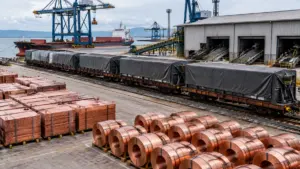
Philippine shipments can provide some relief. Indonesia imported roughly 15 million tonnes of nickel ore from the Philippines in 2025, with 2026 estimates ranging from 20 million to 25 million tonnes. Even at the upper end, those shipments would not fully close the potential feedstock gap.
That matters because NPI producers and HPAL operators do not compete for identical ore. Saprolite is generally used in pyrometallurgical routes that produce NPI or matte, while limonite is more commonly directed to HPAL facilities. A shortage of one feedstock type cannot always be solved by importing another.

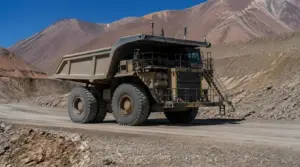
Laterite ore supply links Indonesian mine quotas directly to smelter utilization and intermediate-product availability.
Class 1 supply faces a conversion bottleneck
Class 1 nickel generally refers to material containing at least 99.8% nickel, including cathodes, briquettes and other products eligible for delivery against the LME nickel contract. Class 2 products include NPI and ferronickel, while matte and MHP sit within a broader group of intermediates that may require further processing before entering battery-grade supply chains.
Indonesia’s growth has been concentrated in Class 2 and intermediate products. That has created a market in which bulk nickel can appear oversupplied while specific Class 1 units remain relatively scarce.
The conversion route is central to the difference:
- NPI to nickel metal or sulfate: Estimated total costs range from approximately $14,000 to $18,000 per tonne of nickel, depending on power, reagents, tolling and capital charges.
- MHP to Class 1 nickel: Plant-level costs are often estimated at roughly $13,500 to $17,000 per tonne, with delivered costs to Western cathode facilities potentially reaching about $20,000–$21,000 per tonne.
- High-grade matte to Class 1: Matte production and refining costs vary widely, but delivered costs can fall in the high-teens to low-$20,000s per tonne.
These are not universal cost curves. Cobalt credits, sulphur prices, acid availability, freight and the quality of the feedstock can materially change the result. The direction, however, is clear: higher Indonesian ore benchmarks and tighter feedstock availability are raising the marginal cost of producing qualified Class 1 units.
The revised Indonesian benchmark pricing mechanism, known as HPM, is particularly important for HPAL operators. The new formula raises the base price across ore grades and incorporates cobalt, iron and chromium into the calculation. Analysts have estimated that the price floor for certain HPAL feed could rise from approximately $16 per wet metric tonne to more than $40 per wet metric tonne.
That change increases the cost of producing MHP from purchased ore. It also reduces the likelihood that a large Class 1 supply response will emerge simply because Indonesia has abundant nickel resources.

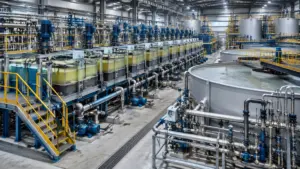
Processing and refining costs increasingly determine whether intermediate nickel can reach battery-grade markets.
Demand growth is positive but uneven
Nickel demand is still expected to grow in 2026, with stainless steel providing the largest base of consumption. CRU has estimated global demand growth of slightly more than 6%, while battery-related nickel demand could rise by approximately 12% to around 560,000 tonnes.
That battery growth is not guaranteed to translate into a global deficit. Lithium-iron-phosphate batteries contain no nickel and continue to gain share in mass-market electric vehicles, particularly in China. Nickel-rich NMC and NCA chemistries remain relevant for longer range, higher-performance vehicles and some specialty applications, but the chemistry mix is limiting the pace of demand growth.
For stainless steel producers, the market remains more comfortable. NPI inventories have been described as elevated, and Chinese stainless steel demand has been relatively subdued. That leaves Class 2 nickel exposed to discounts even as battery-grade MHP and matte attract stronger payables.
The result is a widening basis between products. LME prices may rise because the cost of marginal conversion increases, while NPI discounts remain wide. Battery producers may also pay a premium for qualified MHP, matte or Class 1 material that meets technical, traceability or emissions requirements.
Nickel price scenarios for 2026
The following framework is designed to help operators and investors test assumptions rather than predict a single price outcome.
| Scenario | Supply and demand assumptions | Indicative LME nickel range |
|---|---|---|
| Base case | Indonesia maintains reduced quotas but allows selective revisions; stainless demand improves gradually; LFP limits battery upside | $16,500–$18,500/t |
| Bull case | Quotas are enforced strictly; HPAL or smelter disruptions persist; sulphur and acid costs rise; NMC demand strengthens | $19,000–$22,000/t |
| Bear case | Indonesia restores more supply through quota revisions; stainless demand weakens; LFP adoption accelerates; inventories remain high | $14,000–$16,000/t |
The base case is an uneven market: sufficient Class 2 supply for stainless steel, but higher conversion costs and tighter availability for Class 1 and battery-grade material.
The bull case requires more than a lower quota announcement. It would likely require enforcement, lower-than-expected smelter utilization, physical disruptions or stronger demand. The bear case remains credible because Indonesia retains the ability to increase output and because the global market still has substantial Class 2 capacity.
What decision-makers should monitor
Operators, buyers and investors should focus on the following indicators:
- RKAB revisions: Additional Indonesian allocations could quickly restore surplus conditions.
- Ore imports from the Philippines: Rising shipments would show how much of the Indonesian gap can be offset regionally.
- NPI, matte and MHP production: Product-level output is more informative than total mined nickel.
- Sulphur and acid prices: HPAL margins remain sensitive to these inputs.
- Class 1 premiums and payables: A widening premium would confirm tightening in high-purity material.
- Battery chemistry trends: NMC growth supports nickel demand, while LFP adoption limits it.
- Western project progress: Canadian sulphide projects may improve future supply diversity, but they cannot materially change the 2026 balance.
The central conclusion is that the nickel market is no longer adequately described by a single surplus or deficit figure. Indonesia may continue expanding overall production, yet the cost and availability of Class 1 nickel will depend on ore allocation, conversion capacity and the economics of producing qualified intermediates.
For 2026 planning, the most important question is not simply how much nickel is mined. It is how much can be converted into the right product, in the right region, at a cost that supports continued operation.
LinkedIn snippet
Nickel’s 2026 outlook is splitting along product lines. Indonesia may continue expanding total output, but lower ore quotas, higher HPM benchmarks and rising HPAL conversion costs are tightening the economics of Class 1 and battery-grade supply. Our base, bull and bear framework examines the market balance, regional shipments and the cost variables decision-makers should monitor.
X snippet
Nickel’s 2026 market may be balanced globally but tight in Class 1 material. Indonesia’s lower ore quota, rising conversion costs and growing Philippine shipments will determine whether the market stays in surplus or moves toward deficit. Full outlook: Skillings Mining