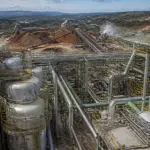
Tailings infrastructure and water controls are becoming central to mining approvals, financing and licence retention.

By Penny Langford
Mining ESG compliance is moving from a reporting exercise to a condition of doing business. In Zimbabwe, proposed mining legislation would connect environmental impact assessments, social responsibility certificates and rehabilitation obligations directly to the granting and retention of mining rights. Brazil is building a critical-minerals framework around project qualification, traceability and state-backed guarantees. In the European Union, strategic-project status may improve access to regulators and lenders, but does not remove liquidity risk.
For operators and investors, the practical consequence is clear: environmental and social performance is increasingly becoming a project-finance issue, a permitting issue and, in some jurisdictions, a title issue.
The shift is especially important for copper, lithium, nickel, rare earths and other critical minerals. Governments want new supply quickly, but projects are being judged against stricter expectations on water security, tailings governance, Indigenous rights, community benefits and closure funding.

Zimbabwe links ESG performance to mining rights
Zimbabwe’s proposed Mines and Minerals Bill 2025 is among the clearest examples of ESG obligations being embedded in mining regulation. The Bill is intended to replace the existing legal framework and would give environmental and social performance a more direct role in title management.

As reported by Mining Zimbabwe, Clause 154 would require mining leaseholders and special grant holders to submit a statutory environmental impact assessment and a social responsibility certificate within 30 days of registration.
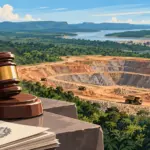
The social responsibility certificate would cover community engagement, cultural heritage, labour practices and tangible local benefits. The Bill would also allow environmental agencies and local authorities to raise complaints against operators that breach their obligations. Continued non-compliance could result in the suspension or forfeiture of mining titles.

That changes the risk calculation for companies operating in Zimbabwe. Under an older system, title retention was more closely tied to fees and evidence that a claim was being worked. Under the proposed framework, the standard becomes closer to “use it responsibly or lose it.”
The Bill also proposes a Mining Industry Environmental Protection Fund. Operators could provide insurance or other financial security for rehabilitation, or contribute 0.1% of gross monthly mineral production to the fund. The aim is to ensure that public authorities and communities are not left with the cost of restoring abandoned or polluted sites.
For investors, the most important point is not the levy itself. It is the connection between environmental obligations and legal tenure. A failure involving water contamination, inadequate rehabilitation or community commitments could affect the asset’s operating status rather than simply produce a fine.
Brazil combines critical-minerals incentives with stronger oversight
Brazil is taking a different approach. Its proposed National Policy on Critical and Strategic Minerals is designed to attract investment in exploration, mining, processing, recycling and industrialisation while giving the federal government a stronger role in strategic transactions.
The Federal Senate approved Bill No. 2,780/2024 and sent it for presidential sanction, according to a legal analysis by Demarest.
The bill would create the National Council for the Industrialization of Critical and Strategic Minerals, known as CIMCE. The council would help define priority minerals and projects, qualify projects for public support and oversee a national registry of critical and strategic mineral projects.
It would also create the Mineral Activity Guarantee Fund, or FGAM, with potential assets of up to R$2 billion. The fund is intended to provide guarantees for eligible projects rather than act as a conventional direct lender. A separate processing and transformation programme could provide tax credits of up to R$5 billion between 2030 and 2034.
The incentives are paired with more demanding controls. Projects seeking support would need to enter the national registry and meet requirements involving mining rights, environmental licensing, fiscal compliance and mineral traceability. The bill would also give the federal government authority to review certain changes in control, foreign investment and international contracts involving strategic mineral assets.
This creates a more interventionist model: the state offers financing support and faster regulatory treatment, but expects a greater degree of transparency and control over the project and its supply chain.
For companies developing Brazilian lithium, rare earth, nickel or niobium projects, the result may be improved access to capital if the project is strategically aligned. It may also mean longer transaction reviews and greater scrutiny of ownership, offtake agreements and processing plans.
EU strategic projects still face a liquidity test
The EU’s Critical Raw Materials Act has created a route for strategic-project designation, faster permitting and coordinated access to public lenders. But designation does not equal funding.
The European Court of Auditors’ special report found that the EU framework remains exposed to financing, permitting and execution constraints. The Act does not provide dedicated EU funding for strategic projects, while financial viability is not itself a condition for receiving the designation.
The audit reviewed 19 strategic-project applications and found permitting risks in several cases. It also noted that one project promoter filed for bankruptcy after being included on the strategic-project list. Many selected projects remain at an early development stage or lack firm offtake agreements, making it difficult for them to contribute meaningful supply by 2030.
The EU has responded with a combination of public-bank lending, guarantees and existing funding instruments. The European Investment Bank has announced a critical raw-materials initiative with an annual financing ambition of about €2 billion, while other programmes target exploration, processing, recycling and battery supply chains.
These measures may improve liquidity, but they do not remove the underlying issues. Critical-minerals projects often require long lead times, large upfront capital, specialist processing technology and exposure to volatile prices. Water, biodiversity and social obligations can also affect construction schedules and operating costs.
Strategic status therefore functions more as a coordination mechanism than as a bankability certificate.
The data points behind the compliance shift
| Jurisdiction or framework | Key measure | What it means for project risk |
|---|---|---|
| Zimbabwe Mines and Minerals Bill | EIA and social responsibility certificate within 30 days of registration | Environmental and social performance could affect title retention |
| Zimbabwe rehabilitation framework | Insurance or 0.1% of gross monthly mineral production for environmental protection | Closure and remediation liabilities become an explicit funding requirement |
| Brazil critical-minerals bill | FGAM with potential assets of up to R$2 billion | Qualifying projects may receive credit guarantees, subject to state qualification |
| Brazil processing programme | Tax credits of up to R$5 billion between 2030 and 2034 | Incentives favour domestic processing and value addition |
| EU strategic-project framework | 47 integrated EU projects selected in the first round | Designation can improve coordination but does not guarantee financing |
| EU permitting environment | Mining permits may take three months to three years, with longer outliers | Environmental reviews, appeals and water rules remain schedule risks |
| EU strategic-project audit | 19 applications reviewed by the ECA; permitting remained a material risk in several cases | Project maturity and execution readiness remain decisive |
Figures reflect legislation, official analysis and institutional reporting cited above. Some measures remain subject to enactment or implementation.
Water and tailings are now financing issues
The most material ESG risks are often physical rather than reputational.
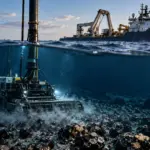
A mine’s water balance affects production continuity, community relations, permitting and closure costs. Operators need to demonstrate where water comes from, how much is recycled, what happens during drought conditions and whether discharges could affect downstream users or ecosystems.
Tailings facilities create a similar chain of risks. The ICMM Mining Principles call for risk-based design, operation, monitoring and decommissioning of tailings facilities. They also require water stewardship, closure planning, financial provision and emergency-response systems.
For lenders, the relevant evidence increasingly includes:
- A complete inventory and risk classification of tailings facilities.
- Independent engineering reviews and operation, maintenance and surveillance plans.
- Water-balance models covering normal, drought and extreme-weather conditions.
- Monitoring of seepage, pore pressure, pond levels and water quality.
- Trigger-action response plans with named owners and escalation thresholds.
- Closure-cost estimates backed by security, insurance, trusts or other approved instruments.
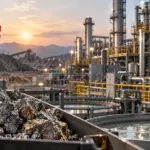
A control room that links production, water and environmental data can help operators manage these obligations, but technology does not substitute for governance. Data must be traceable, independently reviewable and connected to decisions.

Operational data systems can connect environmental monitoring with mine-site decision-making.
Indigenous rights can determine the project timetable
Community engagement is also becoming a schedule-critical workstream. Consultation that begins after a mine plan is effectively fixed can create disputes, redesign costs and permitting delays.
The ICMM framework calls for respect for the rights, interests, cultures, knowledge and livelihoods of Indigenous Peoples. It also expects companies to seek agreement on anticipated impacts and to explore alternatives where projects could cause relocation or significant effects on critical cultural heritage.
The evidence required by lenders and regulators may include stakeholder maps, consultation records, grievance logs, benefit-sharing agreements and documentation of how community input changed project design.
This is especially relevant for water infrastructure, tailings storage, access roads and transmission lines. These facilities can affect communities beyond the immediate mine footprint and may create disputes even when the orebody itself has already been approved.

Early consultation can influence water, land-use and mine-design decisions before permitting becomes adversarial.
Base, bull and bear framework
| Scenario | Regulatory and operational outcome | Implication for operators and investors |
|---|---|---|
| Bull case | ESG requirements become clearer, public guarantees improve access to capital and early engagement reduces permitting conflict | Strong projects gain a lower cost of capital and reach construction with fewer redesigns |
| Base case | Compliance becomes more detailed and expensive; permitting improves in some jurisdictions but water, tailings and social issues continue to create delays | Project maturity, high-quality data and secured offtake matter more than strategic labels |
| Bear case | A major tailings or water incident triggers stricter enforcement, title suspensions, litigation or lender withdrawals | Weak closure funding and unresolved community rights become asset-level threats |
The most probable outcome is a gradual tightening rather than a single global ESG rule. Jurisdictions will use different mechanisms, but the direction is similar: performance must be demonstrated before capital is committed and throughout the life of the asset.
What mining companies should prepare for
Companies developing or acquiring mining assets should treat ESG compliance as part of technical and financial diligence. A practical review should include:
- Rights and permits: Confirm title records, renewal requirements, environmental approvals and unresolved obligations.
- Water security: Test the site-wide water balance against drought, flooding, competing users and changing discharge standards.
- Tailings governance: Reconcile facility inventories, engineering reviews, monitoring data, emergency plans and closure liabilities.
- Indigenous and community rights: Verify the quality of consultation, consent processes, grievance mechanisms and benefit commitments.
- Financial provision: Match rehabilitation and closure costs with enforceable funding instruments.
- Data assurance: Build audit-ready systems that connect site data with corporate disclosures and lender reporting.
Skillings’ earlier analysis on audit-grade ESG data in mining examines why documentation quality is becoming as important as the underlying performance.
The central change in mining ESG compliance is that failure can now affect more than a sustainability score. It can delay a permit, limit access to public support, weaken project finance or threaten the legal right to operate.
For critical-minerals developers, responsible production is no longer separate from supply security. It is becoming one of the conditions for achieving it.