Mining control rooms are becoming central to the collection, validation and assurance of ESG data.

For mining companies, the most important ESG reporting milestone of 2026 is not a new emissions metric. It is the European Commission’s July adoption of revised European Sustainability Reporting Standards, or ESRS, under the EU’s Corporate Sustainability Reporting Directive.
The changes are designed to reduce paperwork. The Commission says the revised standards cut mandatory datapoints by more than 60%, reduce total datapoints by more than 70% and lower reporting costs by more than 30% per company.
That does not mean ESG data becomes inexpensive.
For large mining groups, the cost is moving away from producing long narrative reports and toward building reliable, auditable data systems across mines, processing plants, contractors and supply chains. For investors and lenders, the result should be more comparable information: but also greater scrutiny of whether operational claims can be supported by evidence.

The practical question for operators is therefore not simply whether they are in scope. It is whether their site-level data is ready to withstand assurance, financing diligence and regulatory review.

The 2026 regulatory milestone
On July 3, 2026, the European Commission adopted revised ESRS and a voluntary sustainability reporting standard for smaller companies. The measures form part of the EU’s Omnibus I simplification package.
The revised standards were transmitted to the European Parliament and the Council for scrutiny. The Commission said they would apply after a two-month scrutiny period, which can be extended by a further two months.

The changes follow a broader adjustment to CSRD scope. Under the post-Omnibus framework, the largest EU companies generally need to exceed both:
- 1,000 average employees, and
- €450 million in net annual turnover.
Large non-EU groups with significant European business may also be captured by separate EU turnover and subsidiary or branch tests. That is particularly relevant to global mining companies headquartered in Canada, the United States, Australia and the United Kingdom.
The scope is narrower than the original CSRD design. However, companies that remain in scope still face double-materiality assessments, climate and environmental reporting, management-report integration, digital tagging and external limited assurance.
The first reporting wave also remains important in 2026. Companies already subject to the rules are preparing reports covering financial year 2025, while the EU’s “quick-fix” measures prevent them from facing additional reporting requirements for 2025 and 2026 compared with the prior reporting cycle.
For mining groups, this creates a transition year: fewer required datapoints, but little room for weak controls over the information that remains material.
Why fewer datapoints can still mean higher data costs
The Commission’s headline numbers describe the volume of information required in the final report. They do not fully capture the cost of producing reliable information at mine level.
A mining company may disclose only one consolidated water-use figure, for example. But producing that figure can require data from multiple pits, underground workings, concentrators, tailings facilities and processing plants. The underlying system may need to reconcile meters, production records, laboratory results, contractor reports and regulatory submissions.
The same issue applies to emissions.
Scope 1 and Scope 2 data may be available from fuel records and electricity invoices, but accuracy depends on consistent boundaries across sites. Scope 3 calculations introduce further complexity, including purchased goods, transport, downstream processing and customer use. For copper, nickel and lithium producers, value-chain estimates may involve smelters, refiners, chemical processors and battery-material customers across several jurisdictions.
The cost pressure is therefore concentrated in five areas:
- Site-level measurement: meters, sensors, sampling and operational logs.
- Data architecture: systems that connect mine, plant, environmental and financial information.
- Internal controls: documented ownership, review procedures and exception handling.
- Assurance readiness: evidence trails that support external limited assurance.
- Value-chain coordination: consistent data requests to suppliers, contractors and customers.
The revised ESRS may reduce the number of fields a company has to publish. It does not eliminate the need to prove that the published fields are complete, consistent and connected to operational reality.

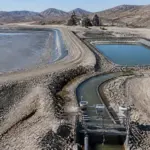
Lithium operations illustrate how water, land disturbance, energy and production data can intersect in a materiality assessment.
What remains material for mining companies
Mining is exposed to a broad set of environmental and social issues. Even under a simplified ESRS regime, large operators are likely to assess and report on topics such as:
- Scope 1 and Scope 2 emissions, and Scope 3 emissions where material;
- energy use and decarbonization plans;
- water withdrawals, consumption and discharge;
- pollution and hazardous waste;
- tailings and waste-rock management;
- land disturbance, rehabilitation and biodiversity;
- worker health and safety;
- affected communities and Indigenous rights;
- business conduct and anti-corruption controls.
The double-materiality principle is central. A topic can be reportable because it affects the company financially, because the company creates a significant impact on people or the environment, or because both conditions apply.
For mining investors, this is important because environmental and social risks often become financial risks through specific operating channels. Water restrictions can reduce production. Community opposition can delay permits. Tailings failures can create remediation liabilities. Carbon prices can alter processing economics. Biodiversity requirements can change project footprints or closure costs.
A credible ESG report should therefore connect the risk to the asset, the timetable and the financial consequence: not simply describe a policy.
The value-chain cap changes supplier expectations
The EU’s voluntary standard for smaller companies includes a value-chain cap. In broad terms, companies with fewer than 1,000 employees that sit in the value chain of a CSRD-reporting company should not be required to provide information beyond the voluntary standard.
That offers some relief to junior explorers, smaller contractors and specialist mining-service providers. It also creates a more standardized baseline for buyers, banks and larger mining groups requesting ESG information.
The cap does not remove commercial pressure. A small mining company may still be asked for emissions, water, safety or community data by a lender, insurer, offtaker or joint-venture partner. But a common framework should reduce the risk of every counterparty creating its own questionnaire.
Large mining companies remain exposed on both sides. They may have to report their own operations while also supplying data to customers, banks and industrial partners seeking to understand the carbon and social profile of their raw-material inputs.
Data implications for capital providers
Banks and investors are becoming users of the same information that mining operators are building.
A lender assessing a copper expansion may need to understand:
- whether the project has secured water access;
- how power costs affect decarbonization plans;
- whether permitting depends on unresolved community agreements;
- how rehabilitation liabilities are funded;
- whether production assumptions rely on emissions-intensive processing;
- and whether the borrower’s reporting controls are strong enough for future disclosures.
Weak ESG data can therefore create a financing issue even where the underlying mine is operationally sound. Missing baselines, inconsistent boundaries or unsupported assumptions may lead to additional diligence, conservative risk treatment or slower credit approval.
This does not mean ESG data automatically determines the cost of capital. Commodity prices, balance sheets, jurisdiction, reserves, logistics and project execution remain central. But assurance-ready sustainability information is increasingly part of the evidence package that capital providers expect.
Linkable 2026 data table
| 2026 milestone or threshold | Number or timing | Mining-sector implication |
|---|---|---|
| Revised ESRS mandatory datapoints | More than 60% reduction | Fewer required disclosures, with greater focus on material topics |
| Revised ESRS total datapoints | More than 70% reduction | Smaller reporting dataset and reduced duplication |
| Commission-estimated reporting-cost reduction | More than 30% per company | Potential savings in reporting production, but not necessarily in site-level data controls |
| Post-Omnibus company threshold | More than 1,000 employees and €450 million turnover | Scope concentrates on the largest mining groups and major EU businesses |
| Revised standards adoption | July 3, 2026 | Application follows Parliament and Council scrutiny |
| First-wave 2026 reporting | Reports covering FY 2025 | Existing reporters must maintain reporting continuity under transitional relief |
| Assurance level | Limited assurance | Operators need documented evidence, controls and traceable data ownership |
Sources: European Commission corporate sustainability reporting timeline; European Commission revised ESRS announcement; European Parliament overview of Omnibus I.
Base, bull and bear scenarios
The following framework is intended to help operators and capital providers assess implementation outcomes. It is not an investment recommendation.
| Scenario | Regulatory and operating assumptions | Likely outcome for miners and capital providers |
|---|---|---|
| Base case | Revised ESRS takes effect after scrutiny; large groups continue 2026 reporting for FY 2025; limited assurance remains the working standard | Reporting volumes decline, but spending continues on site controls, data integration and assurance readiness |
| Bull case | The value-chain cap reduces duplicate questionnaires; common definitions improve interoperability; mine-level systems are reused for permitting, operations and financing | Total compliance workload falls faster, data becomes more useful for lenders and project decisions, and smaller suppliers face less administrative pressure |
| Bear case | National implementation differences persist; data gaps emerge during assurance; non-EU groups misjudge EU turnover exposure; suppliers cannot provide consistent information | Compliance costs rise through remediation and repeat testing, while financing, permitting or transaction diligence takes longer |
The most important variable across all three scenarios is data reuse. A system built only to populate an annual ESG report will remain a cost center. A system that also supports production planning, water management, energy optimization, closure planning and lender diligence can become part of operational control.
That is where automation may matter. Digital equipment records, automated emissions calculations, central document controls and exception-based review can reduce manual reconciliation. However, automation does not resolve poor source data. A sensor with weak calibration or an unclear reporting boundary can simply produce incorrect information more efficiently.

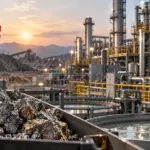
Critical-mineral operations must connect environmental and social information to specific assets and production activities.
What operators should do next
Mining companies preparing for the next reporting cycle should prioritize four actions.
1. Confirm scope and exposure
Map legal entities, employee counts, turnover, European subsidiaries, branches and major customers. Non-EU groups should assess EU activity separately from global reporting commitments.
2. Build a materiality-to-data map
For every material topic, identify the relevant mine, plant, contractor, owner and data source. The exercise should show where information is measured, who approves it and what evidence supports it.
3. Test assurance readiness
Run a controlled review of selected metrics such as emissions, water, safety and rehabilitation. Look for missing source documents, inconsistent boundaries, unexplained year-on-year movements and manual spreadsheet dependencies.
4. Align ESG data with finance and mine planning
Climate, water, biodiversity and closure data should connect to capital expenditure, operating costs, production assumptions, reserves, permitting and risk registers. This makes the information more relevant to lenders and investment committees.

For operators, the reporting challenge is increasingly the control of asset-level information across complex mine sites.
The bottom line
The 2026 ESG disclosure changes simplify the reporting rulebook, but they do not make mining data optional.
The EU has reduced the number of companies and datapoints in scope while retaining pressure on the largest groups to explain their environmental and social risks in a consistent, assured and machine-readable format. That combination will reward companies that treat ESG information as operational data rather than annual-report content.
For operators, the near-term cost is likely to be concentrated in controls, systems and evidence. For capital providers, better information may improve comparability, but gaps in that information will become easier to identify.
The strategic advantage will belong to mining companies that can move from fragmented ESG reporting to a shared data infrastructure covering copper, lithium, nickel, gold and other critical minerals: while connecting sustainability performance to the economics of each asset.
For further context, see Skillings’ analysis of CSRD and ISSB reporting requirements, its coverage of critical-minerals supply chains, and its reporting on autonomous mining technology.